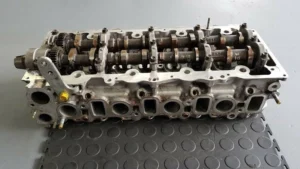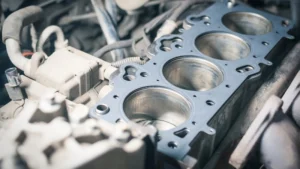
When engineers and procurement managers evaluate cylinder head specifications, the SOHC vs. DOHC question tends to surface early in the conversation. Yet most published comparisons reduce it to a simple performance binary — DOHC is “faster,” SOHC is “simpler” — and move on.
That framing is incomplete.
The choice between a Single Overhead Camshaft and a Double Overhead Camshaft configuration has downstream consequences for thermal behavior, head casting geometry, valve seat wear, serviceability intervals, and — critically for B2B buyers — parts availability and lead times.
What follows is not a generic overview. It is written from the perspective of a cylinder head manufacturer with over two decades of experience producing both SOHC and DOHC heads for OEM and aftermarket applications across passenger vehicles, commercial vehicles, and industrial equipment. The observations here draw on real production experience — tolerance issues encountered at the casting stage, VVT compatibility problems flagged by customers, and the procurement trade-offs that come up repeatedly when buyers source replacement heads at volume.
If you are an engineer evaluating specifications, a procurement professional comparing suppliers, or a technical buyer trying to understand what actually changes between these two designs at the component level — this article is written for you.

Understanding the Valvetrain Architecture: A Starting Point
Before breaking down the differences, it helps to establish a shared reference point.
In any overhead cam engine, the camshaft sits within the cylinder head itself — positioned above the valves rather than deep in the engine block as in older pushrod (OHV) designs. The cam lobes press directly on the valves (or through short bucket-type tappets), eliminating the long pushrod path and reducing the mass of the valve-actuating components.
The distinction between SOHC and DOHC lies in how many camshafts perform this function per cylinder bank.
SOHC Cylinder Head: Engineering Characteristics
In a Single Overhead Cam configuration, one camshaft per cylinder bank handles all valve actuation — both intake and exhaust — from a single shaft positioned centrally within the head.
Valve Arrangement and Geometry
Because one shaft must reach valves on both sides of the combustion chamber, SOHC heads typically employ rocker arms or finger followers to bridge the distance between the cam lobe and the valve stem. This introduces an additional pivot point into the actuation path.
Most SOHC heads support two valves per cylinder (one intake, one exhaust), though three-valve SOHC designs exist — commonly with two intake valves and one exhaust valve — as a middle-ground solution to improve intake flow without the full complexity of a DOHC head.
Head Casting Geometry
The single-cam design produces a comparatively narrow head profile. The cam sits centrally, and the head does not need to accommodate the width required for two separate cam bearing journals. This has practical implications: SOHC heads fit more easily into compact engine bays, and the casting is less material-intensive, which contributes to lower weight per head.
Thermal and Flow Considerations
With fewer valves per cylinder, the total valve curtain area — the effective opening through which gases pass — is smaller. At moderate RPMs and loads, this is entirely adequate. Combustion efficiency at low-to-mid RPM operating ranges is not meaningfully compromised by the reduced valve count.
However, at higher engine speeds, the restricted breathing capacity becomes a limiting factor. The single camshaft also constrains the ability to independently phase intake and exhaust timing, which limits the scope of variable valve timing (VVT) implementation.
Maintenance Profile
SOHC timing systems — whether belt or chain-driven — are generally more accessible. The cam drive path is shorter, the number of tensioners and idler pulleys is lower, and the overall service time for timing component replacement is reduced. For fleet applications or markets where labor costs are significant, this matters.
DOHC Cylinder Head: Engineering Characteristics
A Double Overhead Cam head places two camshafts per cylinder bank — one dedicated exclusively to intake valves, and one to exhaust valves. Each shaft operates its assigned valve set independently.
Valve Arrangement and Geometry
With each camshaft positioned directly above its respective valve row, DOHC heads most commonly support four valves per cylinder: two intake and two exhaust. This arrangement creates what engineers call a pent-roof combustion chamber — a geometric configuration that produces more optimal flame propagation characteristics.
Some high-performance DOHC designs add a fifth valve per cylinder (three intake, two exhaust), further increasing the volumetric flow capability for maximum power output.
Spark Plug Positioning
This is a detail that rarely appears in basic comparisons but carries real engineering significance. In a DOHC four-valve layout, the central position between the two intake and two exhaust valves creates a natural location at the geometric center of the combustion chamber. Centrally-positioned spark plugs produce a more uniform flame front, reducing knock tendency and allowing slightly higher compression ratios without detonation — which contributes to both power output and fuel economy.
Independent Cam Phasing and VVT Implementation
The defining engineering advantage of the DOHC layout is the independence of the two camshafts. Because intake and exhaust timing are controlled by separate shafts, Variable Valve Timing systems can adjust each independently.
This enables a technique called variable valve overlap — the brief period during which both intake and exhaust valves are simultaneously open. At idle and light loads, minimal overlap reduces fuel consumption and exhaust emissions. Under high load, increased overlap improves cylinder scavenging, drawing in more fresh charge. The DOHC architecture makes this tuning possible across a wide operating range in ways that a single-cam design cannot match with equivalent elegance.
Head Casting and Weight
DOHC heads are wider and heavier due to the additional cam bearing journals, oil passages for dual VVT actuators (where fitted), and the larger casting required to house both shafts. For a high-displacement V-configuration engine, the total head assembly mass can be considerably higher than an equivalent SOHC design.
| Parameter | SOHC | DOHC |
|---|---|---|
|
Camshafts per cylinder bank |
1 |
2 |
|
Typical valves per cylinder |
2-3 |
4-5 |
|
Valve actuation mechanism |
Rocker arm / finger follower |
Direct acting bucket / direct |
|
Cam phasing independence |
Cam phasing independence |
Full (intake & exhaust separate) |
|
VVT implementation complexity |
Moderate |
High flexibility |
|
Head width / casting footprint |
Narrower |
Wider |
|
Timing system service complexity |
Lower |
Higher |
|
Low-RPM torque behavior |
Strong |
Good |
|
High-RPM power ceiling |
Moderate |
High |
|
Spark plug centricity |
Offset |
Central (4-valve layout) |
Real-World Application: Where Each Design Belongs
SOHC Applications
SOHC cylinder heads remain widely specified in applications where the priority is reliability, serviceability, and low-RPM torque rather than peak power output.
- Commercial and fleet vehicles: Vans, light trucks, and work-use SUVs where maintenance intervals and cost of ownership matter more than sprint performance.
- Smaller displacement engines: Engines below approximately 1.6L often achieve adequate breathing with an SOHC layout; the added cost of DOHC adds less marginal value.
- Motorcycle engines: Many mid-displacement motorcycle engines retain SOHC designs for their compact profile and mechanical simplicity.
- Agricultural and industrial equipment: Off-highway applications prioritize durability and ease of field repair — areas where SOHC layouts offer genuine advantages.
DOHC Applications
The DOHC configuration has become the standard architecture for most passenger car engines produced in the last two decades, largely driven by emissions regulations requiring optimized combustion across a broader operating range.
- Passenger cars: Virtually all modern mainstream passenger vehicles — including many economy models — now use DOHC layouts to meet Euro 6, CARB, and similar standards.
- Performance and sport applications: The independent cam phasing and four-valve breathing capacity make DOHC the only practical choice for engines designed around peak power output.
- Turbocharged and downsized engines: The combination of DOHC with turbocharging and VVT is now the dominant powertrain formula for achieving high power density alongside low fuel consumption.
From a Procurement Perspective: What Changes at the Cylinder Head Level
For engineers and purchasing professionals sourcing replacement or aftermarket cylinder heads, the SOHC/DOHC distinction has operational implications beyond the mechanical ones.
Casting complexity and cost: DOHC heads are more complex castings — more bearing journals, more oil galleries for VVT, and tighter dimensional tolerances around the cam bores. This increases both raw material requirements and machining time, which is reflected in unit cost.
VVT compatibility: When sourcing a DOHC replacement head, it is critical to verify that the head casting and its integral oil passages are compatible with the specific VVT actuator (phaser) fitted to the vehicle. Incompatibility between the head and the phaser can result in oil control failures that damage the entire valvetrain.
Valve guide clearances: DOHC heads running direct-acting bucket tappets have tighter valve-to-guide clearance tolerances than rocker-arm SOHC designs. This makes precise machining more critical — a relevant factor when evaluating manufacturer quality standards.
A Note on Head Reconditioning vs. Replacement
For damaged or worn cylinder heads, the decision between machining an existing head and replacing it outright depends on the type of failure. Warped deck surfaces, minor valve seat recession, and minor crack damage often respond well to reconditioning. However, cracked cam journals on a DOHC head — or a head that has suffered a hydraulic lock event — typically warrant full replacement rather than repair.
When replacement is the route taken, OEM-specification heads that maintain original casting geometry, port dimensions, and valve seat angles are generally preferable to aftermarket castings that deviate from the original profile, particularly on DOHC engines where port geometry interacts directly with the combustion chamber shape and flame travel path.
Frequently Asked Questions
Can you convert an SOHC engine to DOHC?
In theory, yes — but in practice, converting an SOHC engine to DOHC requires a completely different cylinder head casting, a new cam drive system, and in most cases, modified pistons to accommodate the different combustion chamber geometry. It is rarely cost-effective outside of purpose-built motorsport applications.
Do DOHC engines wear faster than SOHC?
Not inherently. The higher component count in a DOHC head does mean there are more components subject to wear, but modern manufacturing tolerances and lubrication system design make DOHC reliability equivalent to SOHC in well-maintained engines. The critical factor is adherence to oil change intervals, especially on engines with VVT actuators that depend on clean oil for proper function.
Why do some SOHC engines produce more torque than DOHC engines?
Torque output is a function of displacement, compression ratio, cam timing, and induction design — not camshaft count alone. A larger-displacement SOHC engine can produce considerably more torque than a smaller DOHC engine. The valvetrain architecture influences where in the RPM range power is made, not the absolute ceiling of torque in isolation from other variables.
Is a four-valve SOHC head the same as a DOHC two-valve head?
No. A four-valve SOHC head uses a single cam with complex rocker arm geometry to actuate four valves per cylinder, whereas a DOHC two-valve head uses two shafts each directly actuating one valve per cylinder. The airflow characteristics, cam phasing capability, and combustion chamber shapes differ meaningfully between these configurations.
Conclusion: Matching Architecture to Application
The SOHC vs. DOHC question does not have a universal answer — it has a context-dependent one.
SOHC cylinder heads deliver reliable, cost-effective performance for applications where low-RPM torque, straightforward serviceability, and compact packaging are the priority. DOHC heads offer superior breathing at higher engine speeds, finer control over valve timing through independent cam phasing, and the combustion geometry benefits of central spark plug placement — at the cost of greater complexity and higher part cost.
For procurement professionals sourcing at volume, understanding these distinctions helps evaluate supplier specifications accurately and ensures that replacement heads meet not just dimensional fitment requirements, but the functional performance standards the application demands.
This article is authored by the engineering and product team at XinJin Auto Parts’ cylinder head manufacturing facility. With over 20 years in the production of SOHC and DOHC cylinder heads — covering aluminum and cast iron castings, multi-valve configurations, and VVT-compatible designs — we supply OEM and aftermarket customers across North America, Europe, and Asia-Pacific. Our quality standards are benchmarked against OEM specifications, and our technical team works directly with procurement and engineering contacts on application-specific sourcing questions. For inquiries or to request specifications for a particular application, contact our engineering team directly.