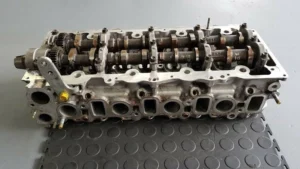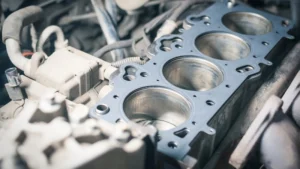
The Toyota 1KD-FTV engine has earned a strong reputation as a workhorse diesel — powering Hilux Surf, Land Cruiser Prado, HiAce, and Fortuner models across dozens of markets worldwide. However, experienced mechanics and fleet operators know that this engine carries a well-documented Achilles heel: cylinder head cracking and premature failure.
If you’re managing a commercial fleet, running a workshop, or sourcing replacement parts at scale, understanding the root causes and early warning signs of 1KD cylinder head failure is critical. Catching these issues early can mean the difference between a straightforward repair and a full engine rebuild — or worse, a vehicle written off entirely.
This guide covers the most common symptoms, the underlying causes, and what to look for when inspecting or sourcing a replacement 1KD cylinder head.
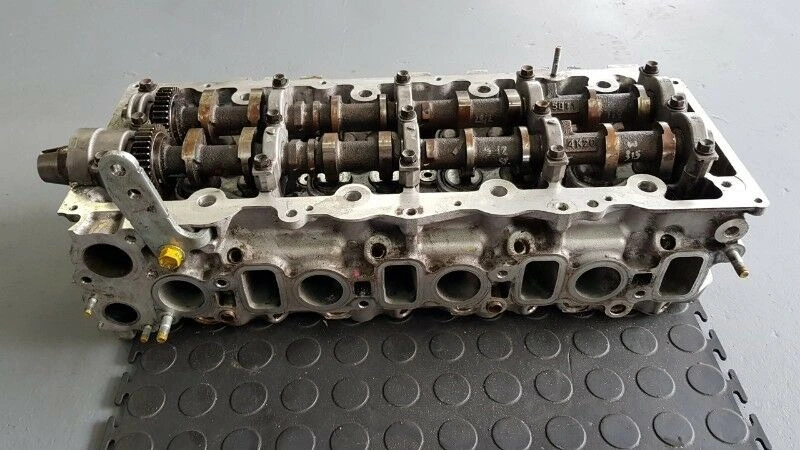
Why the 1KD Cylinder Head Is Prone to Cracking
The 1KD-FTV is a 3.0-litre turbocharged common rail direct injection diesel engine. First introduced in 2002, early variants (particularly those produced before 2010) used an aluminium cylinder head design that, under certain operating conditions, proved to be thermally stressed beyond its design limits.
Several factors contribute to this vulnerability:
- High combustion temperatures combined with common rail injection pressures — The 1KD operates at significantly higher injection pressures than older indirect injection diesels. This generates intense localised heat, especially around the pre-chamber area between cylinders 3 and 4, which is the most commonly reported cracking zone.
- Coolant system weaknesses — Early 1KD engines used a coolant formulation that degraded faster than expected. When coolant loses its anti-corrosion properties, internal corrosion of the water jacket accelerates, reducing heat transfer efficiency and causing localised overheating within the head casting.
- Inadequate EGR cooling — The exhaust gas recirculation system on the 1KD recirculates hot exhaust gases back into the intake to reduce emissions. Over time, EGR coolers on these engines are prone to failure, which can cause steam and combustion gases to enter the cooling circuit — accelerating head damage.
Toyota released a technical service bulletin (TSB) and later extended warranty coverage in several markets specifically to address these issues — which alone speaks to the scale and significance of the problem.
Common Symptoms of 1KD Cylinder Head Failure
1. White Smoke from the Exhaust
This is often the first and most visible symptom. White or grey smoke from the tailpipe — particularly during startup and under load — typically indicates coolant entering the combustion chamber through a cracked or warped cylinder head. Unlike blue smoke (oil burning) or black smoke (over-fuelling), persistent white smoke with a sweet smell strongly points to coolant combustion.
What to look for: White smoke that does not clear after the engine reaches normal operating temperature. In cold climates, some white vapour on startup is normal condensation — the concern is smoke that continues once the engine is warm.
2. Coolant Loss Without Visible External Leaks
If you’re regularly topping up the coolant reservoir but cannot find any external leak point — no puddles under the vehicle, no weeping hose connections, no radiator drips — the coolant is almost certainly going internally. It’s either being burned through the combustion chamber (white smoke) or leaking into the oil system.
What to look for: A consistently dropping coolant level combined with clean undercarriage and no external leak evidence.
3. Milky or Contaminated Engine Oil
When coolant mixes with engine oil, it creates a milky, frothy, or chocolate-coloured sludge. This is one of the most serious symptoms because it means the oil has lost its lubricating properties entirely. Running an engine in this condition will accelerate wear across every bearing surface in the bottom end.
What to look for: Remove the oil filler cap and inspect the underside. A creamy, mayonnaise-like deposit is a clear indicator of coolant contamination. Also check the dipstick — oil that appears thick, foamy, or greyish warrants immediate investigation.
4. Overheating or Elevated Coolant Temperature
A cracked cylinder head can cause coolant to leak internally into the combustion chamber or externally into the engine bay. Either way, the cooling system loses capacity and the engine begins to overheat. The temperature gauge climbing toward the red, or the dashboard warning light illuminating, should never be ignored on a 1KD.
What to look for: Temperature gauge sitting higher than usual, especially under load (towing, steep inclines, sustained highway speeds). Repeated overheating events significantly accelerate head warping and cracking.
5. Loss of Power and Rough Running
A crack between cylinders — or between a cylinder and a coolant passage — compromises compression. The affected cylinder(s) contribute less to power output, resulting in noticeable power loss, rough idle, and uneven throttle response. On a turbodiesel under load, this becomes especially apparent.
What to look for: Cylinder compression tests will typically reveal low compression (below 2,800 kPa or roughly 400 psi on a healthy 1KD) in one or more cylinders. A leakdown test can further pinpoint whether the leak path is through the head gasket or a crack in the casting itself.
6. Air Bubbles in the Coolant Reservoir
If combustion gases are escaping through a crack into the water jacket, they will pressurise the cooling system and push air bubbles into the expansion tank. This is a classic and reliable symptom of head failure.
What to look for: With the engine at operating temperature and the cap removed from the expansion tank (carefully, to avoid steam burns), observe whether bubbles are rising continuously — not just briefly after a rev, but persistently. A combustion gas test kit (block test / chemical test) can confirm the presence of exhaust gases in the coolant.
7. External Coolant Leaks from the Head Gasket Area
In some cases, a cracked 1KD cylinder head will cause the head gasket to fail at the same time, resulting in external coolant seeping from between the head and block. This typically appears as a crusty, dried coolant deposit along the engine block face or staining around head bolt positions.
What to look for: Brown or white mineral deposits on the engine exterior at the head-to-block interface. This is often more visible after the engine has cooled down.
Which Cylinders Are Most at Risk?
Based on documented failure patterns, the area between cylinders 3 and 4 (counting from the front of the engine) is the most common cracking location on the 1KD cylinder head. The crack typically originates near the glow plug seats or between the valve seats in that region, propagating through to the coolant passage.
However, cracks can also appear at the fire ring area around individual cylinders, particularly if the engine has been subjected to repeated overheating events.
How to Confirm a Cracked 1KD Cylinder Head
If the symptoms above are present, a systematic diagnostic approach is recommended:
- Compression test — identifies low compression cylinders
- Leakdown test — identifies where compression is escaping (into coolant, into adjacent cylinder, or externally)
- Chemical block test — detects combustion gases in the coolant
- Pressure test of the cooling system — identifies internal or external leaks under pressure
- Visual inspection of the head — once removed, use a Magnaflux dye penetrant test or pressure test the bare head to confirm crack location
In many cases, particularly on high-mileage or repeatedly overheated engines, the head may be warped beyond the manufacturer’s re-surfacing tolerance (typically 0.05 mm maximum warpage across the full length of the head on the 1KD). A warped head that cannot be machined flat must be replaced.
Sourcing a Replacement 1KD Cylinder Head
When the head is confirmed failed, sourcing the correct replacement is critical. The 1KD-FTV went through several revision stages over its production life. Key specifications to confirm when ordering a replacement head include:
- Engine code and production year — early and late 1KD heads have differences in casting and port geometry
- EGR configuration — some markets had different EGR setups which affects compatibility
- Injector seat design — ensure compatibility with the existing injector type
For fleet operators and workshops sourcing multiple units, OEM-equivalent or remanufactured heads with updated casting specifications (addressing the known thermal cracking weakness) offer a cost-effective alternative to brand-new OEM parts — provided they come from a reputable supplier with documented quality control.
Final Thoughts
The 1KD-FTV is an otherwise capable and proven diesel engine. Its cylinder head vulnerability is well-understood and manageable — provided operators and maintenance teams know what warning signs to watch for and act on them promptly. Ignoring early symptoms like unexplained coolant loss or persistent white smoke dramatically increases the risk of catastrophic engine failure and total loss.
For businesses sourcing 1KD cylinder heads — whether for workshop stock, fleet maintenance programmes, or resale — partnering with a supplier who understands the specific failure modes and revision history of this engine is essential to getting the right part the first time.
If you need technical specifications, custom supply arrangements, or bulk pricing on 1KD cylinder heads and related drivetrain components, contact our team for a professional consultation.