When a cylinder head fails, the cost is never just the part itself. It’s downtime, labor, delayed deliveries, and the cascading problems that follow. Whether you’re managing a fleet, running a repair shop, or overseeing procurement for an OEM operation, choosing among cylinder head manufacturers is a decision that carries real operational weight.
This guide breaks down what actually separates reliable manufacturers from the ones that look good on paper but fall short in practice — covering materials, quality standards, customization capabilities, lead times, and what questions to ask before you commit to a supplier.
What Cylinder Head Manufacturers Actually Do
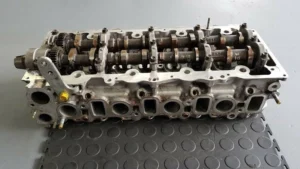
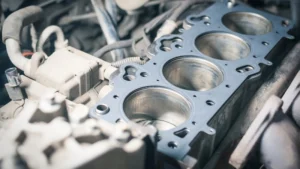
A cylinder head is the top section of an engine’s combustion chamber, housing the intake and exhaust valves, spark plugs or injectors, and coolant passages. It has to withstand extreme heat cycles, high pressure, and constant mechanical stress — often for hundreds of thousands of miles.
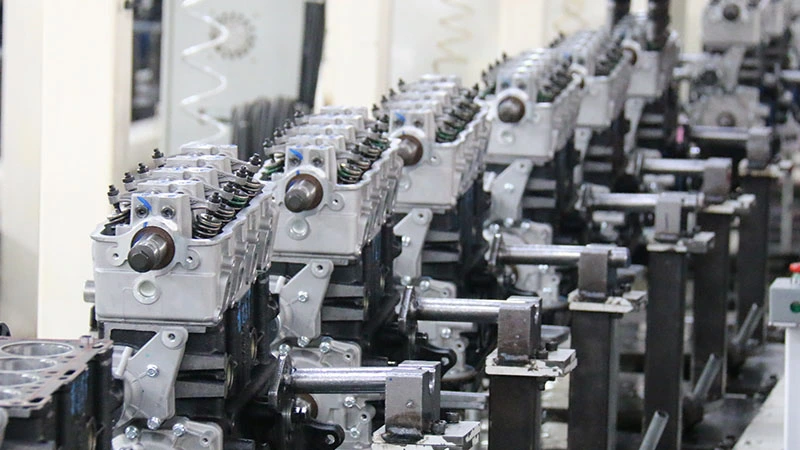
Manufacturers producing cylinder heads typically work in one of three categories, and understanding which applies to your situation is the first step toward finding the right partner:
- OEM-grade suppliers produce parts that meet or exceed original factory specifications, primarily serving vehicle makers and Tier 1 automotive suppliers
- Aftermarket producers focus on volume replacements at varied price and quality tiers, catering to repair shops and fleet operators
- Custom or factory fabricators handle application-specific builds — engine configurations not available through standard channels, such as industrial machinery, marine engines, or racing applications
Materials and Manufacturing Processes That Define Quality
The material a cylinder head is cast or forged from is one of the most telling indicators of its performance ceiling.
Cast iron remains common in heavy-duty diesel engines, agricultural machinery, and older industrial applications. It offers excellent durability and wear resistance but is heavier than aluminum alternatives. High-quality cast iron heads require controlled cooling after casting to prevent internal stress fractures — something that less rigorous manufacturers skip in favor of faster throughput.
Aluminum alloy dominates modern gasoline engines because of its superior heat dissipation and reduced weight. However, aluminum is more sensitive to improper manufacturing tolerances. Porosity — small air pockets trapped during casting — is a persistent problem with lower-quality aluminum heads that can lead to coolant leaks or compression loss under load.
Forged components are used in high-performance and racing applications where extreme pressure demands parts with tighter grain structure than casting can provide.
| Material | Common Applications | Key Advantage | Key Risk if Poorly Made |
|---|---|---|---|
|
Cast iron |
Heavy diesel, agricultural, industrial |
Durability, wear resistance |
Internal stress fractures from rushed cooling |
|
Aluminum alloy |
Modern gasoline engines |
Heat dissipation, light weight |
Porosity causing leaks or compression loss |
|
Forged alloy |
Racing, high-performance builds |
Tighter grain structure under pressure |
High cost if tolerances are off |
When evaluating cylinder head manufacturers, it is worth asking directly: what is your casting process, how do you control for porosity, and what post-casting inspections are performed before machining begins? Manufacturers confident in their process will have clear answers. Those who struggle to respond specifically are often relying on volume output rather than quality control.
Quality Standards and Certifications Worth Checking
Not every cylinder head manufacturer holds the same standards, and certifications are one of the more reliable ways to verify a supplier’s commitment to quality before you receive a single part.
ISO 9001 is the baseline. It certifies that a manufacturer has documented quality management systems in place — not that every part is perfect, but that consistent processes exist to catch and address defects. For B2B buyers, especially those sourcing internationally, ISO 9001 is a minimum bar worth insisting on.
IATF 16949 takes quality management further, specifically for automotive production suppliers. This standard addresses production consistency, measurement systems, and supplier chain management at a level appropriate for companies supplying to vehicle manufacturers or large Tier 1 automotive suppliers.
Beyond certifications, ask about their testing protocols. The following checks are indicators of a manufacturer that takes product quality seriously rather than treating inspection as a formality:
- Pressure testing assembled heads to detect leaks before shipment
- Dimensional inspection reports for critical valve seat and guide tolerances
- Hardness testing on wear surfaces
- Combustion chamber volume verification across a production batch
- Surface finish measurement on mating faces
Machining Precision: Why Tolerances Matter More Than You Think
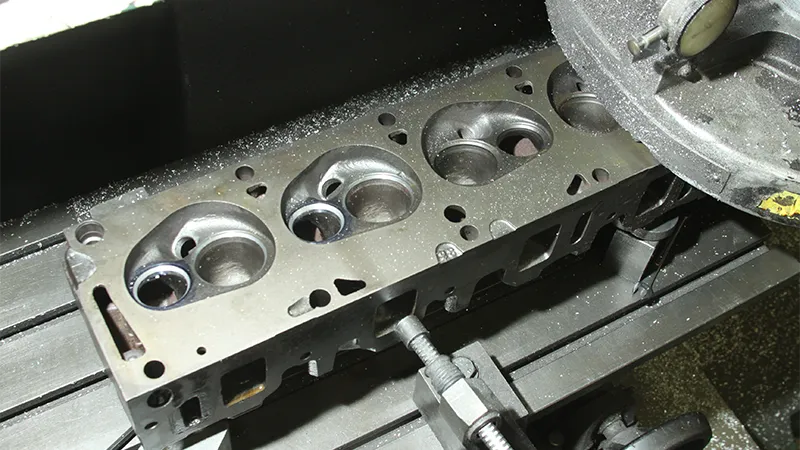
A cylinder head can be cast from excellent material and still perform poorly if the machining phase is handled carelessly. The following dimensions all require precision that directly determines how the head performs once installed:
- Valve seat concentricity — affects valve sealing and compression; off-center seats allow combustion gases to escape
- Deck surface flatness — a warped deck causes head gasket failure regardless of gasket quality
- Valve guide clearance — excessive clearance leads to oil consumption and valve stem wear
- Combustion chamber volume — variation between cylinders affects compression ratio consistency
- Port dimensions — mismatched ports disrupt airflow and reduce engine efficiency
Manufacturers using CNC machining centers with modern tooling and regular calibration of their measuring equipment consistently outperform those relying on older manual processes. Reputable cylinder head manufacturers will provide flatness specifications and inspection data on request — if a supplier cannot produce this documentation, that itself is a meaningful signal.
Customization Capabilities: When Standard Parts Are Not Enough
Some engine applications have no standard off-the-shelf solution. Agricultural machinery with proprietary engine configurations, specialized industrial generators, marine engines, and performance builds often require cylinder heads manufactured to customer specifications rather than catalog dimensions.
When evaluating a manufacturer’s custom capabilities, look at the following areas:
Engineering support
Engineering support is the starting point. A manufacturer that can work from your technical drawings and provide design feedback — pointing out potential machining challenges or material concerns before production begins — is a fundamentally different partner than one who simply machines to prints without review. That kind of collaboration reduces errors and improves end results.
Prototype production
Prototype production capability matters for applications where dimensional validation is required before full production run commitments. Manufacturers with the flexibility to produce a small sample batch for testing save buyers significant risk, particularly for applications where installation access is difficult or engine downtime is expensive.
Production volume range
Production volume range is worth understanding early. Some manufacturers are efficient at high-volume standardized production but struggle with small custom batches. Others specialize in short-run custom work but cannot scale if demand grows. Knowing where a manufacturer’s operational strengths lie helps match them to your actual requirement.
Lead Times and Supply Chain Reliability
For buyers managing production schedules or fleet maintenance programs, delivery reliability is often as important as price. A cylinder head at the right price that arrives three weeks late may cost more in downtime than a part priced higher from a supplier with dependable lead times.
Key factors to evaluate when assessing a manufacturer’s supply chain reliability:
- Quoted vs. actual lead times — ask for references from repeat buyers to verify whether stated timelines hold in practice
- Finished goods inventory — manufacturers who stock popular platforms can ship in days rather than weeks
- Export experience — competent international suppliers have organized export documentation, correct HS code classification, and established freight relationships
- Order tracking and communication — proactive updates on production status reduce uncertainty for the buyer
Be cautious with suppliers who give optimistic lead times during the inquiry phase but consistently push delivery dates once an order is placed. Checking references or reviews from buyers who have made repeat purchases gives a clearer picture of actual delivery performance.
Pricing Structures and What Drives the Differences
Cylinder head pricing varies considerably, and understanding what drives those differences prevents buyers from making purely price-based comparisons between parts that are not actually equivalent.
Raw material grade is the starting point — heads cast from higher-silicon aluminum alloy or superior iron grades cost more before machining even begins, and that difference is reflected in performance under sustained load. Machining complexity adds further cost: a head with multiple camshaft bores, complex port geometry, and tight dimensional tolerances requires more machine time, more tooling changes, and more inspection steps than a simpler design. Batch size also plays a role, as high-volume standard production runs carry a lower per-unit cost than short custom orders. Finally, quality inspection depth is a real cost driver — manufacturers running thorough dimensional checks and issuing inspection reports price accordingly, and that overhead is worth paying for.
Warranty terms deserve particular attention. A manufacturer offering a 12-month replacement warranty versus a competitor offering 90 days is signaling something about their confidence in the product. It is worth reading warranty terms carefully — specifically what is covered, what voids coverage, and what the return process actually requires.
Questions to Ask Cylinder Head Manufacturers Before Committing
Approaching a manufacturer with specific technical questions quickly separates capable suppliers from those who are primarily focused on winning the inquiry rather than delivering a suitable product. The following questions are worth asking before placing any order:
- Can you provide material certification documents with each shipment?
- What are your standard machining tolerances for valve seat concentricity and deck flatness?
- Do you issue dimensional inspection reports for individual orders?
- What is your process if a part arrives damaged or fails to meet specifications?
- Can you produce a prototype or sample batch before full production commitment?
- What certifications does your facility hold (ISO 9001, IATF 16949)?
- Do you have references from buyers in our industry or application type?
The quality of the answers — and specifically whether the responses are specific, consistent, and backed by documentation — tells you significantly more than a catalog or a price quote.
Working with a Factory Supplier vs. a Distributor
Buyers have the option of sourcing cylinder heads directly from the manufacturer or through a distribution layer. Both approaches have legitimate use cases, and the right choice depends on your volume, application, and operational setup.
| Direct Factory | Distributor | |
|---|---|---|
|
Pricing |
Better for larger or repeat volumes |
Markup applied, but often negotiable |
|
Lead time |
Longer for production runs |
Faster from existing inventory |
|
Custom capability |
Full engineering access |
Limited to what distributor stocks |
|
Logistics handling |
Buyer manages import and freight |
Distributor handles import and delivery |
|
Communication |
Direct with production team |
Intermediary layer |
|
Best suited for |
Repeat B2B buyers, custom orders |
Occasional purchases, urgent replacements |
For B2B buyers making repeated purchases or requiring custom work, establishing a direct relationship with a factory-level cylinder head manufacturer almost always delivers better long-term value.
Getting the Most from a Long-Term Supplier Relationship
The best outcomes in industrial parts sourcing come from relationships built on clear specifications, consistent communication, and mutual accountability. Cylinder head manufacturers who treat buyers as ongoing partners — rather than individual transactions — tend to offer more flexibility on lead times, more transparency about production scheduling, and more responsiveness when quality issues do arise.
To build a productive supplier relationship from the start:
- Provide complete and detailed technical specifications upfront, including tolerances, material requirements, and application context
- Communicate volume expectations clearly, even if initial orders are small
- Give consistent feedback on received parts — both positive and where issues arise
- Establish a single point of contact on both sides for cleaner communication
- Review performance periodically rather than waiting for a problem to prompt a conversation
Manufacturers who know what you need, and who understand that consistent performance means continued business, have every incentive to prioritize your orders and resolve issues quickly.
If you are sourcing cylinder heads and want to work directly with a factory — whether for standard replacement parts or custom specifications — Xinjin Auto Parts is ready to help. We manufacture engine components and offer flexible solutions for B2B buyers. Contact us to discuss your requirements.