Aftermarket vs OEM Cylinder Head: Which One Should You Choose for Your Market?

Table of Contents

In today’s global automotive parts industry, sourcing the right cylinder head is no longer just a technical decision—it’s a strategic one. Whether you serve repair shops, distributors, or fleet operators, your choice between aftermarket and OEM cylinder heads directly impacts pricing, performance expectations, customer satisfaction, and ultimately, your market competitiveness.
For B2B buyers, understanding the real differences between aftermarket and OEM cylinder heads is critical. This guide breaks down those differences in practical terms, helping you determine which option aligns best with your target market, product positioning, and long-term business goals.
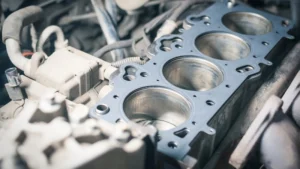
aftermarket cylinder head

What Is an OEM Cylinder Head?

An OEM (Original Equipment Manufacturer) cylinder head is produced either by the original vehicle manufacturer or by an authorized supplier following strict factory specifications.
These cylinder heads are identical—or nearly identical—to the components installed in vehicles during initial production. They are designed to meet exact tolerances, material standards, and performance benchmarks defined by the automaker.

Key Characteristics of OEM Cylinder Heads

  • Manufactured according to original factory blueprints
  • Typically higher in cost due to branding and supply chain layers
  • Consistent fitment and performance reliability
  • Often distributed through authorized dealer networks
  • Limited flexibility in customization
For many buyers, OEM cylinder heads represent the “safe choice,” particularly in markets where reliability and brand trust outweigh cost considerations.

What Is an Aftermarket Cylinder Head?

An aftermarket cylinder head is produced by third-party manufacturers rather than the original vehicle brand. These components are engineered to replace OEM parts, but they can vary significantly in quality, materials, and performance depending on the manufacturer.
Contrary to outdated assumptions, modern aftermarket cylinder heads are not necessarily inferior. In fact, many are engineered to match or even exceed OEM specifications, especially when produced by experienced manufacturers with advanced machining and quality control systems.

Key Characteristics of Aftermarket Cylinder Heads

  • Produced by independent manufacturers
  • Wide range of quality levels (from budget to premium)
  • Competitive pricing and better margins
  • Greater flexibility in design and customization
  • Availability across a broader range of vehicle models
For B2B buyers, aftermarket cylinder heads often offer a more scalable and profitable solution—if sourced from the right supplier.

Aftermarket vs OEM Cylinder Head

Understanding the technical and commercial differences between these two options is essential for making informed purchasing decisions.

1. Price Structure and Profit Margins

OEM cylinder heads are typically more expensive due to:
  • Brand premiums
  • Licensing costs
  • Multi-layer distribution channels
In contrast, aftermarket cylinder heads are usually more cost-effective because they are produced and sold directly by manufacturers or through streamlined supply chains.
For distributors and wholesalers, this translates into:
  • Higher profit margins
  • More competitive pricing in local markets
  • Greater flexibility in bulk purchasing

2. Quality and Manufacturing Standards

A common misconception is that OEM always equals higher quality. While OEM parts are consistent, high-quality aftermarket manufacturers can achieve similar—or even better—results through:
  • CNC precision machining
  • Advanced casting technologies
  • Strict quality inspection processes
  • Improved material selection

The key variable is not “OEM vs aftermarket,” but rather the capability of the manufacturer behind the product.

3. Availability and Lead Time

OEM cylinder heads often face supply limitations, especially for:
  • Older vehicle models
  • Discontinued engines
  • Regional variants
Aftermarket suppliers, on the other hand, are more agile. They can:
  • Produce parts for a wider range of applications
  • Offer shorter lead times
  • Maintain flexible inventory systems

This is particularly valuable for markets in Southeast Asia, the Middle East, Africa, and Latin America, where vehicle diversity is high and demand for replacement parts is strong.

4. Customization Capabilities

OEM parts are standardized by definition. There is little to no room for modification.
ftermarket manufacturers can offer:
  • Material upgrades (e.g., improved aluminum alloys)
  • Design optimizations for durability
  • Adaptations for specific working conditions (heat, load, fuel quality)
  • Branding and packaging customization
For B2B buyers building their own brand or targeting niche markets, this flexibility is a significant advantage.

5. Market Perception and Customer Trust

In some regions—particularly in North America and Europe—OEM parts are often associated with reliability and warranty compliance.
However, in many developing and price-sensitive markets:
  • Aftermarket parts dominate
  • Buyers prioritize cost-performance balance
  • Brand loyalty is less rigid
Understanding your customer base is essential. What works in one market may not translate effectively to another.
Criteria OEM Cylinder Head Aftermarket Cylinder Head
Price
Higher due to brand premium and distribution layers
More competitive, factory-direct pricing
Profit Margin
Lower for distributors
Higher margin potential for B2B buyers
Quality Consistency
Highly consistent, factory-controlled
Varies by manufacturer, high-quality options available
Manufacturing Standards
Strict OEM specifications
Can match or exceed OEM depending on supplier
Availability
Limited for older or discontinued models
Wider availability across various engine models
Lead Time
Longer due to supply chain complexity
Shorter, more flexible production cycles
Customization
Not available
Not available
Market Perception
Strong trust in developed markets
Widely accepted in price-sensitive markets
Application Flexibility
Fixed specifications
Adaptable to different operating conditions

When to Choose OEM Cylinder Head?

OEM cylinder heads are best suited for specific scenarios where consistency and brand alignment are critical.

Ideal Use Cases

  • Authorized repair centers and dealerships
  • Warranty-sensitive repairs
  • High-end or luxury vehicle segments
  • Customers who prioritize brand authenticity
In these cases, the higher cost of OEM parts is justified by customer expectations and service requirements.

When to Choose Aftermarket Cylinder Head?

For most B2B buyers, aftermarket cylinder heads offer greater commercial advantages, especially when sourced from reliable manufacturers.

Ideal Use Cases

  • Independent distributors and wholesalers
  • Export businesses targeting multiple regions
  • Fleet maintenance operations
  • Price-sensitive markets
  • Companies building private-label brands
The ability to control cost, customize products, and scale supply makes aftermarket cylinder heads the preferred choice in these scenarios.

How to Evaluate Aftermarket Cylinder Head Suppliers

Choosing aftermarket does not mean compromising on quality—it means being more selective about your supplier.

1. Manufacturing Capabilities

Look for manufacturers with:
  • Advanced casting facilities
  • CNC machining centers
  • Precision measurement systems
These directly impact the dimensional accuracy and durability of the cylinder head.

2. Quality Control Systems

A reliable supplier should implement:
  • Pressure testing
  • Crack detection
  • Surface finish inspection
  • Material composition analysis
Consistency is critical, especially for bulk orders.

3. Product Range and Compatibility

A strong supplier should cover:
  • Popular global engine models
  • Multiple vehicle brands (Toyota, Ford, Nissan, etc.)
  • Both gasoline and diesel applications
This allows you to expand your product catalog efficiently.

4. Customization and OEM Service

Even though you are sourcing aftermarket parts, a capable manufacturer should offer:
  • OEM-level production standards
  • Custom branding options
  • Flexible packaging solutions
This is particularly important if you are developing your own brand.

5. Logistics and Export Experience

For international buyers, logistics is just as important as product quality. Evaluate:
  • Export documentation support
  • Packaging standards for long-distance shipping
  • Lead time reliability
A supplier experienced in global trade will reduce operational risks.

In summary, selecting the right aftermarket cylinder head supplier requires a balance of manufacturing capability, quality control, product range, and global supply experience. XinJin Auto Parts meets these key criteria with stable production quality, competitive pricing, and flexible customization options. You can explore our full lineup of cylinder heads here: Cylinder Head Products. If you are evaluating reliable long-term suppliers, feel free to contact us for more information.

Common Misconceptions About Aftermarket Cylinder Heads

“Aftermarket means low quality”

This is one of the most widespread misconceptions. In reality, the quality of aftermarket cylinder heads varies depending on the manufacturer, not the category itself.
Established manufacturers with advanced casting, CNC machining, and strict inspection processes can produce cylinder heads that meet—or even exceed—OEM standards. The key is supplier selection, not whether the part is labeled “aftermarket.”

“OEM is always the safest choice”

OEM parts are often perceived as the most reliable option, but this is not always the full picture.
In some cases, OEM supply chains include remanufactured or rebuilt cylinder heads, especially for older or discontinued models. These components are restored to working condition to reduce costs, which may result in variability in performance depending on the refurbishment process.
By comparison, high-quality aftermarket cylinder heads are typically brand-new products, offering more consistent material integrity and structural reliability.

“Aftermarket parts don’t last as long”

Durability is determined by engineering design, material selection, and manufacturing precision—not whether a part is OEM or aftermarket.
Many aftermarket manufacturers optimize their products based on real-world operating conditions, such as:
  • Higher thermal resistance
  • Improved alloy composition
  • Reinforced structural design
As a result, some aftermarket cylinder heads can deliver equal or even better service life in demanding environments.

“Aftermarket parts have poor fitment”

Fitment issues are usually associated with low-quality suppliers, not aftermarket products as a whole.
Reputable manufacturers follow OEM specifications closely and use precision machining to ensure proper alignment, sealing, and compatibility. In many cases, aftermarket cylinder heads are designed with improved tolerances to address known weaknesses in original designs.

“Aftermarket options lack consistency in bulk orders”

Consistency is a valid concern for B2B buyers—but again, this depends on the supplier’s production system.
Professional aftermarket manufacturers implement:
  • Standardized production workflows
  • Batch-level quality control
  • Pressure and leak testing
  • Traceable inspection records
With these systems in place, bulk orders can achieve a high level of consistency, making aftermarket cylinder heads suitable for distributors, wholesalers, and large-scale projects.

Final Thoughts

The decision between aftermarket and OEM cylinder heads is not about which is universally better—it’s about which is better for your business model and target market.

If your priority is brand alignment and guaranteed consistency, OEM may be the right choice. But if you are focused on scalability, cost control, and market adaptability, aftermarket cylinder heads offer a more strategic advantage.

For most B2B buyers operating in competitive and diverse markets, partnering with a reliable aftermarket manufacturer is the key to long-term growth.

At XinJin Auto Parts, we manufacture high-quality aftermarket cylinder heads with stable performance, competitive pricing, and customization support. As a factory, we ensure consistent supply for global markets. If you are sourcing cylinder heads, feel free to contact us: https://www.engineassy.com/contact-us/
Related Post

Leave a Comment

Your email address will not be published. Required fields are marked *

Scroll to Top

Get Your Quote Now

    Get Your Quote Now