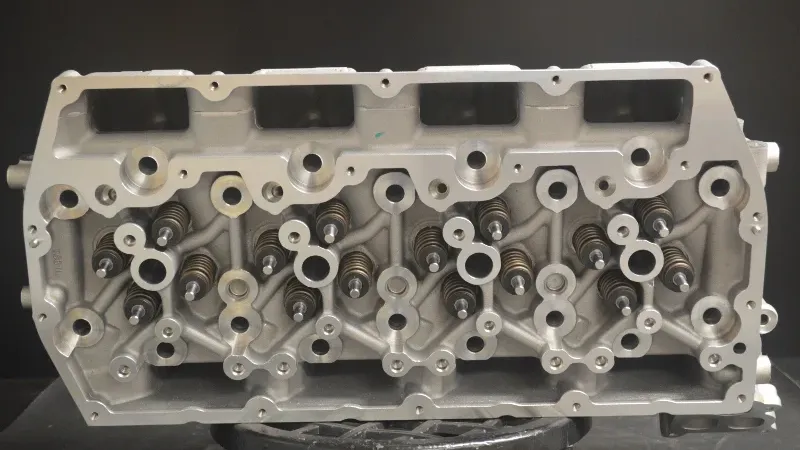
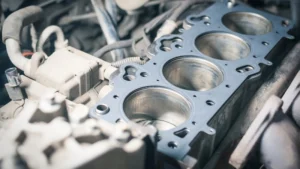
If you operate heavy machinery, manage a commercial fleet, or work closely with diesel-powered equipment, you already know how critical the engine head is to overall performance. The cylinder head sits at the top of the engine block, housing the intake and exhaust valves, the combustion chamber, and in many designs, the camshaft. It is, in short, one of the most mechanically stressed components in a diesel engine. When it begins to fail, the consequences rarely stay contained.
The problem is that diesel engine head failure does not always announce itself with a sudden breakdown. More often, it develops gradually over thousands of operating hours, presenting early symptoms that are easy to dismiss or misattribute. By the time the failure becomes undeniable, significant secondary damage may have already occurred. Recognizing the warning signs early is the difference between a manageable repair and a complete engine overhaul.
This article covers seven of the most reliable indicators that your diesel engine head is heading toward failure, along with what each symptom means mechanically and how to respond.
White smoke coming from the exhaust is one of the earliest and most telling signs of diesel engine head trouble. While light white smoke at startup during cold weather can be normal, persistent white smoke that continues once the engine has reached operating temperature is a red flag.
The underlying cause is almost always coolant entering the combustion chamber. When the cylinder head develops a crack or the head gasket fails, coolant can seep past the sealing surface and into the cylinder. During combustion, that coolant vaporizes and exits through the exhaust as white or grayish-white smoke. In many cases, you will also detect a faintly sweet smell, which comes from the ethylene glycol in the coolant burning off.
If you notice this symptom, do not continue running the engine and hope it resolves on its own. Coolant in the combustion chamber does not just affect power output. It strips lubrication from cylinder walls and can cause hydraulic lock, a condition where liquid accumulates in the cylinder and, because liquid cannot compress, causes catastrophic internal damage when the piston attempts to complete its stroke.
You check the coolant reservoir and it is consistently low. You inspect the hoses, radiator, water pump, and every accessible fitting, but nothing is visibly leaking. This scenario is more common than it sounds, and it points directly toward an internal failure rather than an external one.
When a diesel engine head cracks or the head gasket begins to fail, coolant can leak internally into the combustion chamber, the oil passages, or the intake manifold. None of these leak paths are visible from the outside. The coolant simply disappears.
A useful diagnostic step is to perform a combustion gas test on the coolant reservoir. If exhaust gases are present in the coolant, it confirms that combustion gases are crossing into the cooling system through a failed sealing surface, which means the inverse is also happening: coolant is entering the combustion side. Additionally, inspect the oil dipstick. If the oil appears milky, foamy, or has a chocolate-milk texture, coolant and oil have mixed, a condition that accelerates bearing wear and can destroy engine internals within a relatively short operating period.
An engine that runs hot is not unusual. Thermostats fail, cooling fans stop working, and radiators get clogged. But when you address these issues and the overheating returns without a clear new cause, the diesel engine head itself deserves serious attention.
A warped or cracked cylinder head disrupts the engine’s cooling circuit in ways that standard repairs cannot fix. Coolant passages within the head may be partially blocked by corrosion, warping, or debris from internal deterioration. Warping along the deck surface also prevents the head from sealing properly against the engine block, allowing combustion gases to escape into the cooling system and displace coolant, which reduces the system’s ability to transfer heat.
Another mechanism worth understanding: a head gasket failure between a water jacket and a combustion chamber allows high-pressure exhaust gases to enter the coolant. Those gases cannot absorb heat the way liquid coolant can, so overall cooling efficiency drops even when the cooling system components themselves are fully functional.
If your diesel engine continues to overheat after a thorough check of all conventional cooling system components, a pressure test and a visual inspection of the head surface for warping should be the next step.
Pull the oil dipstick or remove the oil filler cap, and if you see oil that looks milky, foamy, or significantly lighter than its normal dark color, coolant contamination is almost certainly the cause. This is a serious warning sign that should prompt immediate action.
Under normal operating conditions, the oil and coolant in a diesel engine travel through completely separate passages. When a head gasket fails or the head cracks between an oil gallery and a coolant passage, those two fluids begin to mix. Coolant is primarily water-based, and water has no lubricating properties. As the contamination progresses, the oil’s viscosity and film strength degrade, which means the bearings, valve train, and other precision surfaces are no longer receiving adequate protection.
It is worth noting that milky oil can occasionally result from condensation in engines that are frequently run for short periods without reaching full operating temperature. However, in a diesel engine used for commercial or industrial applications, this is rarely the explanation. In those contexts, milky oil almost always means internal coolant intrusion, and the diesel engine head is the most likely source.
Diesel engines are valued for their torque and pulling power. When an engine that previously handled load well starts to feel sluggish, struggles to maintain speed on grades, or requires more throttle input to do the same work, something has compromised the combustion cycle.
A failing diesel engine head can contribute to power loss in several ways. Cracked combustion chamber surfaces reduce the ability to contain combustion pressure, meaning energy that should be driving the piston downward is being lost. Warping of the head surface can cause valves to seat improperly, leading to compression leaks. Damaged valve seats or deteriorated valve guides allow combustion gases to escape during the power stroke.
A compression test and a leak-down test are the standard diagnostic tools here. A compression test tells you the peak pressure being generated in each cylinder. A leak-down test goes further by pressurizing each cylinder and measuring how quickly that pressure drops, which can also help identify whether the loss is coming from the valves, the rings, or the head gasket.
Open the coolant reservoir while the engine is at operating temperature (carefully, as the system is pressurized) and observe the coolant. Under normal circumstances, you may see slight movement, but the coolant should not be actively bubbling or gurgling.
If you see consistent bubbling, or if the overflow hose is expelling coolant that is not the result of a simple overfill, combustion gases are entering the cooling system. This happens when the head gasket fails in a location that allows the high-pressure gases from the combustion chamber to push into the adjacent coolant passage.
This symptom is significant for two reasons. First, it confirms internal failure of the sealing surface rather than an external leak. Second, the gases entering the coolant carry combustion byproducts that accelerate corrosion within the cooling system and can damage the radiator, heater core, and other aluminum components over time.
A thorough visual inspection of the diesel engine head exterior can reveal problems that have not yet produced obvious performance symptoms. Run your hand along the head surface, check the area around head bolts, and look at the gasket line between the head and the block.
External oil seepage at the head gasket line often indicates that the gasket is beginning to fail. While a small amount of seepage at very high mileages may be monitored without immediate intervention, an active leak requires attention before it progresses. Oil on a hot exhaust manifold is also a fire hazard in enclosed operating environments.
Carbon deposits concentrated in specific areas on the combustion face of the head, visible during a valve or injector service, can point to localized hot spots caused by cooling passage blockages or surface cracks. Cracks themselves are not always visible to the naked eye, but dye penetrant testing or magnetic particle inspection, both standard workshop procedures, can reveal hairline cracks in the casting before they develop into through-cracks.
For equipment that has been in service for extended periods, cylinder head inspection should be part of a scheduled maintenance program rather than a reactive measure. The cost of inspecting and resurfacing a head at the appropriate interval is a fraction of what an undetected failure costs in downstream engine damage.
If your diesel engine is showing one or more of the warning signs described above, the recommended course of action is straightforward. Stop operating the engine under load, especially if overheating or coolant loss is present. Continuing to run a diesel with an internal coolant leak or a compromised combustion seal compresses the timeline for catastrophic damage significantly.
Have the engine inspected by a qualified diesel technician who can perform a compression test, leak-down test, combustion gas check, and visual inspection of the head surface for warping and cracking. If the head requires replacement, sourcing a quality component from a reputable manufacturer is not a step to shortcut. Cylinder head tolerances in modern diesel engines are precise, and a substandard replacement part introduces new failure modes rather than solving the original problem.