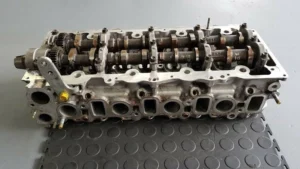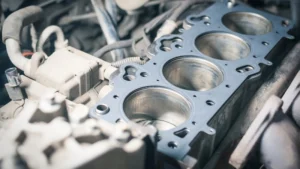
When it comes to serious engine performance, few components influence power output as directly as the cylinder head. In any cylinder head racing build—whether for drag strips, circuit tracks, drifting, or high-boost street applications—the cylinder head largely determines how efficiently air enters and exits the combustion chamber. That airflow efficiency translates directly into horsepower, torque, throttle response, and high-RPM stability.
Many engine builders focus heavily on bottom-end strength or turbo selection, yet overlook the fundamental airflow architecture that governs the entire combustion process. A properly engineered racing cylinder head is not simply a modified stock casting. It is a carefully designed airflow system optimized for volumetric efficiency, combustion stability, and thermal management under extreme conditions.
If you are evaluating a cylinder head for racing, the following five features should be at the top of your checklist.

1. Optimized Port Design and Airflow Efficiency
In any cylinder head racing application, airflow is the foundation of power. The intake and exhaust ports act as controlled pathways for air and combustion gases. Their shape, size, cross-sectional area, and surface finish directly affect airflow velocity and volume.
Port Size vs. Port Velocity
A common misconception is that larger ports always produce more power. In reality, excessively large ports may reduce air velocity at lower engine speeds, weakening throttle response and mid-range torque. Racing engines must balance airflow volume (measured in CFM on a flow bench) with airspeed.
For example:
- Drag racing engines operating at sustained high RPM may benefit from larger intake ports optimized for peak airflow.
- Road racing engines often require a balanced approach, preserving mid-range torque for corner exit acceleration.
Well-designed ports maintain smooth transitions, minimal turbulence, and consistent cross-sectional geometry. CNC porting has become common in high-performance cylinder head racing builds because it ensures repeatable precision and uniform airflow characteristics across cylinders.
Exhaust Port Efficiency
Exhaust flow is equally critical. A restrictive exhaust port traps residual gases in the combustion chamber, reducing efficiency and increasing heat retention. High-performance heads often feature reshaped exhaust runners that improve scavenging and reduce backpressure.
When evaluating a racing cylinder head, always review airflow data across multiple valve lifts, not just peak numbers. Real-world engine performance depends on flow consistency throughout the camshaft’s lift range.
2. Combustion Chamber Design and Compression Control
The combustion chamber is where air and fuel convert into power. Its geometry affects flame propagation, detonation resistance, and thermal efficiency. In cylinder head racing builds, combustion chamber design must align with the engine’s intended compression ratio and fuel type.
Chamber Shape and Flame Travel
Modern racing heads often feature optimized chamber contours that:
- Promote faster flame travel
- Reduce detonation risk
- Improve mixture homogenization
- Enhance burn efficiency at high RPM
Compact, well-contoured chambers help concentrate the air-fuel mixture near the spark plug, allowing more complete combustion.
Compression Ratio Compatibility
Compression ratio is central to racing performance. Naturally aspirated builds often rely on higher compression ratios to maximize power. Turbocharged and supercharged engines require chamber designs that balance compression with boost pressure to prevent knock.
Before selecting a racing cylinder head, confirm:
- Chamber volume (cc rating)
- Piston compatibility
- Fuel octane requirements
- Intended boost levels (if applicable)
A mismatch between chamber design and bottom-end configuration can limit performance or compromise reliability.
3. High-Strength Valve Train Components
At elevated engine speeds, the valve train becomes a critical reliability factor. Valve float, spring fatigue, or retainer failure can quickly destroy an otherwise well-built racing engine.
A quality cylinder head racing configuration typically includes upgraded components designed for sustained high RPM operation.
Larger Valves and Performance Materials
Racing cylinder heads often incorporate:
- Larger intake and exhaust valves
- Stainless steel or titanium valves
- Hardened valve seats
- Upgraded valve guides
Larger valves increase airflow capacity, while stronger materials resist deformation and heat damage.
Valve Springs and Retainers
The valve spring assembly must match the camshaft profile. Aggressive cam lift and duration require higher spring pressure to prevent valve float. However, excessive pressure increases wear and friction.
Premium racing cylinder heads often include:
- Dual or triple valve springs
- Chromoly or titanium retainers
- Precision-machined spring seats
The goal is stability at high RPM without sacrificing durability.
4. Material Construction and Heat Management
Racing environments generate significantly more heat than standard street applications. Effective heat dissipation ensures stable combustion and reduces the risk of detonation.
Aluminum vs. Cast Iron
Most modern racing cylinder head applications favor aluminum castings. Aluminum offers:
- Superior heat transfer
- Reduced weight
- Improved detonation resistance
Cast iron, while durable, retains more heat and is typically reserved for specific heavy-duty builds.
Cooling Passage Design
Beyond material selection, internal coolant routing is critical. Efficient cooling passages prevent hot spots around exhaust valves and combustion chambers.
When evaluating a cylinder head for racing, consider:
- Coolant flow distribution
- Deck surface thickness
- Reinforced areas near high-stress zones
- Resistance to warping under thermal load
High-quality castings maintain structural integrity under repeated heat cycles, which is essential for endurance racing or high-boost engines.
5. Machining Precision and Assembly Quality
Even the best design is ineffective without precise manufacturing. Cylinder head racing performance depends heavily on machining tolerances and assembly accuracy.
Surface Finish and Deck Flatness
Improper deck finish can lead to head gasket failure. Racing engines often operate at higher cylinder pressures, making sealing integrity critical.
Key machining factors include:
- Deck flatness within tight tolerances
- Accurate valve seat concentricity
- Proper guide alignment
- Balanced chamber volumes across cylinders
CNC Consistency
CNC-machined heads provide repeatable airflow characteristics, ensuring that each cylinder performs equally. Uneven port flow between cylinders can result in imbalanced combustion and reduced efficiency.
When comparing options, prioritize documented quality control standards and proven production consistency.
Matching the Cylinder Head to Your Racing Application
Not all racing cylinder heads serve the same purpose. The optimal configuration depends on your engine architecture and competition environment.
Naturally Aspirated Builds
These engines rely heavily on airflow efficiency and compression. Look for:
- High-flow intake ports
- Optimized combustion chamber volume
- Aggressive valve sizing
- Lightweight valve train components
Turbocharged and Supercharged Applications
Forced induction engines demand:
- Reinforced casting strength
- Efficient exhaust flow
- Controlled chamber design for knock resistance
- Robust cooling architecture
Endurance Racing
Durability becomes as important as peak power. Prioritize:
- Stable valve train geometry
- Efficient heat management
- Balanced airflow characteristics
- Reliable sealing surfaces
Choosing a cylinder head without considering the broader engine system often leads to compromised performance. A racing head must function as part of an integrated powertrain strategy.
Common Mistakes in Cylinder Head Racing Builds
Understanding what to avoid is just as important as knowing what to seek.
- Oversized ports without considering RPM range
- Mismatched camshaft and valve spring combinations
- Ignoring cooling capacity under sustained load
- Selecting components based solely on peak flow numbers
- Failing to balance chamber volumes across cylinders
Each of these mistakes can limit performance gains or shorten engine lifespan.
Why the Cylinder Head Defines Racing Performance
In many ways, the cylinder head acts as the “brain” of the engine’s airflow system. It controls intake charge efficiency, combustion dynamics, exhaust evacuation, and thermal stability.
A well-engineered cylinder head racing setup delivers:
- Higher volumetric efficiency
- Stronger throttle response
- Improved high-RPM stability
- Greater detonation resistance
- More consistent lap-to-lap performance
Rather than viewing the cylinder head as a simple component upgrade, it should be treated as a precision airflow platform tailored to your specific racing goals.
Final Thoughts
Selecting the right cylinder head for racing requires more than comparing advertised horsepower gains. Port design, combustion chamber geometry, valve train strength, material construction, and machining precision all contribute to real-world results.
When these five features align with your engine’s configuration and competition demands, the cylinder head becomes a decisive advantage rather than just another part in the build.
If you are sourcing high-performance cylinder heads for racing applications, XinJin Auto Parts is a factory supplier with manufacturing experience in precision engine components. For technical inquiries or bulk orders, please contact us at: https://www.engineassy.com/contact-us/