What Is a Crate Engine?

If you have ever searched for a convenient way to replace or upgrade an engine, you have likely come across the term “crate engine.” It appears frequently in discussions about performance builds, restorations, fleet maintenance, and even daily-driver repairs. But what is a crate engine, exactly? How does it differ from a rebuilt engine or a long block? And when does it make financial and technical sense to choose one?
This guide provides a detailed explanation of crate engines, how they are built, what they include, and how to determine whether they are the right solution for your vehicle or business.

What Is a Crate Engine?
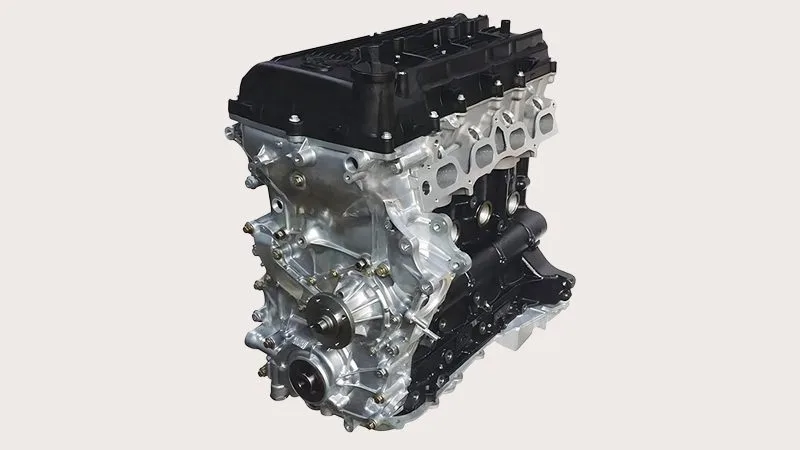
A crate engine is a complete, factory-assembled engine that is shipped in a crate, ready to be installed into a vehicle. Unlike used engines pulled from salvage vehicles or locally rebuilt units, crate engines are typically brand-new or professionally remanufactured under controlled manufacturing conditions.
They are called “crate” engines simply because they are packaged in wooden or metal crates to protect them during shipping. The term does not refer to a specific design; it describes the method of packaging and distribution.
Crate engines are commonly offered by original manufacturers such as General Motors, Ford Motor Company, and Stellantis, as well as by independent performance and aftermarket engine builders.
Toyota-2TR-crate-engine

What Does a Crate Engine Include?

The contents of a crate engine depend on the specification and the supplier. In general, they fall into three main categories:

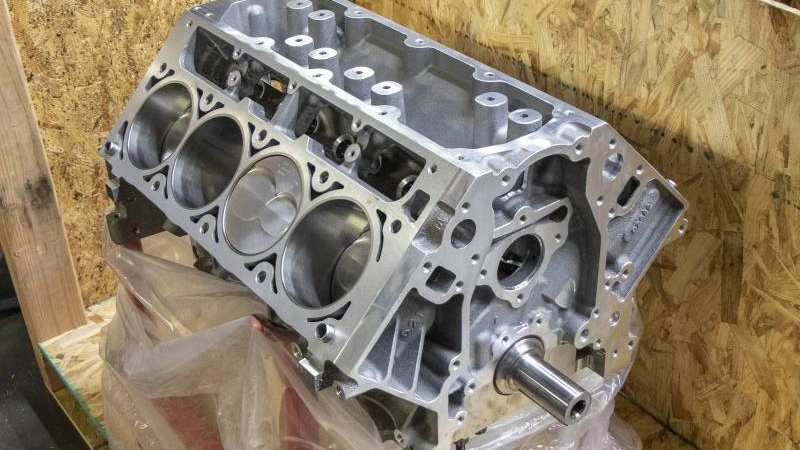
1. Short Block Crate Engine

A short block typically includes:
  • Engine block
  • Crankshaft
  • Connecting rods
  • Pistons
  • Bearings

It does not include the cylinder head, valvetrain, intake system, or external accessories.

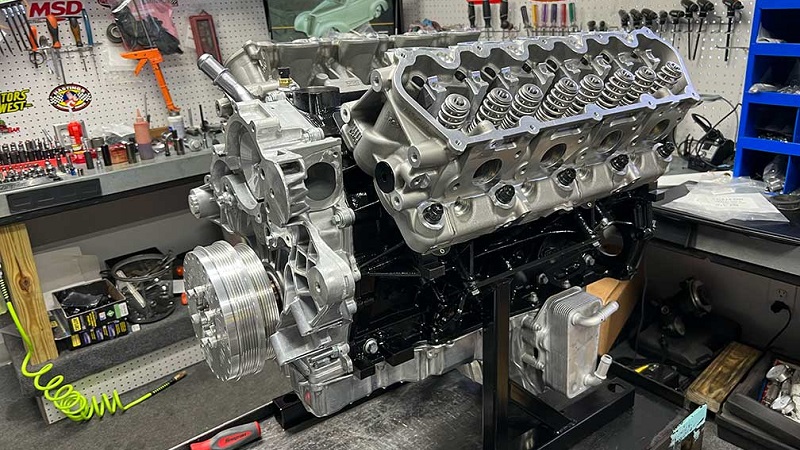
2. Long Block Crate Engine

A long block usually includes:
  • Engine block
  • Rotating assembly
  • Cylinder head(s)
  • Camshaft(s)
  • Valvetrain components
  • Timing components
However, it often excludes:
  • Intake manifold
  • Fuel system
  • Exhaust manifold
  • Alternator, starter, and other accessories

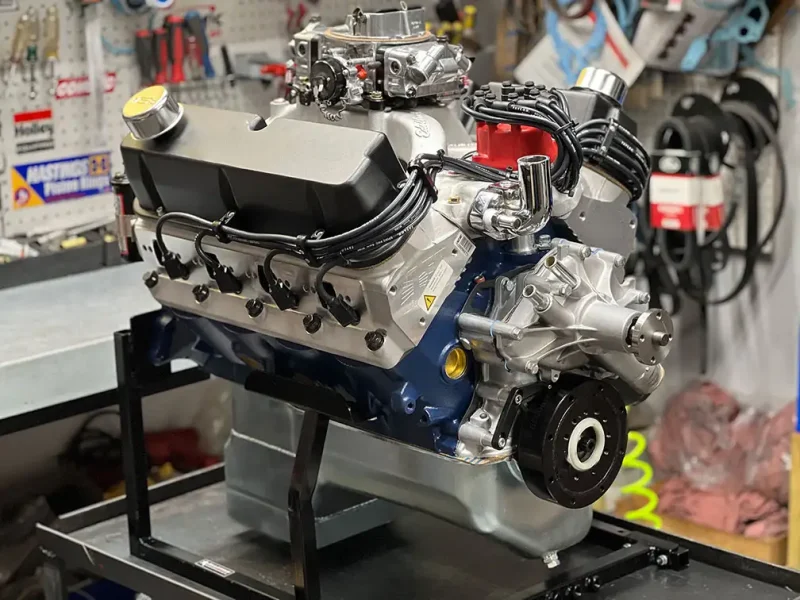
3. Complete or Turnkey Crate Engine

A complete crate engine may include:
  • Intake and exhaust systems
  • Fuel injection or carburetor
  • Ignition system
  • Oil pan
  • Valve covers
  • Sometimes, even engine management
Turnkey versions may be ready to run once connected to fuel, cooling, and electrical systems. Always confirm the included components before purchasing. The term “complete” can vary by supplier.
short block
Short Block
long engine block
Long Block
crate engine
Crate Engine

Why Choose a Crate Engine?

1. Reliability and Quality Control

Crate engines are assembled in controlled environments with standardized torque procedures, precision machining, and calibrated measurement tools. Compared to a local rebuild of uncertain quality, this can significantly reduce risk.
For fleet operators or commercial workshops, predictability matters. A crate engine provides consistent specifications and known tolerances.

2. Time Efficiency

Engine rebuilding requires:
  • Disassembly
  • Inspection
  • Machining
  • Parts sourcing
  • Reassembly
  • Testing

This process can take weeks, depending on the machine shop’s capacity. A crate engine arrives assembled and ready to install, minimizing vehicle downtime. For businesses where vehicle availability directly affects revenue, this time advantage is critical.

3. Performance Upgrades

Many crate engines are designed not only as replacements but also as upgrades. For example, high-output V8 crate engines are widely used in hot rods and muscle car restorations.
Popular examples include LS-based engines originally developed by General Motors, as well as Coyote-based platforms from Ford Motor Company. These engines are frequently chosen for swaps because of their power-to-weight ratio and aftermarket support.

4. Warranty Coverage

Many factory crate engines come with manufacturer-backed warranties. This is often more comprehensive than the limited coverage provided by small local rebuilders.
For commercial buyers, warranty protection reduces operational risk.

Crate Engine vs Rebuilt Engine

Understanding the difference is essential.
Feature Crate Engine Rebuilt Engine
Assembly Location
Factory or certified facility
Local machine shop
Parts Condition
New or remanufactured to spec
Mix of reused and new parts
Quality Control
Standardized
Depends on shop
Warranty
Often manufacturer-backed
Usually limited
Downtime
Short
Longer
A rebuilt engine can be a cost-effective solution if performed by a reputable specialist. However, quality varies significantly depending on the machinist’s skill and equipment.
Crate engines offer consistency, which is especially important for professional installations.

Crate Engine vs Used Engine

A used engine from a salvage yard may cost less upfront, but it introduces unknown variables:
  • Unknown service history
  • Potential hidden wear
  • Limited or no warranty
  • Compatibility risks
While a used engine may be suitable for low-budget repairs, it does not offer the reliability or lifecycle expectancy of a properly assembled crate engine.

Who Typically Buys Crate Engines?

Crate engines are widely used in several segments:

Restoration Projects

Classic car restorers often choose crate engines to preserve originality or upgrade performance without rebuilding aging components.

Performance Enthusiasts

Engine swaps are common in motorsport and street performance builds. LS and HEMI-based crate engines from Stellantis platforms are especially popular in muscle car conversions.

Fleet Operators

Commercial fleets prioritize uptime and cost predictability. A crate engine reduces downtime compared to in-house rebuilds.

Workshops and Installers

Automotive repair shops frequently install crate engines because it simplifies the supply chain. Instead of coordinating machining and parts sourcing, they receive a fully assembled unit.

Key Technical Considerations Before Buying

Before purchasing a crate engine, evaluate the following:

1. Compatibility

Confirm:
  • Engine code
  • Mounting points
  • Transmission compatibility
  • ECU requirements
  • Emissions compliance
An engine may be physically similar but electronically incompatible.

2. Intended Use

Is the vehicle for daily driving, towing, racing, or commercial use? Compression ratios, camshaft profiles, and internal tolerances vary based on application.

3. Fuel Type

Gasoline and diesel crate engines differ significantly in internal design, compression ratio, and injection systems.

4. Support and Parts Availability

Choose platforms with strong aftermarket support. Engines with abundant replacement parts reduce long-term maintenance costs.

How Are Crate Engines Manufactured?

The manufacturing process typically involves:
  1. Precision machining of engine blocks and cylinder heads
  2. Measurement of clearances using calibrated tools
  3. Installation of crankshaft, rods, and pistons
  4. Torque-controlled assembly
  5. Valve timing calibration
  6. Leak and compression testing
  7. Final inspection and packaging
Remanufactured crate engines undergo disassembly, inspection, re-machining, and component replacement before reassembly to factory tolerances.
Consistency in tolerances is one of the defining advantages.

Cost of a Crate Engine

The price of a crate engine can vary significantly depending on configuration, brand, and intended application. Instead of looking at a single number, it’s important to understand what drives the cost.

Main Factors That Affect Pricing

  • Engine Displacement
    Larger engines require more materials and machining time. A four-cylinder engine will typically cost less than a V8 due to size and complexity.
  • New vs. Remanufactured
    Brand-new crate engines use entirely new components and therefore command higher prices. Remanufactured units are rebuilt to factory tolerances and usually offer a more budget-conscious alternative.
  • Performance Specification
    Engines built with forged pistons, upgraded camshafts, or high-compression setups cost more because of stronger materials and additional engineering requirements.
  • Level of Completeness
    A short block is less expensive than a long block. A fully dressed or turnkey crate engine—including intake, ignition, and sometimes fuel components—will be priced higher.
  • Brand and Warranty Support
    Engines backed by major manufacturers or comprehensive warranties often cost more but reduce long-term risk.

Typical Price Range

Entry-level four-cylinder crate engines often begin in the lower thousands of dollars. High-performance V8 packages, especially those designed for racing or heavy-duty use, can reach substantially higher price levels.

Additional Costs to Consider

Beyond the engine price itself, factor in:
  • Installation labor
  • ECU tuning or calibration
  • Shipping and freight
  • Core return charges (if required)
  • Warranty coverage

Evaluating the total project investment—not just the engine price—provides a clearer and more practical cost assessment.

Installation Considerations

Although crate engines arrive assembled, proper installation still requires technical expertise.

Key steps include:
  • Inspecting engine mounts
  • Replacing cooling system components
  • Verifying fuel system pressure
  • Updating engine management calibration
  • Performing break-in procedures

Improper installation can void warranties. For commercial operators, professional installation is strongly recommended.

Are Crate Engines Worth It?

Whether a crate engine is worth the investment depends largely on your technical priorities, budget structure, and long-term ownership goals. There is no universal answer—only the solution that best aligns with your specific application.

When a Crate Engine Makes Sense

A crate engine is often the stronger choice if:
  • Predictable reliability is critical
    Factory-assembled engines are built under controlled conditions with standardized tolerances and documented quality procedures. This reduces variability and mechanical uncertainty.
  • Downtime must be minimized
    For commercial vehicles, fleet operators, or busy workshops, time is revenue. A crate engine eliminates the waiting period associated with machining, parts sourcing, and iterative rebuild work.
  • Warranty protection matters
    Many crate engines include structured warranty coverage. This shifts risk away from the owner and provides financial protection against defects.
  • You prefer controlled, repeatable assembly standards
    Rather than depending on the skill level of a local machine shop, you receive an engine assembled using calibrated tools and factory torque specifications.

When Rebuilding May Be Preferable

In some situations, rebuilding remains a valid option:
  • Preserving matching numbers in collector vehicles
    For classic or investment-grade cars, originality can directly affect resale value. Rebuilding the original engine block maintains authenticity.
  • Access to a highly skilled machinist
    If you have trusted specialists with proven experience and proper equipment, a rebuild can deliver excellent results.
  • Strict budget limitations
    A carefully planned rebuild may reduce upfront costs, particularly if reusable components are in good condition.

For most modern vehicles, especially where reliability and efficiency are priorities, crate engines offer a balanced combination of performance, consistency, and convenience that often justifies the investment.

Common Misconceptions About Crate Engines

Myth 1: Crate engines are only for race cars.
In reality, many are designed for daily driving and commercial vehicles.

Myth 2: All crate engines are high-performance builds.
Many are direct factory-spec replacements.

Myth 3: Crate engines are always expensive.
When factoring in machining, labor, and downtime, they can be competitively priced.

Final Thoughts

Understanding what a crate engine is helps you make informed decisions about engine replacement or performance upgrades. Whether you operate a workshop, manage a fleet, or build project cars, crate engines offer a structured, quality-controlled alternative to rebuilding or buying used units.

If you are sourcing reliable engine components or complete assemblies, XinJin Auto Parts is a direct factory supplier with manufacturing experience in automotive powertrain components. For inquiries, visit our contact page, and our team will respond promptly.
Related Post

Leave a Comment

Your email address will not be published. Required fields are marked *

Scroll to Top

Get Your Quote Now

    Get Your Quote Now