Table of Contents
Choosing an OEM auto parts supplier is one of the most consequential decisions a business can make. Whether you are running an automotive repair chain, distributing parts across multiple markets, or building a vehicle assembly operation, the supplier you work with directly affects your product quality, delivery reliability, and ultimately your customer relationships.
The market for OEM auto parts suppliers is enormous and, frankly, inconsistent. There are manufacturers who hold themselves to rigorous production standards, and there are those who cut corners in ways that only become visible after thousands of units are in the field. Knowing how to tell the difference before you commit to a partnership can save significant time, money, and reputational damage.
This guide walks through the criteria that experienced procurement professionals and sourcing teams use when evaluating an OEM auto parts supplier — from initial qualification to long-term supply chain management.
What Does OEM Actually Mean in the Auto Parts Industry
The term OEM, or Original Equipment Manufacturer, is used in a few different ways in the auto parts space, and the ambiguity causes real confusion. In the strictest sense, an OEM auto parts supplier is a manufacturer that produces components to the exact specifications of the original vehicle manufacturer. These parts are designed to fit, perform, and last at the same standard as the components that came on the vehicle from the factory.
In practice, many suppliers use the term OEM more loosely to describe parts that meet equivalent specifications, even if they are not produced for or endorsed by the original vehicle brand. When evaluating a supplier, it is worth clarifying exactly what they mean when they use the term — and asking for documentation to back it up.
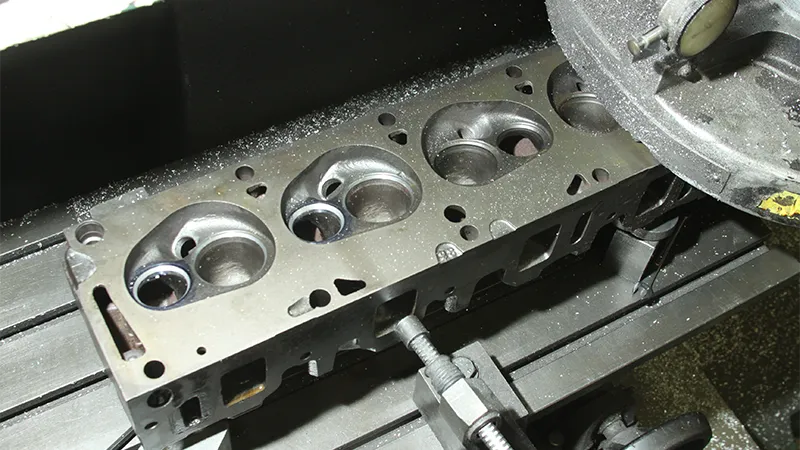
For buyers sourcing engine components, cylinder heads, or other high-tolerance parts, this distinction matters enormously. A cylinder head, for example, must meet precise dimensional tolerances, surface finish requirements, and material specifications. Any deviation affects combustion efficiency, sealing, and engine longevity.
Why Supplier Selection Is More Complex Than Price Comparison
Many buyers, especially those newer to industrial procurement, approach OEM auto parts sourcing the same way they would approach buying a commodity: they get three quotes and choose the lowest price. This approach almost always leads to problems.
Price is a result of many underlying decisions a manufacturer makes about materials, labor, quality control investment, and production efficiency. A significantly lower price usually signals that one or more of these factors has been compromised. In the engine parts category specifically, the downstream cost of a failed component — warranty claims, engine damage, customer churn — far exceeds whatever was saved at purchase.
The more useful framework is to evaluate total value, which includes unit cost, but also accounts for quality consistency, delivery reliability, technical support capability, and the supplier’s willingness to stand behind their product when something goes wrong.
Key Criteria for Evaluating an OEM Auto Parts Supplier
Before going into each criterion in detail, the table below provides a quick reference of the core evaluation factors buyers should apply when assessing any OEM auto parts supplier.
| Evaluation Criteria | What to Look For | Why It Matters |
|---|---|---|
|
Certifications |
ISO 9001 |
Validates production quality systems |
|
Industry Experience |
Years in engine/auto parts manufacturing |
Reduces defect and delay risk |
|
Material Traceability |
Material certificates, batch test reports |
Ensures consistent part quality |
|
Lead Time Reliability |
Historical on-time delivery rate |
Protects your inventory planning |
|
Technical Support |
Direct engineering access |
Faster issue resolution |
|
Export Compliance |
Documentation capability for your market |
Avoids customs delays and penalties |
|
Factory Audit Openness |
Willingness to allow on-site or video audit |
Confirms manufacturing transparency |
Manufacturing Certifications and Quality Standards
The first filter any serious buyer should apply is certification. ISO 9001 is the baseline quality management certification and should be considered a minimum requirement, not a differentiator.
Beyond certifications, ask to see how they handle their actual production controls. A credible OEM auto parts supplier should be able to describe their Statistical Process Control (SPC) practices, incoming material inspection procedures, and how they manage non-conforming product. If these concepts are unfamiliar to the supplier’s sales team, that is a meaningful signal.
Manufacturing Capability and Specialization
There is a significant difference between a supplier that makes engine components as part of a broad catalog and one that has built their entire operation around a specific product family. Specialization tends to produce better outcomes in high-tolerance parts manufacturing because the tooling, workforce expertise, and quality systems are all calibrated to the demands of that specific product.
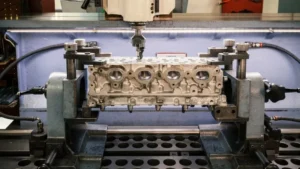
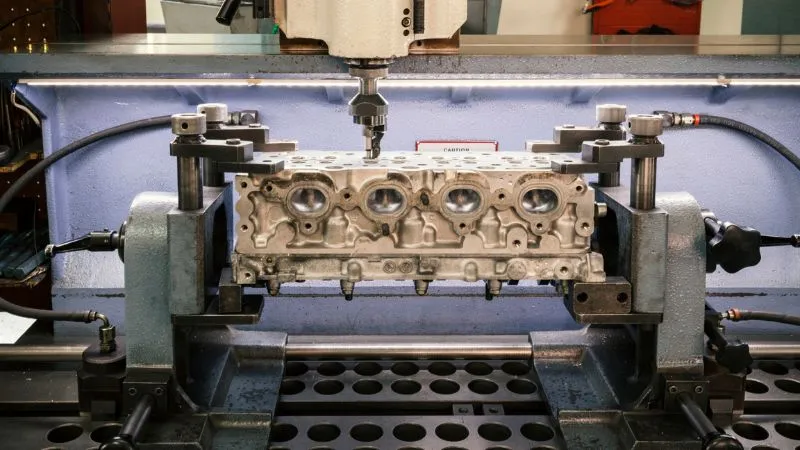
When evaluating a supplier’s technical capabilities, look beyond what their brochure claims. Ask specifically about the machining equipment they use, their casting or forging material sources, and their measurement and inspection systems. Manufacturing a high-quality cylinder head, for example, demands precise CNC machining to maintain combustion chamber geometry, controlled surface finishing for reliable gasket sealing, and systematic pressure testing before any unit leaves the floor. Suppliers who can walk you through that process in detail — without hesitation — have clearly done it many times.
Industry Experience and Track Record
Years of experience in automotive manufacturing — particularly in engine components — carry real weight. Suppliers who have spent years producing cylinder heads, short blocks, or differential assemblies have encountered and resolved the failure modes that only reveal themselves over long production runs. That accumulated knowledge shows up in their tooling decisions, their process controls, and the questions they ask when you submit a new part specification. A newer supplier working from a general machining background may be technically capable on paper, but they are learning on your order.
References and case studies from existing clients in similar applications are another important verification tool. A supplier with a genuine track record will have customers willing to speak to their experience. Ask specifically for references in your part category, not just general manufacturing. Verified experience in supplying engine components to buyers with comparable quality requirements tells you far more than any sales presentation.
Industry Experience and Track Record
For any safety-critical or high-performance component, material traceability is non-negotiable. A reputable OEM auto parts supplier should be able to provide material certificates showing the chemical composition and mechanical properties of the metals used in each batch of production. They should also conduct regular testing — hardness testing, pressure testing for engine components, dimensional verification — and be able to share results on request.
This level of documentation is standard practice among serious manufacturers and rare among suppliers who are primarily focused on moving volume at low margins. The presence or absence of this documentation tells you a great deal about how a supplier thinks about their responsibility to the buyer.
Lead Times, MOQ, and Supply Consistency
Operational fit matters just as much as product quality. A supplier with excellent product quality but unpredictable lead times can cause serious disruption to your inventory planning and customer commitments. Before finalizing any OEM auto parts supplier relationship, get specific answers on standard lead times, the reliability of those timelines based on their historical performance, minimum order quantities, and how they handle surge demand or expedited orders.
Also ask how they manage raw material supply. Suppliers who have invested in secure, long-term relationships with their material sources tend to deliver more consistent lead times than those who buy materials opportunistically on the spot market.
Technical Support and After-Sales Responsiveness
One area that separates factory-direct OEM auto parts suppliers from trading companies or intermediaries is technical depth. When you have a fitment question, a quality concern, or a design modification request, you need access to people who actually understand the manufacturing process behind the product.
Lorem ipsum dolor sit amet, consectetur adipiscing elit. Ut elit tellus, luctus nec ullamcorper mattis, pulvinar dapibus leo.
Customs Compliance and Export Documentation
For buyers sourcing internationally, compliance capability is a serious qualification factor. Your OEM auto parts supplier should have experience preparing the documentation required for smooth customs clearance in your market: commercial invoices, packing lists, certificates of origin, and any product-specific certifications required by your country’s regulatory framework.
Suppliers who lack experience with export documentation or who are vague about their compliance capabilities introduce risk into your supply chain that goes beyond just shipping delays. Regulatory problems at customs can result in seized shipments, fines, and significant business disruption.
Red Flags to Watch for During Supplier Evaluation
Experience in this industry reveals certain patterns that consistently predict supplier problems. Here are the warning signs that should prompt deeper scrutiny or a decision to look elsewhere.
Reluctance to allow factory audits is one of the clearest indicators of something being hidden. Any manufacturer confident in their operations should welcome the opportunity to demonstrate their capabilities in person or via video audit.
Pricing that is dramatically below market rates without a credible explanation for the cost structure should raise questions. Sustainable manufacturing at competitive prices is possible, but prices that seem too good to be true in the auto parts space usually reflect compromises in material quality, process control, or both.
Inconsistent or incomplete documentation is another common red flag. If a supplier cannot produce quality records, certifications, or test reports on request, they likely do not maintain them — which means quality is being managed by inspection rather than by controlled production processes.
Finally, watch for suppliers who are unable or unwilling to provide references from existing customers in applications similar to yours. Established, reliable OEM auto parts suppliers have customers who are willing to speak positively about their experience. If a supplier cannot connect you with even one reference, that gap should be taken seriously.
The Value of Working with a Factory-Direct Supplier
The distinction between a factory-direct OEM auto parts supplier and a trading company is often understated in buyer conversations. Trading companies have their place in the supply chain, particularly for consolidating small orders across many part numbers. But for buyers seeking consistent quality, transparent pricing, and responsive technical support, working directly with the manufacturer delivers clear advantages.
The table below outlines the key differences between factory-direct suppliers and trading companies across the factors that matter most to procurement teams.
| Comparison Factor | Factory-Direct OEM Supplier | Trading Company |
|---|---|---|
|
Pricing |
Transparent, no intermediary margin |
Includes reseller markup |
|
Technical Support |
Direct access to engineering team |
Filtered through sales contact |
|
Quality Accountability |
Full control over production process |
Dependent on third-party factory |
|
Customization Capability |
Can modify specs and tooling directly |
Limited ability to accommodate changes |
|
Lead Time Control |
Managed internally |
Subject to factory scheduling |
|
Documentation |
First-hand quality and material records |
May lack full production documentation |
|
Audit Accessibility |
Factory open to inspection |
May not be able to arrange access |
Factory-direct relationships eliminate the margin layer that trading companies add, which gives buyers more room to negotiate on price without pushing suppliers toward quality compromises. Direct relationships also mean that quality feedback, engineering change requests, and delivery schedule conversations happen with the people who actually control the outcome — not with an intermediary who relays messages on a delay.
For engine components specifically, where material specifications and machining tolerances have a direct impact on product performance, the ability to have direct, detailed technical conversations with the people running the production line is genuinely valuable.
Questions to Ask Before Finalizing an OEM Auto Parts Supplier
Before signing any supply agreement, the following questions should have clear, documented answers.
These questions are not exhaustive, but a supplier’s ability and willingness to answer them clearly is a strong predictor of how the relationship will function once it is operational.
Frequently Asked Questions About OEM Auto Parts Suppliers
What is the difference between OEM and aftermarket auto parts?
OEM parts are manufactured to the original vehicle specifications, either by the vehicle manufacturer or an approved supplier. Aftermarket parts are produced by third-party manufacturers and may vary in specification, material, and quality. For critical engine components, OEM-spec parts generally offer more predictable performance and fitment.
If you are evaluating which option is right for your business, our detailed breakdown of aftermarket vs OEM cylinder heads covers the key differences in pricing, quality, and market fit.
How do I verify that a supplier is a genuine manufacturer and not a trading company?
Ask for a factory audit, either in person or via video. Request images of the production facility, machining equipment, and quality lab. Check whether the supplier has direct engineering staff who can answer technical questions about the manufacturing process. Trading companies typically cannot answer production-level technical questions without consulting an outside source.
Is it safe to source engine parts from overseas OEM auto parts suppliers?
Yes, provided you qualify the supplier carefully. Look for ISO or IATF certifications, request material and test documentation, and start with smaller trial orders to validate quality before committing to larger volumes. Many of the world’s most respected engine component manufacturers are based in Asia and supply directly to automotive OEMs globally.
What lead time should I expect from an OEM auto parts supplier?
Lead times vary significantly by product type, order volume, and supplier location. For standard catalog engine parts, 15 to 45 days is typical from a factory-direct international supplier. Custom or low-volume specialty parts may take longer. Always confirm lead times in writing and ask about historical on-time delivery performance.
What certifications should an OEM auto parts supplier hold?
ISO 9001 is the baseline and should be considered a minimum requirement. IATF 16949 is the more rigorous standard specifically designed for automotive production and is a stronger indicator of a supplier’s commitment to quality systems. For engine components and other safety-critical parts, IATF 16949 certification is worth prioritizing.
Can an OEM auto parts supplier accommodate custom specifications?
Factory-direct manufacturers generally can, though capability varies. The key questions are whether they have in-house engineering support, whether they own the tooling for your parts, and what their process looks like for managing engineering changes. Suppliers with dedicated R&D or application engineering teams are best positioned to handle custom work efficiently.
If you are looking for a factory-direct source for engine parts, cylinder heads, or related components, XinJin Auto Parts manufactures to OEM specifications with full quality documentation. Feel free to contact us any time to discuss your requirements.