Where to Buy Cylinder Heads

If your engine has been overheating, losing compression, or consuming oil at an alarming rate, there is a good chance the cylinder head is involved. Replacing it is one of the more significant repairs a mechanic or fleet manager can face, and one of the first questions that comes up is a simple but important one: where do you actually buy a cylinder head that you can trust?

The answer depends on several factors, including your application, budget, quality expectations, and whether you need a standard replacement or a custom-built component. This guide walks you through the most common purchasing channels, what to look for in each, and how to avoid the costly mistakes that buyers often make when sourcing cylinder heads for the first time.
where to buy cylinder head

Understanding What You Are Buying

Before you start searching for suppliers, it helps to know exactly what kind of cylinder head you need. Cylinder heads come in a few distinct categories: new OEM (original equipment manufacturer), OEM-equivalent aftermarket, remanufactured, and used or pulled units.

New OEM heads are produced by or directly for the vehicle manufacturer. They carry the highest level of fit-and-finish consistency but also come with the steepest price tags. For commercial fleets or high-value vehicles still under warranty, this is often the preferred route.

Aftermarket cylinder heads are manufactured by third-party companies to match or exceed OEM specifications. Quality varies widely across brands, so vetting the supplier matters significantly. A well-made aftermarket head can perform just as reliably as an OEM part at a fraction of the cost.

Remanufactured heads are used cores that have been professionally disassembled, cleaned, pressure-tested, and rebuilt with new valve seats, guides, and seals. When done properly by an experienced rebuilder, a reman head can be an excellent value, particularly for older or discontinued engine applications.

Used or “pull” heads sourced from salvage yards are the most economical option, but also carry the most risk. You typically get little to no warranty, and the internal condition of a used head is difficult to verify without thorough testing.

Understanding these distinctions will help you ask the right questions regardless of where you decide to shop.

Buying From Local Auto Parts Stores

For many buyers, the first instinct is to check a nearby auto parts retailer. Chains like AutoZone, O’Reilly, and NAPA carry cylinder heads or can order them through their distribution networks. This approach has a few clear advantages: you can often get the part within a day or two, returns are relatively straightforward, and staff can sometimes help verify fitment using your VIN.

The downside is that local retailers typically stock a limited range of heads, mostly for popular consumer vehicles. If you are working on a commercial truck, an off-road machine, a marine engine, or any specialty application, you will likely find their catalog falls short. Pricing also tends to be higher than sourcing directly from a manufacturer or distributor, since you are paying for the convenience of retail markup.

Online Marketplaces and E-Commerce Platforms

Platforms like Amazon, eBay Motors, and RockAuto have become go-to sources for many parts buyers. The selection is broad, prices are competitive, and customer reviews can give you a sense of how a part has performed for others.

That said, purchasing cylinder heads through online marketplaces requires careful attention. Seller reputation matters enormously. Always check whether the listing comes from an established parts supplier with verifiable reviews rather than an anonymous reseller. Look for detailed product descriptions that confirm compatibility with your specific engine code, displacement, and year. Be cautious about listings that offer vague fitment information or unusually low prices with no technical support.

Return policies for engine components can also be more restrictive than for other product categories, so read the fine print before committing.

Salvage Yards and Recyclers

Auto salvage yards remain a practical option for older vehicles where new or remanufactured heads are no longer available or are priced prohibitively. Reputable recyclers will inspect and test pulled heads before resale, and some even offer limited warranties.

When buying from a salvage yard, always ask about the mileage and service history of the donor vehicle if known, request a compression test or at least a visual inspection of the mating surface, and confirm whether any valve work has been done. Take the extra step of having the head checked for cracks and warpage by a machine shop before installation. The savings can be worthwhile, but only if you protect yourself from buying a head that has already failed.

Wholesale Distributors and Direct Factory Sourcing

For workshops, fleet operators, and commercial buyers, the most cost-effective and reliable long-term strategy usually comes down to two closely related options: working with a wholesale distributor or purchasing directly from the manufacturer. Both approaches cut out the retail layer, but they serve slightly different needs and are worth understanding together.

Wholesale distributors source inventory directly from factories and pass on better pricing to trade accounts. They typically carry higher stock levels, offer credit terms, and have technical staff who can assist with part identification across a range of engine families. Building a relationship with a reputable distributor means having a consistent point of contact and predictable lead times, which matters when you are managing a workshop schedule or a fleet maintenance program. The main limitation is that distributors still add a margin to cover their own operations, and minimum order requirements can be a barrier if you only need a single unit.

Going directly to the manufacturer removes that layer entirely. When you source cylinder heads from a factory, you gain access to their engineering team, cleaner pricing on volume orders, and — critically — the ability to request modifications or specifications tailored to your exact application. This is particularly valuable in industrial, agricultural, marine, and heavy equipment sectors where standard off-the-shelf heads may not meet specific performance or dimensional requirements. Direct factory relationships also mean faster resolution when warranty questions arise, since there is no intermediary to work through.

For buyers who are sourcing regularly or working with non-standard engine configurations, it is worth contacting manufacturers directly, even if you have historically purchased through distributors. Many factories are willing to work with businesses of various sizes, and the conversation often reveals options that simply are not visible through a distribution catalog.

Comparing Your Sourcing Options at a Glance

Every purchasing channel has its place depending on your situation. The table below summarizes the key trade-offs to help you match the right source to your specific needs.
Sourcing Channel Best For Price Level Selection Range Custom Options Technical Support
Local Auto Parts Store
Quick, common replacements
Medium-High
Limited
No
Basic
Online Marketplace
Research-led individual buyers
Low-Medium
Broad
No
Minimal
Salvage Yard
Older or discontinued applications
Low
Variable
No
None
Wholesale Distributor
Trade buyers, volume orders
Medium
Wide
Rare
Good
Direct from Manufacturer
Commercial, industrial, custom builds
Low (volume)
Comprehensive
Yes
Excellent
Use this as a starting point rather than a final answer. A salvage yard head might be the right call for a low-priority repair on an older machine, while a direct factory order makes far more sense for a fleet application where consistency and customization are priorities.

Key Factors to Evaluate Any Supplier

Regardless of where you decide to buy, there are a few non-negotiable questions worth asking before you place an order.

Does the supplier offer documented quality control? Reputable manufacturers and distributors will be able to tell you what testing each head goes through before it ships. Pressure testing, surface flatness verification, and valve seal checks are baseline expectations for any serious supplier.

What does the warranty actually cover? A warranty that only applies to manufacturing defects but excludes labor costs or installation issues may not protect you in a meaningful way. Understand the terms before purchasing.

Can the supplier confirm fitment for your specific engine? Cylinder heads are not universal. A head that looks identical may have slight variations in port sizing, bolt patterns, or coolant passages that affect how it performs. Suppliers with genuine expertise in the parts they sell will be able to confirm compatibility with confidence.

Is there someone you can actually speak with? Technical support availability is often a reliable indicator of a supplier’s overall professionalism. If a vendor has no way to answer your technical questions before the sale, they are unlikely to be helpful when problems arise after.

What Buyers Often Overlook

One mistake that appears repeatedly, particularly among first-time buyers, is focusing exclusively on the upfront cost of the head itself while overlooking the full cost of the job. A cheaper head that requires machine shop work to correct surface warpage, or one that fails within a year and requires a second installation, can end up costing far more than a slightly more expensive unit that installs correctly and holds up over time.

Another common oversight is not confirming whether the head comes as a bare casting or as a fully assembled unit with valves, springs, and camshaft components already installed. Both options have their place, but the difference matters for planning your installation timeline and budgeting additional parts.

Finally, many buyers underestimate the importance of sourcing from a supplier who understands their specific engine family rather than one who sells cylinder heads as a peripheral part of a broader catalog. Specialization in this space genuinely matters.

Making the Right Call

The best source for a cylinder head depends on what you are working on and what you need from the transaction. For a common consumer vehicle, a well-reviewed aftermarket brand through a trusted retailer or distributor is often sufficient. For commercial, industrial, or high-performance applications where reliability and customization matter, sourcing from a manufacturer directly is almost always the better path.

Take the time to vet your supplier, ask specific technical questions, and read the warranty terms carefully. A cylinder head is not a part where cutting corners pays off.

FAQ

1. Is it better to buy a new or remanufactured cylinder head?

It depends on your application and budget. A new OEM or quality aftermarket head offers the most predictable service life and is the right choice when reliability is non-negotiable. A properly remanufactured head from an experienced rebuilder can be an excellent alternative, especially for older engine families where new heads carry a significant price premium. The keyword is “properly” — always ask about the specific processes and testing a reman supplier uses before committing.

2. How do I know if a cylinder head will fit my engine?

Fitment goes beyond the make, model, and year of the vehicle. You need to confirm the engine displacement, the specific engine code (usually found on a tag or stamp on the block), the combustion chamber configuration, and whether the head is for a single or dual overhead cam setup if applicable. A reputable supplier will ask for these details before confirming compatibility. If a seller only asks for year, make, and model without any further questions, that should give you pause.

3. Can I buy cylinder heads directly from a manufacturer if I am not a large company?

Yes, in many cases. While some factories primarily serve high-volume commercial accounts, others are willing to work with smaller buyers or individual inquiries, particularly for specialty or non-standard applications. It is always worth reaching out directly to ask about minimum order requirements and lead times. At minimum, the conversation may point you toward a distributor who carries their product.

4. What is the difference between a bare cylinder head and a complete assembly?

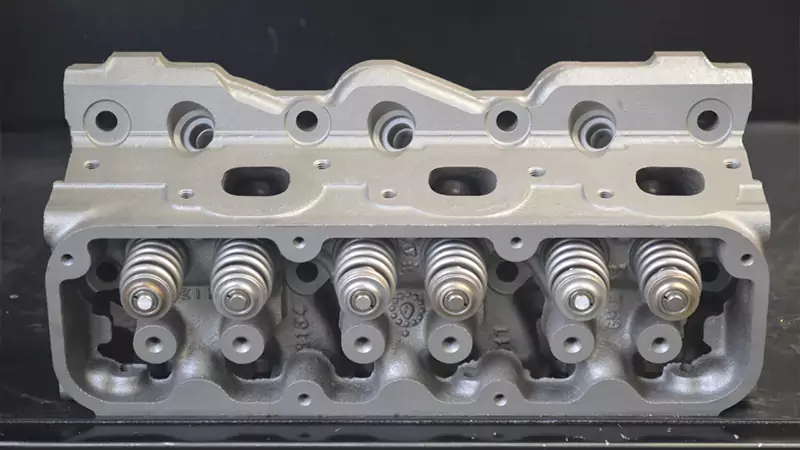
A bare cylinder head is the casting alone, without valves, springs, seals, or camshafts. A complete or fully assembled head comes with those components already installed and may even include sensors or a camshaft depending on the application. Bare heads offer more flexibility if you plan to reuse existing components or upgrade valvetrain parts, while a complete assembly simplifies installation and is often the better choice when time is a priority.

5. How long should a replacement cylinder head last?

A quality cylinder head, properly installed with the correct head gasket and torqued to specification, should last the life of the engine in normal service. Premature failure is almost always the result of overheating, improper installation, a faulty head gasket, or underlying cooling system issues that were not addressed before the replacement. Fixing the root cause of the original failure is just as important as choosing the right head.

6. What should I do if the mating surface on my engine block is warped?

Before installing any replacement head, have the block deck surface inspected and resurfaced if necessary. Installing a new head on a warped block surface is one of the most common causes of premature head gasket failure. A machine shop can check and correct the surface flatness quickly and at relatively low cost, and skipping this step can compromise an otherwise perfect replacement.
If you are sourcing cylinder heads for commercial or industrial applications and need a reliable manufacturing partner, XinJin Auto Parts is a factory specializing in engine components with the capability to support custom requirements. Feel free to contact us for more information or to discuss your specific needs.

Related Post

Leave a Comment

Your email address will not be published. Required fields are marked *

Scroll to Top

Get Your Quote Now

    Get Your Quote Now