In the world of internal combustion engine architecture, the cylinder head acts as the command center for power generation. While modern high-performance engines almost exclusively utilize crossflow designs, the reverse flow cylinder head remains a subject of intense interest for classic car restorers, industrial engine designers, and automotive historians. Understanding how reverse flow heads operate—and why they were the standard for decades—is essential for anyone looking to optimize vintage machinery or appreciate the evolution of thermal efficiency.
What is a Reverse Flow Cylinder Head?
A reverse flow cylinder head is a design where the intake and exhaust ports are located on the same side of the engine block. In this configuration, the air-fuel mixture enters the cylinder from one side, and after combustion, the exhaust gases exit through the same side. This contrasts with a crossflow head, where the intake and exhaust ports are situated on opposite sides, allowing gases to flow across the combustion chamber.
The reverse flow terminology refers to the path of the gases. Because the ports are adjacent, the flow must essentially pull a U-turn within the chamber. While this may sound inefficient by modern standards, it was a practical and highly effective solution for the space and manufacturing constraints of early 20th-century automotive engineering.
The Anatomy and Engineering of Reverse Flow Designs
To appreciate the reverse flow head, one must look at the physical constraints of the engines it typically populates, such as the classic British BMC A-Series or early American inline-six engines.
Port Arrangement
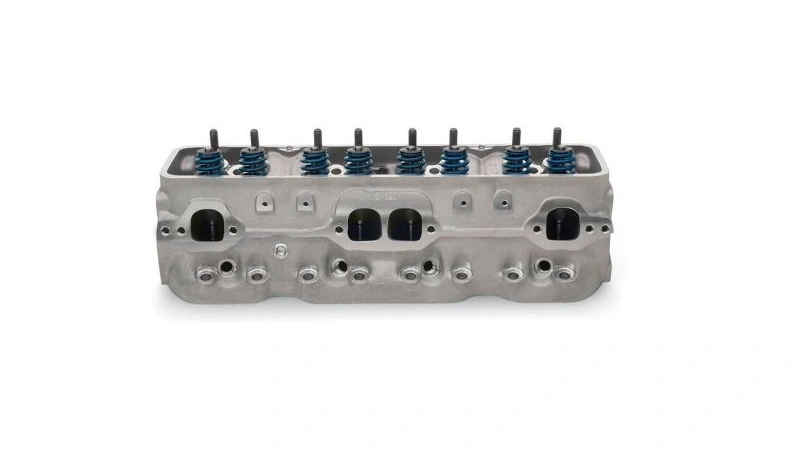
In a reverse flow setup, the intake and exhaust manifolds are bolted to the same flank of the cylinder head. This creates a compact engine package. However, it also means that the intake and exhaust valves must be arranged in a line (usually I-E-E-I-I-E-E-I for a four-cylinder). This side-by-side arrangement limits the maximum size of the valves, as they must all compete for the same linear space above the cylinders.
Heat Management and Pre-Heating
One of the unique characteristics of the reverse flow head is the proximity of the hot exhaust manifold to the cool intake manifold. In the era of carburetors, this was actually considered a feature rather than a flaw. The heat radiating from the exhaust helped to vaporize the fuel within the intake manifold, preventing fuel droplets from puddling in cold weather and improving combustion stability during warm-up.
Induction Turbulence
Because the air must enter and exit from the same side, the tumble and swirl characteristics within the combustion chamber are distinct. Engineers of these heads relied on the shape of the piston crown and the combustion chamber roof to ensure that the incoming charge did not simply mix with the outgoing exhaust—a challenge known as scavenging.
Advantages of Reverse Flow Cylinder Heads
While modern performance leans toward crossflow, the reverse flow design offers several distinct advantages that keep it relevant in specific niches:
- Compact Engine Packaging: By keeping all plumbing on one side of the engine, the overall width of the powertrain is significantly reduced. This was vital for narrow engine bays in mid-century economy cars. It also simplifies the engine bay layout, leaving the other side of the block free for accessories like generators, steering columns, or starters.
- Simplified Casting and Manufacturing: From a manufacturing standpoint, a reverse flow head is often simpler to cast. The water jacket and internal oil galleries do not have to navigate a complex web of ports exiting on both sides. For factories in the 1940s and 50s, this meant lower rejection rates and faster production cycles.
- Thermal Efficiency in Cold Climates: As mentioned, the heat soak from the exhaust manifold to the intake manifold is beneficial for fuel atomization in cold environments. Engines with reverse flow heads often reach operating temperatures faster and exhibit smoother idling characteristics in sub-zero conditions compared to cold crossflow designs.
Limitations and Challenges
The transition away from reverse flow was driven by the pursuit of raw horsepower and strict emissions standards. The design faces three primary hurdles:
- Volumetric Efficiency: The biggest drawback is the bottleneck effect. Since the air must change direction sharply, there is more flow resistance (pumping loss) than in a straight-through crossflow design. At high RPMs, the engine struggles to breathe, which is why reverse flow engines are generally characterized by high low-end torque but limited top-end power.
- The Hot Spot Problem: While heat helps with fuel vaporization, too much heat is the enemy of density. As the intake charge gets hotter, it becomes less dense, meaning less oxygen is available for combustion. This increases the risk of knocking or pre-detonation, especially if the compression ratio is increased.
- Valve Size Constraints: Because all valves are in a single row, you cannot easily fit large valves or multi-valve setups (like 4-valves per cylinder). This hard ceiling on valve area naturally limits the maximum air mass the engine can process.
Maintenance and Performance Tuning
For enthusiasts working on classic engines like the Triumph Spitfire, the MG Midget, or the Ford Kent (pre-crossflow), optimizing a reverse flow head requires a specific approach. Porting and polishing are critical; since the flow path is inherently restrictive, smooth transitions are vital. Flow-benching a reverse flow head often focuses on the short-side turn—the tight radius the air must take to enter the valve seat.
Modern tuners often install heat shields between the intake and exhaust manifolds. This allows the engine to retain the compact layout while preventing the intake charge from becoming excessively hot, thus preserving air density. Furthermore, upgrading to a long-branch exhaust manifold can help pull exhaust gases out more efficiently through scavenging, partially compensating for the natural flow limitations of the head.
Comparing Cylinder Head Flow Designs
To fully grasp the position of the reverse flow head in automotive history, it is helpful to compare it against the four primary flow architectures used in internal combustion engines. Each design handles the movement of gases differently, impacting power, emissions, and complexity.
1. Reverse Flow
As discussed, the intake and exhaust ports sit on the same side. The gases enter and exit in a U-turn fashion. It is the most compact and cost-effective design, primarily found in vintage and industrial engines. Its primary benefit is packaging and cold-start reliability.
2. Crossflow
The intake and exhaust ports are on opposite sides. This allows for a straight-through path, significantly reducing turbulence and heat soak. It is the modern standard for high-performance and passenger vehicles because it allows for much larger valves and better cooling of the intake charge.
3. Loop Flow
Often found in two-stroke engines, this design uses precisely angled ports to loop the fresh air-fuel mixture toward the top of the cylinder to push out exhaust gases. It relies heavily on fluid dynamics rather than mechanical valves to manage the gas exchange, making it lightweight but often less efficient in terms of emissions.
4. Uniflow
Most common in large-scale two-stroke diesel engines (such as those used in marine propulsion), air enters through ports at the bottom of the cylinder and exits through valves at the top. The flow moves in a single, upward direction, making it extremely efficient for scavenging and thermal management in massive, high-torque applications.

Key Differences at a Glance
The primary difference between these designs lies in volumetric efficiency and thermal management. While reverse flow heads excel in simplicity and cold-start vaporization, crossflow and uniflow designs are superior at high-velocity gas exchange. Loop flow remains a niche solution where mechanical simplicity (lack of valves) is the priority. For most classic automotive applications, the choice usually boils down to the balance between the historical authenticity of a reverse flow setup and the raw power potential of a crossflow conversion.
| Feature | Reverse Flow | Crossflow | Loop Flow | Uniflow |
|---|---|---|---|---|
|
Port Location |
Same side |
Opposite sides |
Cylinder walls |
Bottom to Top |
|
Manufacturing |
Simple |
Complex |
Simplest (no valves) |
Very Complex |
|
Primary Use |
Classics/Industrial |
Modern Automotive |
Two-strokes |
Large Marine Diesel |
|
High RPM Flow |
Low |
High |
Medium |
High |
Why the Choice of Material Matters
In the aftermarket, you will find both cast iron and aluminum reverse flow heads. Cast iron provides excellent thermal mass and durability, making it the preferred choice for heavy-duty industrial applications where the engine might run for thousands of hours under load.
Aluminum offers a significant weight saving—often up to 50%—and better heat conduction. For a classic sports car, an aluminum head can improve handling by taking weight off the front axle and allowing for a slightly higher compression ratio without knocking. When sourcing a replacement or a performance-cast cylinder head, material quality is paramount. Modern reproductions use high-grade alloys and hardened valve seats, allowing classic reverse flow engines to run reliably on modern unleaded fuel.
Conclusion
The reverse flow cylinder head is a testament to an era where efficiency was measured by reliability and compactness rather than peak horsepower. While it may have been eclipsed in the racing world by crossflow designs, it remains a vital component for millions of engines worldwide. Understanding its thermal dynamics and flow characteristics is the key to maintaining or enhancing the performance of any vehicle equipped with this classic architectural choice.
Whether you are restoring a vintage gem or maintaining industrial equipment, sourcing the right components is the foundation of engine longevity. As a specialized factory, XJXPARTS provides high-quality cylinder heads and engine components tailored for durability and precision. If you require expert manufacturing or wholesale supplies, please contact us today for professional assistance.