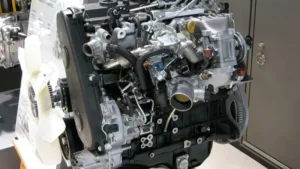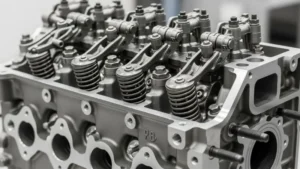
The internal combustion engine—a masterful piece of engineering complexity—is the beating heart of your vehicle. For the vast majority of drivers, the factory specifications are more than sufficient. But for a dedicated subset of enthusiasts, the stock configuration is merely the beginning, a canvas awaiting the transformative brushstrokes of modification.
Engine modification, or tuning, is the art and science of altering a vehicle’s engine components and calibration to improve its performance, efficiency, or longevity. It’s a journey driven by the quest for more horsepower, sharper throttle response, and a deeply personalized driving experience. It requires not just mechanical skill, but patience, research, and a profound respect for the complex physics at play.
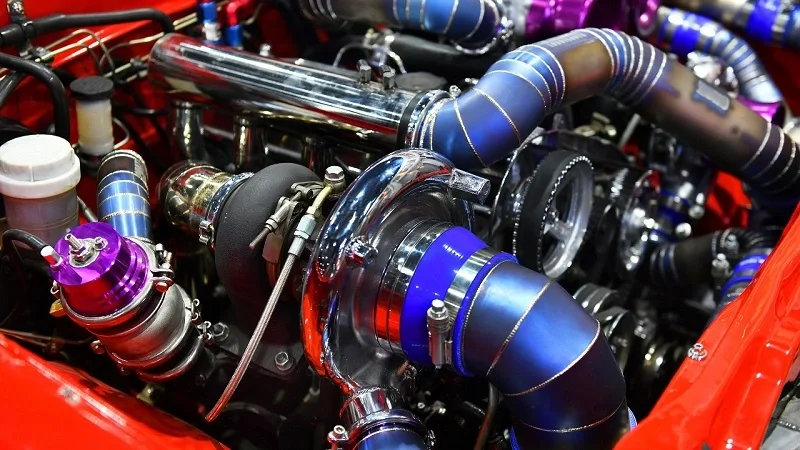
This guide serves as your foundation. It dissects the fundamental principles and the common systems involved, and the structured approach required to safely and successfully unlock the hidden potential within your engine bay. Before you select a single part, you must first understand the “why” and “how” of this captivating endeavor.
Why Modify the Engine?
Why do enthusiasts commit significant time, money, and effort to change what engineers spent years perfecting? The motivations are varied, yet they all stem from a desire to transcend the limitations imposed by mass-production mandates.
Power and Performance: The Quest for More
The most obvious and frequent reason for modification is the pursuit of raw power. Every engine is constrained by factory settings that prioritize reliability, emissions compliance, and cost-effective manufacturing for a broad consumer base. Modifying an engine allows you to push these boundaries.
By optimizing the way the engine inhales air, mixes fuel, combusts the mixture, and exhales spent gases, the overall thermodynamic efficiency can be dramatically improved. This translates directly into higher horsepower (the ability to do work quickly) and increased torque (the rotational force that drives the wheels), resulting in faster acceleration and a more thrilling driving experience. This improvement often involves increasing the volumetric efficiency—the engine’s ability to fill its cylinders with air—and then exploiting that air with precise fuel delivery and ignition timing.
Efficiency and Reliability: Smarter, Not Just Faster
While the focus is often on speed, modification is not solely about brute force. Many modern modifications, particularly professional ECU tuning, can be aimed at increasing fuel efficiency. By smoothing out factory software inconsistencies and optimizing the air-fuel ratio (AFR) at light load, tuners can sometimes achieve better fuel economy.
Reliability may seem counterintuitive when modifying, but targeted upgrades can actually bolster weak points in an engine. For instance, replacing factory plastic charge pipes with reinforced metal ones or upgrading the oil cooler system are reliability-focused modifications that prevent catastrophic failure when the engine is run harder than stock. Modification, when done correctly, is about building a system that can reliably handle increased demands.
Personalization and the Driving Experience
For many, engine tuning is an intensely personal expression. The sound of a performance exhaust, the feel of a sharper clutch engagement, or the instant throttle response achieved through a custom tune transforms a utilitarian object into an extension of the driver. It creates a direct, visceral connection to the machine that standard vehicles often lack. This deep level of personalization is what makes the modification culture thrive.
The Path of Power: Common Modification Stages
The process of modification is best approached in stages, which helps manage complexity and cost and ensures reliability. These stages are loosely defined but provide a logical progression for any build.
Stage 1: Bolt-ons and Refinements
This is the entry point for most enthusiasts, involving components that can be “bolted on” with minimal invasive engine work. The primary goal is to improve the engine’s breathing and control without altering internal components.
- Typical Components: Cold Air Intake, Cat-Back Exhaust System, and a basic ECU tune (often called a ‘Stage 1’ map).
- Expected Results: Noticeable gains in throttle response, improved engine sound, and a moderate increase in horsepower and torque (typically 10-25% depending on the vehicle platform).
- Philosophy: This stage exploits the headroom left by the factory, capitalizing on the most restrictive elements for the highest return on investment.
Stage 2: Forced Induction and Headwork
Stage 2 involves significantly altering the engine’s air supply, typically by introducing forced induction or enhancing cylinder head flow. This is where power gains become substantial, often doubling the stock output on turbocharged platforms.
- Forced Induction: The most transformative element is often upgrading or adding a turbocharger (uses exhaust gas energy) or a supercharger (belt-driven) to compress air, forcing a far greater volume into the cylinders. This requires substantial supporting modifications: an upgraded intercooler (to cool the compressed air), a full performance exhaust (including a less restrictive downpipe), and, crucially, a complete, custom ECU tune.
- Headwork: Enhancing the flow through the cylinder head by porting, polishing the runners, or installing performance camshafts allows the engine to breathe better at higher RPMs.
Stage 3: Internal Components and High-Tolerance Builds
Once the engine is reliably pushing high levels of boost or generating significant power, the stock internal components—the pistons, connecting rods, and crankshaft—become the weakest link. This stage involves tearing down the engine and replacing these components with forged, high-strength alternatives.
- Components: Forged pistons (stronger and lighter), upgraded connecting rods (to handle immense tensile loads), and often a fortified valvetrain (stronger springs and retainers) to prevent valve float at high RPMs.
- Result: The engine can now safely handle extreme boost levels and power output, enabling the maximum potential of the installed forced induction system. This stage demands professional assembly and meticulous balancing.
Essential Considerations Before Turning a Wrench
The world of engine modification is exhilarating, but it is also fraught with potential pitfalls if approached carelessly. Success relies on diligent planning and realistic expectations.
Budgeting and Scope Creep
Modification can quickly become an expensive endeavor. The concept of “scope creep” is rampant in tuning: you upgrade one component, which then exposes the weakness in the next. For instance, installing a larger turbocharger requires a better fuel pump, which requires larger injectors, which requires a custom tune, which requires a stronger clutch. Define a realistic budget and a concrete final power goal, and stick to them.
Vehicle Usage and Goals
The modifications you choose must align with the vehicle’s intended purpose.
- Daily Driver: Requires modifications that maintain reliability, fuel economy, and street-legal compliance. Focus should be on Stage 1 components and conservative tuning.
- Track Car (Road Course): Needs extensive attention to cooling, braking, suspension, and oiling systems. Raw power is less important than reliable, sustained performance under load.
- Drag Racer: Requires maximum horsepower, often at the expense of comfort and longevity, focused on peak performance over a short duration.
Legal and Emissions Compliance
A critical, and often overlooked, factor is compliance with local regulations. Removing or altering factory emissions equipment (such as catalytic converters) is illegal in many regions and can result in severe fines and failure of inspection. Always research the laws in your specific area. Reputable performance parts manufacturers often offer “street-legal” parts that maintain compliance while delivering performance gains.
The Importance of Professional Tuning
As you progress beyond basic bolt-ons, the quality of the Engine Control Unit (ECU) calibration becomes the single most important factor for success and engine longevity. A pre-written, generic “off-the-shelf” map may work for simple Stage 1 upgrades, but a custom tune performed by an experienced professional will optimize the engine for your unique combination of parts.
The tuner’s job is to ensure the engine operates within safe thermal limits, maintains a safe Air-Fuel Ratio (AFR) under load, and optimizes ignition timing to maximize power without introducing damaging detonation. A poor tune can destroy a physically sound engine in minutes. Invest in the best tuning you can afford.
The tuner’s job is to ensure the engine operates within safe thermal limits, maintains a safe Air-Fuel Ratio (AFR) under load, and optimizes ignition timing to maximize power without introducing damaging detonation. A poor tune can destroy a physically sound engine in minutes. Invest in the best tuning you can afford.
Conclusion: Starting Your Engine Journey Methodically
The journey of engine modification is a rewarding pursuit that blends engineering, mechanics, and passion. It begins not with purchasing parts, but with research, defining your goals, setting your budget, and choosing a logical progression of upgrades. Understand the systems you are impacting—air, fuel, and spark—and always prioritize safety and reliability above all else. Success in tuning is achieved through a methodical approach and deep understanding, ensuring that every horsepower gained is a reliable one.
When you’re ready to turn your high-performance vision into reality, remember that the quality of the entire power unit is paramount. We at XinJin Auto Parts are a factory specializing in the manufacturing of complete, durable engines and cylinder heads (Cylinder Head). We provide whole units engineered to meet the rigorous demands of modification and tuning. If you are looking to purchase a complete, high-performance engine or cylinder head, and have specific requirements for the internal components or performance specifications, please do not hesitate to reach out and Contact Us to discuss your custom build. We are here to power your passion for performance.