Early Innovations: The Birth of the Internal Combustion Engine
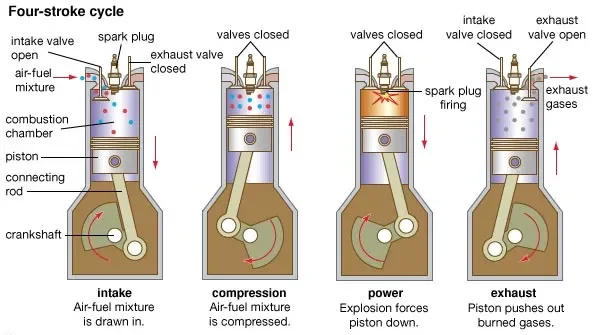
- Nikolaus Otto (1876): The Otto cycle engine, also known as the four-stroke engine, established the foundation for modern gasoline engines. Otto’s design demonstrated efficient fuel combustion within a cylinder, providing a controllable and repeatable power cycle.
- Karl Benz (1886): Often credited with creating the first practical automobile, Benz integrated a single-cylinder gasoline internal combustion engine into a three-wheeled vehicle. This design was lightweight, compact, and capable of self-starting—an essential step toward commercial viability.
- Gottlieb Daimler and Wilhelm Maybach: Pioneered high-speed gasoline engines with improved power-to-weight ratios, enabling faster and more reliable vehicles.
Early 20th Century: Standardization and Growth
- Multi-cylinder Engines: Single-cylinder engines were gradually replaced by multi-cylinder configurations, such as inline-four and inline-six engines, offering smoother operation and increased power.
- Carburetion Systems: Carburetors controlled the air-fuel mixture delivered to the cylinders, improving combustion efficiency and drivability.
- Ignition Advances: The introduction of magneto ignition systems and, later, battery-coil ignition improved spark reliability and engine starting performance.
Mid-20th Century: Refinement and Performance
- Overhead Valve (OHV) and Overhead Camshaft (OHC) Designs: These improved valve operation, allowing engines to breathe more efficiently and increase power output.
- Compression Ratio Optimization: Engineers increased compression ratios to extract more energy from fuel, improving both performance and fuel efficiency.
- Fuel Delivery Improvements: The evolution from carburetors to mechanical fuel injection systems provided more precise fuel metering, reducing wastage and improving throttle response.
- Engine Configurations: Inline, V-type, and flat (boxer) engines became common, each offering different advantages in packaging, power delivery, and vehicle handling.
Late 20th Century: Efficiency, Emissions, and Advanced Control
- Electronic Fuel Injection (EFI): EFI systems replaced mechanical fuel delivery, allowing precise control of fuel flow and ignition timing. This advancement improved fuel economy, reduced emissions, and enhanced engine performance.
- Emission Control Technologies: Catalytic converters, exhaust gas recirculation (EGR), and improved combustion chamber designs helped gasoline engines meet increasingly stringent environmental standards.
- Variable Valve Timing (VVT): By adjusting valve timing dynamically, engines achieved a better balance between low-end torque and high-end power, optimizing overall efficiency.
- Lightweight Materials: Aluminum engine blocks and cylinder heads reduced weight, improving fuel efficiency and handling without sacrificing strength.
Modern Gasoline Engines: High Performance and Efficiency
- Direct Fuel Injection: Delivers fuel directly into the combustion chamber, improving combustion efficiency and reducing fuel consumption.
- Turbocharging: Smaller engines achieve higher power outputs without increasing displacement, enhancing both performance and fuel economy.
- Multi-Cylinder Configurations: Inline-four, V6, and V8 engines remain popular, tailored to vehicle size and performance requirements.
- Engine Management Systems: Advanced electronic control units (ECUs) monitor and optimize ignition timing, fuel delivery, and emissions in real time.
Why Gasoline Internal Combustion Engines Remain Prevalent
- Cost and Accessibility: Gasoline engines are generally less expensive to manufacture and maintain than diesel alternatives. Components are widely available, ensuring ease of service and repair.
- Performance: Spark-ignition engines offer smooth acceleration and high RPM capability, suitable for everyday driving and highway use.
- Noise and Vibration: Compared to diesel engines, gasoline engines operate more quietly, improving cabin comfort.
- Fuel Availability: Gasoline infrastructure is extensive globally, allowing drivers convenient access to fuel.
Summary of Key Historical Milestones
| Era | Milestone | Impact on ICE Development |
|---|---|---|
|
1876 |
Otto four-stroke engine |
Established the basis for modern gasoline engines |
|
1886 |
Benz three-wheeled automobile |
First practical car using gasoline ICE |
|
Early 1900s |
Multi-cylinder engines & carburetors |
Improved power, smoothness, and drivability |
|
1940s–1970s |
OHV/OHC designs & fuel delivery refinement |
Enhanced performance and reliability |
|
1970s–1990s |
EFI, emission control, VVT |
Optimized efficiency and environmental compliance |
|
2000s–present |
Direct injection, turbocharging, ECUs |
High performance, fuel efficiency, and adaptability |
Conclusion
The internal combustion engine has been at the heart of automotive innovation for over a century. From Nikolaus Otto’s pioneering four-stroke design to today’s advanced gasoline engines, ICE technology has continuously evolved to meet consumer expectations, regulatory requirements, and performance demands. Gasoline internal combustion engines, in particular, have maintained their prominence due to their balance of affordability, smooth operation, and adaptability. Understanding the historical development of these engines provides a foundation for appreciating modern automotive powertrains and highlights the engineering expertise behind every vehicle on the road today.
Explore High-Quality Automotive Engines from Our Factory
For businesses, distributors, and automotive professionals seeking reliable and high-performance engines, our factory specializes in manufacturing a wide range of gasoline internal combustion engines. Each engine is produced with precision engineering, high-quality materials, and strict quality control to ensure durability and optimal performance.
Whether you are sourcing engines for passenger vehicles, commercial applications, or custom projects, we provide tailored solutions to meet diverse requirements. To learn more about our products or to discuss your specific engine needs, you can visit our product catalog or contact our sales team directly.
Discover our engines here: https://www.engineassy.com/products/