1. Neglecting the Engine’s Supporting Systems
- Why it Happens: The excitement of adding major power components overshadows the tedious yet critical task of upgrading fuel, cooling, and lubrication systems.
- The Costly Mistake: Installing a larger turbocharger without upgrading the fuel pump and injectors can lead to a lean condition, resulting in dangerously high Exhaust Gas Temperatures (EGT) and melting pistons. Similarly, ignoring the cooling system can cause catastrophic overheating under heavy load.
- How to Avoid It: Before you bolt on that new turbo, ensure your fuel delivery system can handle the estimated power increase with at least a 20% safety margin. Invest in a high-capacity radiator and a reliable oil cooler, especially for forced induction applications. A powerful engine is only as good as its weakest supporting component.
2. The “Bigger is Always Better” Fallacy
- Why it Happens: Misguided pursuit of peak dyno numbers rather than usable powerband characteristics.
- The Costly Mistake: Selecting a turbocharger that is too large will cause significant “turbo lag” at lower RPMs, making the car slow and unresponsive in daily driving. Choosing an overly aggressive camshaft can severely limit vacuum, cause valve-to-piston contact, and require a high-stall-speed converter, making the car unpleasant to drive.
- How to Avoid It: Match component selection to your intended use. For street cars, focus on components that improve mid-range torque and responsiveness. Use a turbocharger map to select a unit that operates efficiently within your engine’s primary RPM range. For internal components like the camshaft and cylinder head valves, precision and flow velocity often matter more than sheer size.
3. Ignoring the Importance of Quality Fasteners
- Why it Happens: Fasteners, such as head studs and connecting rod bolts, seem like minor expenses compared to major components.
- The Costly Mistake: Using stock or low-quality head bolts on a high-boost or high-compression engine can lead to cylinder head lift, which immediately causes a blown head gasket and coolant/oil mixing, quickly ruining the bearings. A failed rod bolt can cause the connecting rod to exit the side of the engine block.
- How to Avoid It: Always upgrade to high-quality, high-tensile strength fasteners (like those made from Chromoly or Inconel) for the connecting rods, main caps, and cylinder head studs. Always follow the manufacturer’s precise torque specifications and tightening procedures (e.g., using a torque-to-yield or stretch method).
4. Poor Piston Ring End Gap Selection
- Why it Happens: Overlooking this step, assuming factory specs will suffice, or not having the proper file-fitting tools.
- The Costly Mistake: If the end gap is too small, the heat of combustion will cause the rings to expand and butt against each other. This results in scoring the cylinder wall, loss of compression, and eventual piston failure.
- How to Avoid It: Always manually file-fit piston rings to the proper specification for your application. Forced induction and high-power naturally aspirated engines require a larger top-ring end gap than standard engines to accommodate the higher operating temperatures. Always consult the piston manufacturer’s recommendation.
5. Neglecting Valve Train Geometry and Clearance
- Why it Happens: Focusing too much on cylinder head flow numbers and not enough on the functional relationship between the camshaft and the rocker arm motion.
- The Costly Mistake: If pushrod length is incorrect or if the valve spring pressure is inadequate for the high lift and aggressive ramp rate of a performance camshaft, it can lead to valve float. Valve float causes the valve to bounce off the seat, resulting in lost power, engine damage, and, in severe cases, the valve impacting the piston.
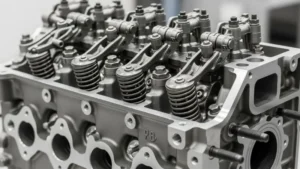
- How to Avoid It: Precisely measure the pushrod length to ensure correct rocker arm geometry. Always install valve springs, retainers, and keepers rated to handle the maximum lift and RPM of your new camshaft. When installing a modified cylinder head, perform a clay check to ensure adequate piston-to-valve clearance.
6. Mismanaging Engine Break-In (Run-In)
- Why it Happens: Impatience to experience the new power, or a lack of understanding of modern oil chemistry.
- The Costly Mistake: Modern oils often lack the high levels of ZDDP (Zinc Dialkyldithiophosphate) required to properly break in a new flat-tappet camshaft. Improper run-in, especially failing to hold RPMs above 2,000 for the first 20 minutes, can lead to the immediate failure (wiping out) of a new camshaft lobe and the corresponding lifter.
- How to Avoid It: Use specific break-in oil with high ZDDP content. For flat-tappet camshafts, the initial 20-30 minute run-in period is critical—keep the RPMs varied between 2,000 and 3,000 RPM to splash-lubricate the lobes.
7. Skipping the Professional Tuning Session
- Why it Happens: Trying to save the cost of professional dyno time, or overconfidence in off-the-shelf tuning solutions.
- The Costly Mistake: A generic tune cannot account for the specific airflow characteristics of your cylinder head, the precise fuel flow of your injectors, or the unique environmental factors (altitude, fuel quality) of your location. This can result in an overly aggressive ignition timing or a dangerously lean air-fuel ratio, leading to detonation (knock) and piston damage.
- How to Avoid It: Factor a professional dyno tune into your budget from the very start. Insist on a custom tune performed by an experienced specialist who monitors parameters like knock sensors, EGT, and manifold pressure under load.
8. Underestimating the Quality of the Core Components
- Why it Happens: Trying to save money on the core engine or trusting a used component that hasn’t been properly inspected and machined.
- The Costly Mistake: A cracked block, a warped cylinder head deck, or cylinder bores with excessive taper will undermine the sealing ability of the head gasket and piston rings, causing performance issues and eventual failure, often shortly after the build is completed.
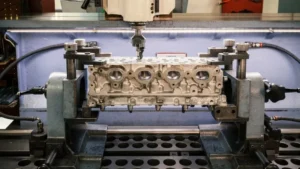
- How to Avoid It: Always have your core engine components professionally inspected. Have the block checked for cracks (using Magnaflux or dye penetrant testing) and ensure the deck surface of both the block and the cylinder head is perfectly flat and within manufacturer specifications.
9. Incorrectly Assembling the Oil Pump and Pickup Tube
- Why it Happens: Improper installation technique or not replacing the O-ring seals.
- The Costly Mistake: If the oil pump pickup tube is not correctly sealed to the pump inlet (often secured by an O-ring), the pump can suck air instead of oil from the pan. This causes oil pressure loss, which immediately starves the main bearings, rod bearings, and the valve train. The result is total engine seizure.
- How to Avoid It: Always use a new O-ring for the pickup tube seal. Lubricate the O-ring and ensure the tube is fully seated in the pump. Prime the oil pump manually before the initial start-up to ensure oil pressure is established immediately.
10. Neglecting Routine Maintenance after Modification
- Why it Happens: Assuming the stock maintenance schedule still applies, or a misplaced belief that the new parts are invincible.
- The Costly Mistake: Extended oil change intervals can lead to oil breakdown under the heat of forced induction, damaging turbo bearings and increasing wear on internal components. Ignoring spark plug heat range can lead to misfires and pre-ignition.
- How to Avoid It: Shorten your oil change interval significantly—typically every 3,000 to 5,000 miles for high-performance builds, using only high-quality synthetic oil. Regularly check the condition of spark plugs and adjust the heat range based on tuning results. Perform frequent oil analysis to monitor bearing wear and contaminant levels.
Building a high-performance engine requires patience, attention to detail, and quality components. Avoiding these common mistakes will save you time, money, and the frustration of a failed project. The difference between a reliable 500-horsepower build and a smoking pile of metal often comes down to the quality of the inspection and the precision of the assembly.
When you are ready to take your project to the next level, start with a foundation you can trust. XinJin Auto Parts is a leading factory specializing in the manufacturing and supply of high-quality cylinder heads and engines. We provide precision-engineered components built to withstand the demands of modified, high-performance applications.
If you are looking for reliable, factory-direct engines or cylinder heads for your next build, or if you need expert advice on component selection, feel free to contact XinJin Auto Parts today.