The heart of every great vehicle is its engine. While modern automotive trends lean toward electrification, the legacy of the internal combustion engine (ICE) remains the bedrock of automotive passion and engineering prowess. Whether it is the reliability of a daily commuter or the visceral scream of a supercar, certain powerplants have transcended their mechanical purpose to become cultural icons.
Defining the “best” engine is a subjective task that requires balancing raw performance, mechanical longevity, cultural impact, and engineering innovation. In this comprehensive guide, we rank the top 10 engines in automotive history, analyzing why they stood the test of time and why they continue to dominate the dreams of enthusiasts worldwide.
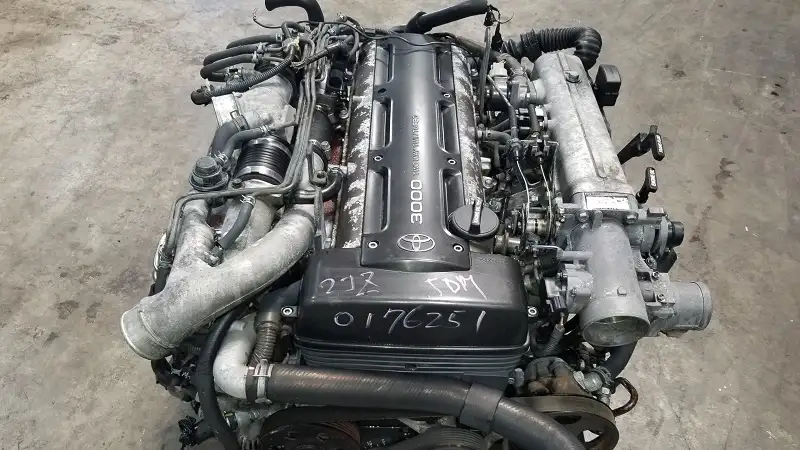
1. Toyota 2JZ-GTE: The Overbuilt Legend
If there is a “holy grail” of Japanese engineering, the Toyota 2JZ-GTE is it. Originally powering the MkIV Toyota Supra, this 3.0-liter inline-six was born during Japan’s “bubble economy,” a period where engineers were given nearly unlimited budgets to over-engineer every component.
The 2JZ-GTE is famous for its cast-iron block and forged internals, which were designed to handle far more than the factory-specified 276 horsepower (a limit set by a “gentleman’s agreement” among Japanese manufacturers). In the tuning world, it is common to see 2JZ engines producing 800 to 1,000 horsepower on stock bottom ends. Its sequential twin-turbocharged setup provided a smooth power band, but its true legacy lies in its bulletproof reliability under extreme stress.
Key Specifications:
- Configuration: 3.0L Twin-Turbo Inline-6
- Notable Vehicle: Toyota Supra (A80)
- Why it ranks: Unmatched tuning potential and thermal efficiency.
2. Chevrolet Small-Block V8 (LS Series): The Universal Powerplant
First introduced in 1955 and revolutionized with the LS series in 1997, the Chevrolet Small-Block V8 is arguably the most influential engine in American history. The LS series, specifically the LS1 and its successors, proved that a pushrod (overhead valve) design could be just as efficient and powerful as more complex dual-overhead-cam (DOHC) rivals.
The beauty of the LS lies in its compact dimensions and lightweight aluminum construction. This “power density” made it the default choice for engine swaps across the globe. From drift cars in Japan to classic muscle cars in Europe, the LS is celebrated for its simplicity, massive aftermarket support, and “LS-swap everything” culture.
Key Specifications:
- Configuration: 5.7L to 7.0L V8 (OHV)
- Notable Vehicle: Chevrolet Corvette, Cadillac CTS-V
- Why it ranks: Best-in-class power-to-weight ratio and ease of maintenance.
3. BMW S54: The Pinnacle of the Straight-Six
BMW built its reputation on the “Ultimate Driving Machine” mantra, and no engine embodies that better than the S54. Found in the E46 M3, this 3.2-liter naturally aspirated inline-six is a masterpiece of high-revving precision.
With individual throttle bodies for each cylinder and a redline of 8,000 RPM, the S54 offers a throttle response that few modern turbocharged engines can match. It produces over 100 horsepower per liter—a benchmark for naturally aspirated engines in the early 2000s. Its metallic “rasp” at high RPM is one of the most recognizable soundtracks in the automotive world.
Key Specifications:
- Configuration: 3.2L Naturally Aspirated Inline-6
- Notable Vehicle: BMW M3 (E46), Z4 M
- Why it ranks: Pure mechanical engagement and award-winning engineering.
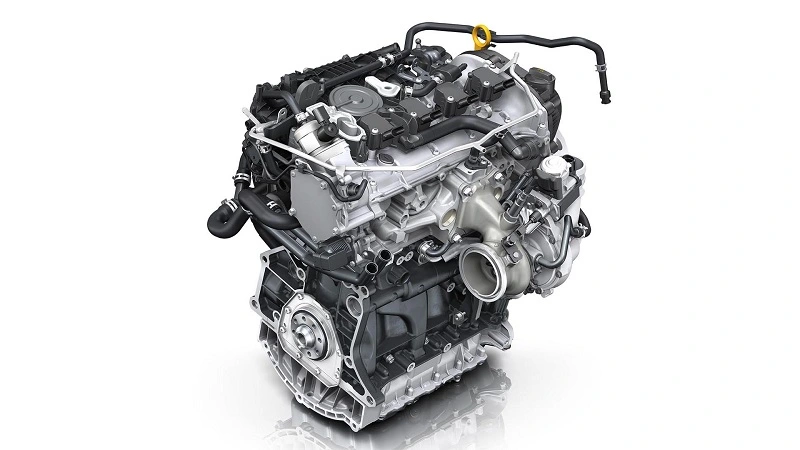
4. Volkswagen Group EA888: The King of Modern Versatility
The EA888 is perhaps the most important engine in the modern era of the Volkswagen Group. Spanning across brands like Audi, Volkswagen, Porsche, and Cupra, this 2.0-liter turbocharged four-cylinder redefined what a “global engine” could be. Now in its fourth generation (Evo4), it represents the perfect balance between daily efficiency and track-ready performance.
What sets the EA888 apart—particularly the Gen 3 and Gen 4 variants—is its sophisticated thermal management and the integration of the exhaust manifold into the cylinder head. For enthusiasts, the EA888 is a “tuning king”; with a simple ECU reflash, these engines can reliably gain 50-100 horsepower. It powers everything from the practical VW Golf GTI to the high-performance Audi S3 and Porsche Macan, proving its incredible adaptability.
Key Specifications:
- Configuration: 2.0L Turbocharged Inline-4
- Notable Vehicle: VW Golf R, Audi S3, Porsche Macan
- Why it ranks: Unbeatable versatility, modern efficiency, and massive aftermarket potential.
5. Honda B-Series (B16/B18): The VTEC Revolution
Before the B-Series, small-displacement four-cylinder engines were often viewed as economical but boring. Honda changed that perception forever with the introduction of VTEC (Variable Valve Timing and Lift Electronic Control).
The B16A was the first production engine to break the 100-hp-per-liter barrier in a mass-market car. By using two different cam profiles, Honda allowed the engine to be fuel-efficient at low speeds and a high-screaming race motor at high RPM. The B18C5, found in the Integra Type R, is often cited as the best-handling front-wheel-drive engine ever built, capable of sustained high-RPM abuse that would shatter other motors.
Key Specifications:
- Configuration: 1.6L to 1.8L Inline-4
- Notable Vehicle: Honda Civic Si, Acura Integra Type R
- Why it ranks: Bringing high-end racing technology to the affordable masses.
6. Nissan RB26DETT: The Godzilla Heart
While the 2JZ is known for its brute strength, the Nissan RB26DETT is known for its sophisticated racing pedigree. Purpose-built for Group A touring car racing, the RB26 powered the R32, R33, and R34 Nissan Skyline GT-Rs.
The “26” stands for its 2.6-liter displacement, specifically chosen to fit into a certain racing class when paired with Nissan’s ATTESA E-TS all-wheel-drive system. Unlike the 2JZ, the RB26 features six individual throttle bodies, giving it a sharper, more aggressive response. It is a technical marvel that earned the Skyline the nickname “Godzilla” for its dominance on the track.
Key Specifications:
- Configuration: 2.6L Twin-Turbo Inline-6
- Notable Vehicle: Nissan Skyline GT-R
- Why it ranks: Dominant racing history and iconic acoustic signature.
7. Porsche Flat-Six (Mezger Engine): The Le Mans Bloodline
Named after legendary engineer Hans Mezger, this water-cooled flat-six is the heart of Porsche’s most successful GT cars. The Mezger engine traces its roots directly to the 911 GT1 Le Mans winner.
What makes the Mezger special is its “true” dry-sump oiling system and two-piece crankcase, which differ significantly from the standard 911 engines of the era. It was designed to endure 24 hours of racing at the limit. For enthusiasts, a “Mezger” 911 (like the 996 or 997 GT3) represents the pinnacle of Porsche reliability and mechanical purity.
Key Specifications:
- Configuration: 3.6L to 4.0L Flat-6
- Notable Vehicle: Porsche 911 GT3 (996/997), 911 Turbo
- Why it ranks: Direct motorsport heritage and unrivaled durability.
8. Mercedes-Benz OM617: The Million-Mile Diesel
Not every great engine is about speed. The Mercedes-Benz OM617 is the gold standard for reliability. This 3.0-liter five-cylinder turbodiesel is the engine that built Mercedes’ reputation for “over-engineering.”
In the 1970s and 80s, these engines were commonly found in W123 sedans that served as taxis across Europe and Africa. It is not unusual to find OM617 engines with over 500,000 miles (800,000 km) on the original internals. It is a slow, heavy, and loud engine, but it is virtually indestructible, proving that engineering excellence can also be measured in decades of service.
Key Specifications:
- Configuration: 3.0L 5-Cylinder Diesel
- Notable Vehicle: Mercedes-Benz 300D, 300SD
- Why it ranks: The benchmark for global automotive longevity.
9. Ferrari Colombo V12: The Soul of Maranello
The Ferrari V12, designed by Gioacchino Colombo, is the engine that put Ferrari on the map. Beginning as a tiny 1.5-liter unit in 1947, it evolved over decades to power the legendary 250 GTO and the 365 GTB/4 Daytona.
The Colombo V12 is less of a machine and more of a musical instrument. Its complex valvetrain and multi-carburetor setups produced a symphony that defined the “Ferrari sound.” Beyond the aesthetics, it was a winner, propelling Ferrari to countless victories at Le Mans and in Formula 1.
Key Specifications:
- Configuration: 1.5L to 4.9L V12
- Notable Vehicle: Ferrari 250 GTO, Testarossa
- Why it ranks: Artistic beauty combined with world-class racing success.
10. Ford Flathead V8: The Engine That Democratized Speed
Before 1932, V8 engines were reserved for luxury cars. Henry Ford changed the world with the Flathead V8, bringing eight-cylinder power to the average person. It featured a simple design with the valves located in the engine block rather than the head.
While inefficient by modern standards, the Flathead V8 birthed the “Hot Rod” culture in America. It was simple to work on, easy to modify, and provided a low-end torque that redefined what a “people’s car” could do. It remained in production for over 20 years and laid the foundation for the entire American performance industry.
Key Specifications:
- Configuration: 3.6L to 4.2L V8
- Notable Vehicle: Ford Model 18, Ford F-Series
- Why it ranks: Historical significance and the birth of aftermarket tuning.
Why Engine Rankings Matter for Enthusiasts and Buyers
When researching the best engines in the world, consumers often focus on raw horsepower. However, high-intent searches for automotive engineering reveal that reliability, parts availability, and tuning potential are equally important. For instance, the inclusion of the EA888 and the LS V8 highlights how modular design allows an engine to remain relevant across multiple generations of vehicles.
For those looking to invest in a performance vehicle or a project car, understanding these powerplants is essential. A car is only as good as its heart, and these ten engines have proven to be the most resilient, powerful, and emotionally resonant designs ever to hit the asphalt.
Technical Comparison
To further assist readers in their automotive journey, we have summarized the core strengths of these icons. Whether you are a fan of high-RPM Japanese engineering or the torque-heavy reliability of American and German steel, there is an engine on this list for every philosophy.
| Engine Type | Primary Strength | Best For |
|---|---|---|
|
Toyota 2JZ |
Extreme Durability |
High-Horsepower Builds |
|
VW EA888 |
Modern Efficiency |
Daily Drivers & Stage 2 Tuning |
|
BMW S54 |
Throttle Response |
Track Days & Driving Purity |
|
Honda B-Series |
High-RPM VTEC |
Lightweight Sports Cars |
|
Merc OM617 |
Longevity |
High-Mileage Dependability |
Final Thoughts on Choosing the Right Engine
If you are looking for a car that offers a blend of performance and long-term value, focusing on the engine is the best place to start. Whether you prioritize the “tunability” of a Japanese turbo or the “soul” of an Italian V12, the engines listed above are the gold standard of their respective categories.
Maintaining these legendary powerplants requires precision-engineered components that meet or exceed original standards. If you are in the market for high-quality engines or cylinder heads, look no further than XinJin Auto Parts. As a rising brand in the global automotive industry, we specialize in premium aftermarket solutions designed for durability and performance.
With a rapidly growing reputation for excellence and a commitment to delivering superior products, XinJin Auto Parts is becoming the trusted choice for enthusiasts and professionals alike. Contact us today to ensure your vehicle’s heart continues to beat with peak efficiency and power.