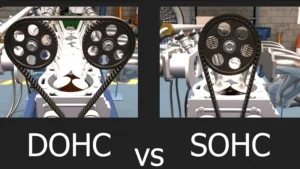
When browsing vehicle specifications or looking for replacement engine parts, two acronyms frequently appear: SOHC and DOHC. These terms refer to the design of the cylinder head and the mechanism that controls the engine’s valves. While both systems serve the same fundamental purpose—managing the air-fuel intake and exhaust expulsion—the way they achieve this significantly impacts performance, fuel efficiency, and maintenance.
Understanding the nuance between a Single Overhead Cam (SOHC) and a Double Overhead Cam (DOHC) setup is essential for automotive enthusiasts, mechanics, and car buyers alike. In this guide, we will break down the mechanics, advantages, and drawbacks of each system to help you understand which architecture best suits specific driving needs.
The Fundamentals of the Overhead Camshaft
To appreciate the difference between SOHC and DOHC, we must first understand the role of the camshaft. The camshaft is a rotating shaft fitted with “cams” (lobed profiles) that push against the valves to open them at precise intervals.
In older engine designs, the camshaft was located inside the engine block (Overhead Valve or OHV engines). However, modern engineering has moved the camshaft to the cylinder head, directly above the valves. This is known as an “Overhead Cam” (OHC) design. By placing the cam closer to the valves, manufacturers can reduce reciprocating mass, allowing the engine to reach higher RPMs and operate with greater precision.
What is SOHC (Single Overhead Cam)?
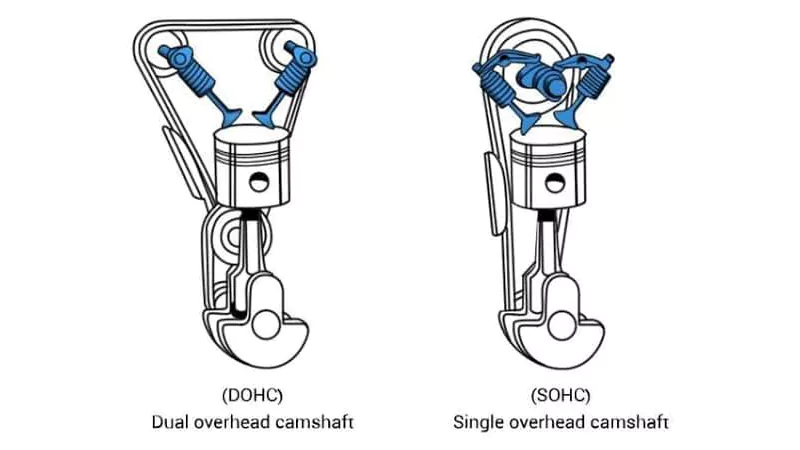
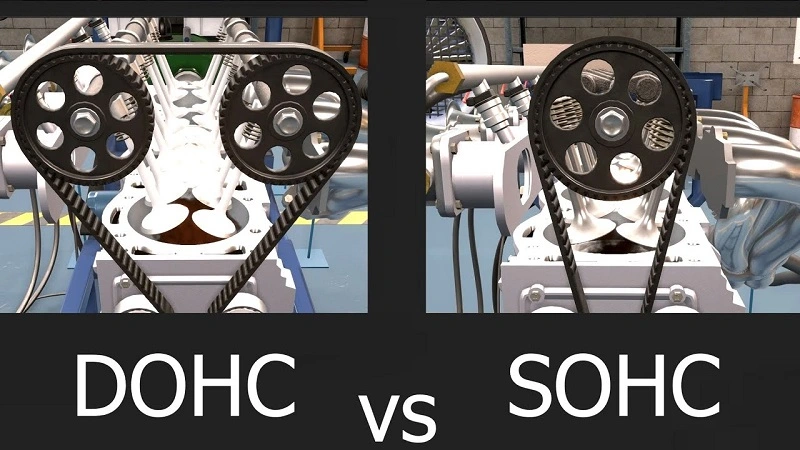
In an SOHC engine, a single camshaft is positioned within each cylinder head. If it is an inline engine (like an I4), there is one cam. If it is a V-shaped engine (like a V6 or V8), there is one cam per bank of cylinders.
How SOHC Works
The single camshaft is responsible for operating both the intake valves and the exhaust valves. Because there is only one shaft, it usually sits in the center of the cylinder head. It uses rocker arms to reach the valves, which are typically arranged in a simple V-pattern.
Advantages of SOHC
- Simplicity and Weight: With fewer moving parts (one shaft instead of two), SOHC heads are generally lighter and less complex.
- Low-End Torque: SOHC designs often excel at providing better torque at lower RPMs, making them ideal for commuting and city driving.
- Cost-Effective: Fewer components result in lower manufacturing costs and, often, more affordable replacement parts for the end consumer.
- Compact Design: The cylinder head is physically smaller, which can be a significant advantage in tight engine bays.
Disadvantages of SOHC
The primary limitation of SOHC is its restricted airflow at high speeds. Because one shaft manages all valves, there is less flexibility in valve timing. Additionally, SOHC engines typically feature two or three valves per cylinder, which limits the volume of air the engine can “breathe” compared to multi-valve DOHC setups.
What is DOHC (Double Overhead Cam)?
DOHC, often referred to as “Twin Cam,” utilizes two separate camshafts per cylinder head. One camshaft is dedicated exclusively to the intake valves, while the other controls the exhaust valves.
How DOHC Works
By separating the intake and exhaust functions, engineers can place the valves directly beneath the camshafts. This eliminates the need for complex rocker arm geometries and allows for a “Pent-roof” combustion chamber design. This layout typically permits four valves per cylinder (two intake and two exhaust), significantly increasing the surface area for airflow.
Advantages of DOHC
- High-RPM Performance: Because DOHC engines breathe better at high speeds, they produce more horsepower. This makes them the standard for sports cars and modern performance vehicles.
- Variable Valve Timing (VVT): DOHC makes it much easier to implement advanced VVT systems. Since the intake and exhaust cams are independent, their timing can be adjusted separately to optimize efficiency across the entire powerband.
- Efficiency and Power Density: A 2.0L DOHC engine will almost always produce more power than a 2.0L SOHC engine because of the increased valve count and optimized combustion.
- Spark Plug Placement: With the cams pushed to the sides, the spark plug can be placed exactly in the center of the combustion chamber, leading to more efficient ignition.
Disadvantages of DOHC
The main drawbacks are complexity and size. DOHC heads are wider and heavier. They require longer timing belts or chains and more tensioners, which can increase the cost of a major service (such as a timing belt replacement).
SOHC vs. DOHC: A Comparative Analysis
To choose the right architecture, we must look at how these differences manifest in real-world driving.
1. Volumetric Efficiency
Volumetric efficiency is a measure of how well an engine moves air in and out. DOHC engines are the clear winners here. By utilizing four valves per cylinder, the engine can move a larger volume of air with less resistance. Imagine drinking through four straws instead of two; the effort required is lower, and the flow is higher.
2. Valve Control and Timing
In an SOHC engine, the relationship between intake and exhaust timing is fixed by the physical grind of the single camshaft. In a DOHC engine, the intake cam can be advanced or retarded independently of the exhaust cam. This allows for “valve overlap” optimization, which improves fuel economy at cruising speeds and maximizes power under heavy acceleration.
3. Maintenance and Reliability
SOHC engines are often praised for their durability and ease of repair. If a timing belt snaps on an older SOHC engine, the repair is often straightforward. DOHC engines, with their dual shafts and multiple cam gears, are more labor-intensive to service. However, modern manufacturing has made both systems incredibly reliable, provided the owner adheres to the manufacturer’s maintenance schedule.
| Feature | SOHC | DOHC |
|---|---|---|
|
Camshafts per head |
1 |
2 |
|
Typical valves per cylinder |
2 or 3 |
4 or 5 |
|
Top-end Horsepower |
Moderate |
High |
|
Low-end Torque |
Excellent |
Good |
|
Complexity |
Low |
High |
|
Fuel Efficiency |
Good |
Excellent (with VVT) |
Why the Industry Shifted to DOHC
If you look at the automotive market today, DOHC has become the dominant architecture. Even economy cars that prioritize fuel savings over speed have made the switch. Why?
The answer lies in global emissions standards and the demand for efficiency. To meet strict CO2 targets, engines must be smaller. To get usable power out of a small engine (like a 1.0L or 1.5L turbocharged unit), the engine must be highly efficient. DOHC provides the platform for the advanced technologies—such as Gasoline Direct Injection (GDI) and sophisticated Variable Valve Timing—required to meet these modern standards.
While SOHC remains a viable and respected design for certain trucks and budget-friendly vehicles where low-end grunt is preferred over high-RPM racing, DOHC is the path forward for the majority of the industry.
Key Components and Replacement Considerations
Regardless of whether you drive an SOHC or DOHC vehicle, the health of the cylinder head components is paramount. Over time, heat and friction can wear down camshaft lobes, valve seals, and guides.
When performing a cylinder head overhaul, it is vital to use precision-machined components. Because DOHC systems involve more moving parts, the tolerances are much tighter. A slight misalignment in a DOHC timing setup can lead to catastrophic engine failure if the valves strike the pistons (in “interference” engine designs).
Identifying Your Engine Type
If you are unsure which system your car uses, you can usually find this information in a few places:
- The Engine Cover: Many manufacturers proudly stamp “16V” (indicating 4 valves per cylinder, usually DOHC) or “Twin Cam” on the plastic beauty cover.
- The VIN Number: Decoding your Vehicle Identification Number will reveal the specific engine code.
- Physical Inspection: On many inline engines, a wide cylinder head usually indicates DOHC, while a narrow, peaked head suggests SOHC.
Conclusion: Which is Better?
There is no “perfect” engine design; there is only the right design for the application.
- Choose SOHC if you value simplicity, lower maintenance costs, and need an engine that delivers strong performance at lower speeds. It is a workhorse architecture that has powered millions of reliable vehicles for decades.
- Choose DOHC if you want maximum performance, better fuel efficiency through advanced technology, and a smoother power delivery at highway speeds.
As engines continue to evolve, the precision of the cylinder head remains the heart of vehicle performance. Ensuring these components are manufactured to the highest standards is the only way to guarantee longevity and power.
Maintaining the integrity of your valvetrain requires parts built to exacting specifications. As a dedicated manufacturer, XinJin Auto Parts provides high-quality cylinder heads and engine components for both SOHC and DOHC configurations. If you require reliable parts for your next repair or build, please contact us to learn how we can support your needs.