When it comes to automotive propulsion, the battle between the rotary engine and the traditional piston engine is one of the most storied rivalries in mechanical engineering. For decades, car enthusiasts and engineers have debated which architecture offers the superior driving experience. While the reciprocating piston engine has become the global standard for everything from economy commuters to heavy-duty trucks, the rotary engine remains a cult classic, synonymous with high-revving performance and smooth power delivery.
Understanding the nuances between these two powerplants is essential for any automotive professional or hobbyist. This guide breaks down the mechanics, advantages, and drawbacks of each to help you understand why they occupy such different spaces in the automotive landscape.
The Mechanical Foundation: How They Work
At their core, both engines are internal combustion devices that convert chemical energy from fuel into mechanical work. However, the path they take to achieve that rotation is fundamentally different.
The Piston Engine: Reciprocating Motion
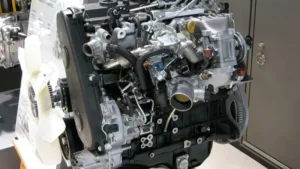
The vast majority of vehicles on the road today use a reciprocating piston engine. Whether it is an inline-four, a V8, or a flat-six, the basic principle remains the same.
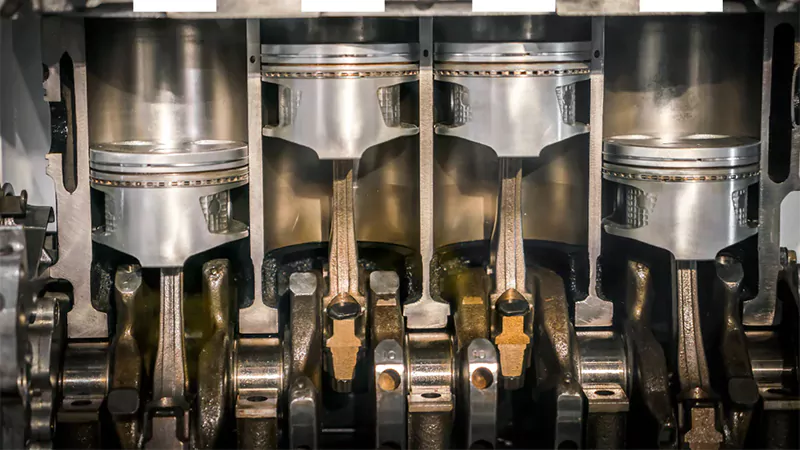
Inside a cylindrical bore, a piston moves up and down. This linear motion is converted into rotational motion by a crankshaft, much like how a cyclist’s legs move up and down to turn the gears of a bike. This cycle involves four distinct stages—Intake, Compression, Power, and Exhaust—often referred to as the Otto Cycle. Because the pistons must stop and reverse direction thousands of times per minute, this design inherently generates vibration and mechanical stress.
The Rotary (Wankel) Engine: Orbital Motion
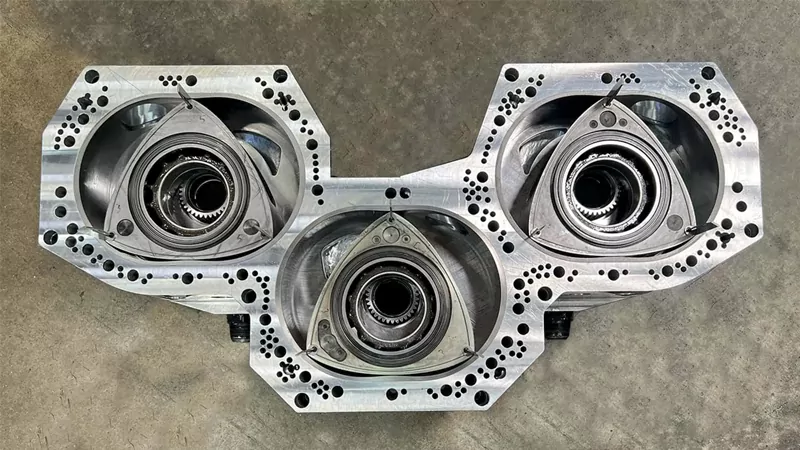
The rotary engine, or Wankel engine, operates without pistons. Instead, it features a Reuleaux triangle-shaped rotor that spins inside an epitrochoid (oval-shaped) housing.
As the rotor turns, it creates three separate chambers that change in volume. As the rotor orbits the central eccentric shaft, it completes the same four stages (Intake, Compression, Combustion, Exhaust) simultaneously in different sections of the housing. Because the motion is purely rotational and continuous, there are no heavy parts changing direction, allowing for incredibly high RPMs and a compact footprint.
Power Density and Weight: The Rotary Advantage
One of the most compelling arguments for the rotary engine is its incredible power-to-weight ratio. Because a rotary engine produces power during 360 degrees of eccentric shaft rotation (compared to 720 degrees for a single-cylinder four-stroke piston engine), it can produce significant horsepower from a very small displacement.
A typical 1.3-liter rotary engine, such as the Mazda 13B found in the RX-7, can produce power figures comparable to a 2.5-liter or 3.0-liter piston engine. Furthermore, a rotary engine has significantly fewer moving parts. A standard V6 engine has dozens of moving components, including valves, camshafts, timing chains, rockers, and lifters. A two-rotor engine, by contrast, has as few as three main moving parts: two rotors and an eccentric shaft.
This simplicity reduces the overall mass of the vehicle, improves weight distribution, and allows for a lower center of gravity, which is why rotary engines are legendary in the world of sports car racing and drifting.
Reliability and Longevity: The Piston Engine’s Stronghold
While the rotary wins on size, the piston engine dominates when it comes to long-term durability and maintenance.
Thermal Management and Seal Wear
The biggest Achilles’ heel of the rotary engine is the apex seal. These are the seals located at the three points of the triangular rotor, responsible for maintaining compression between the chambers. Because the combustion process in a rotary engine always happens in the same part of the housing, that specific area remains extremely hot, while the intake side remains cool. This uneven thermal distribution can lead to warping or seal failure over time.
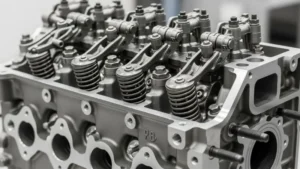
Piston engines, conversely, benefit from a more uniform heat distribution. The entire cylinder head and block are designed to handle the heat of combustion across the full stroke. Modern piston engines can easily surpass 200,000 miles with basic maintenance, whereas many rotary engines require a comprehensive “rebuild” (replacing seals and O-rings) much sooner.
Oil Consumption
By design, rotary engines are built to consume oil. To keep the apex seals lubricated against the housing walls, the engine injects a small amount of oil into the combustion chamber. This means owners must constantly monitor oil levels. In a piston engine, burning oil is usually a sign of a mechanical failure; in a rotary, it is a requirement for survival.
Efficiency and Environmental Impact
In the modern era of strict emissions regulations, the piston engine has adapted through technologies like variable valve timing (VVT), direct injection, and cylinder deactivation. Its ability to maintain high compression ratios and complete combustion makes it relatively efficient.
The rotary engine struggles in this department. Due to the long, thin shape of the combustion chamber, the fuel-air mixture often fails to burn completely. This results in unburnt hydrocarbons exiting the exhaust, leading to higher emissions and lower fuel economy. While engineers have made strides in improving rotary efficiency, it remains a “thirsty” engine architecture that typically delivers the fuel economy of a V8 with the torque of a four-cylinder.
Driving Characteristics: The "Feel" of the Engine
For the driver, the choice between these two engines often comes down to emotion rather than spreadsheets.
- Piston Engines provide a familiar, “torquey” feel. You can feel the mechanical thump of the cylinders, and power is often delivered in a predictable, linear fashion. They are versatile, capable of towing heavy loads or cruising quietly at low RPMs.
- Rotary Engines offer a “turbine-like” smoothness. Because there is no reciprocating mass, the engine can rev to 9,000 RPM and beyond without the harsh vibrations found in a piston engine. The exhaust note is also unique—a high-pitched “brapping” at idle that turns into a screaming wail at high speeds.
| Feature | Piston Engine | Rotary Engine |
|---|---|---|
|
Primary Motion |
Reciprocating (Up/Down) |
Rotational (Orbital) |
|
Moving Parts |
High (Valves, Camshafts, etc.) |
Low (Rotors, Eccentric Shaft) |
|
Vibration |
Moderate to High |
Very Low |
|
Size/Weight |
Larger and Heavier |
Compact and Lightweight |
|
Fuel Efficiency |
Good to Excellent |
Poor |
|
Maintenance |
Low (Long intervals) |
High (Requires specialized care) |
Conclusion: Which Architecture Wins?
There is no definitive “winner” in the debate between rotary and piston engines; there is only the “right tool for the job.” The piston engine is the champion of reliability, efficiency, and mass production. It powers the world’s logistics and daily commutes with unwavering consistency. The rotary engine, however, remains a masterpiece of alternative engineering—a lightweight, high-revving marvel that prioritizes performance and smoothness over practicality.
Maintaining these complex machines requires precision-engineered components that can withstand extreme heat and friction. At XinJin Auto Parts, we are a dedicated factory specializing in high-quality engine components for various platforms. If you are looking for reliable parts to keep your vehicle running at peak performance, please contact us today.