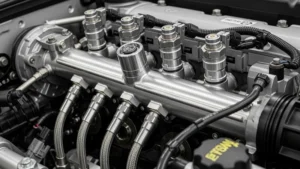
When your engine starts showing signs of trouble, determining whether you’re dealing with a cracked engine block or a damaged cylinder head can mean the difference between a manageable repair and a complete engine replacement. Both components form the heart of your engine’s structure, and damage to either can lead to catastrophic failure if left unaddressed.
Understanding the differences between these two critical failures helps you make informed decisions about repairs, costs, and whether replacement parts are necessary. This comprehensive guide walks you through the symptoms, causes, and diagnostic methods to identify which component has failed in your engine.
Understanding Engine Block Head Components
Before diving into diagnosis, it’s essential to understand what these components do and how they work together.
The engine block serves as the foundation of your entire engine. This massive casting houses the cylinders, coolant passages, and oil galleries. It must withstand extreme pressure and temperature while maintaining structural integrity under constant stress.
The cylinder head sits on top of the engine block, sealing the combustion chambers. It contains the valves, spark plugs (in gasoline engines), and forms the upper boundary of the combustion chamber. Between these two components sits the head gasket, which creates a seal to prevent combustion gases, coolant, and oil from mixing.
These components must work in perfect harmony. The engine block head assembly experiences tremendous forces during operation. Combustion pressures can exceed 1,000 PSI in diesel engines, while temperatures regularly reach over 200 degrees Fahrenheit. This constant thermal cycling and mechanical stress eventually takes its toll on even the most robust materials.
Common Symptoms of Engine Block Head Damage
Several warning signs indicate problems with your engine block head assembly. Recognizing these symptoms early can prevent minor issues from becoming major failures.
Coolant Leaks and Consumption
One of the most obvious signs of damage appears as coolant leaks. External leaks might appear as puddles under your vehicle or visible drips from the engine. However, internal leaks prove more insidious. If you find yourself constantly topping off coolant without visible external leaks, the coolant may be leaking internally into the combustion chamber or oil passages.
White smoke from the exhaust often accompanies internal coolant leaks. This happens when coolant enters the combustion chamber and burns along with the fuel. The smoke typically has a sweet smell and appears thicker than normal exhaust vapor.
Oil Contamination Issues
Check your oil regularly for signs of contamination. Coolant mixing with oil creates a milky, coffee-colored substance that looks nothing like fresh engine oil. This contamination appears most obviously on the oil cap and dipstick. If you notice this “milkshake” appearance, stop driving immediately, as this condition can destroy your engine bearings within minutes.
Conversely, oil in the coolant appears as an oily film floating on top of the coolant in the reservoir or radiator. This often indicates a more severe breach in the engine block head seal.
Engine Performance Problems
Damage to the engine block head assembly directly impacts performance. You might experience rough idling, misfires, or reduced power. These symptoms occur because damaged areas compromise cylinder sealing, reducing compression and combustion efficiency.
Overheating represents another critical symptom. Cracks in either component can disrupt coolant flow, creating hot spots that lead to rapid temperature increases. Modern engines have sophisticated cooling systems, so persistent overheating despite a full coolant system suggests structural damage.
How to Diagnose a Cracked Engine Block
Identifying a cracked engine block requires systematic testing and careful observation. These methods help pinpoint block damage specifically.
Visual Inspection Methods
Start with a thorough visual inspection. Clean the engine block exterior and look for hairline cracks, especially around cylinder walls and coolant passages. Use a bright light and magnifying glass for detailed examination. Cracks often appear as fine lines that may weep coolant or oil.
Check for signs of previous repairs. Welding marks or epoxy patches indicate someone attempted to fix cracks before. These repairs often fail over time, especially if the underlying cause wasn’t addressed.
Pressure Testing Procedures
A cooling system pressure test provides definitive evidence of block cracks. This test pressurizes the cooling system and monitors for pressure drops. A steadily falling gauge indicates a leak somewhere in the system.
To isolate the engine block specifically, perform the test with the cylinder head removed if possible. This eliminates the head and head gasket as potential leak sources. Pressure testing works best when combined with dye penetrant testing, which makes tiny cracks visible under UV light.
Compression and Leak-Down Testing
Compression testing measures the pressure each cylinder can generate. Significantly low compression in one or more cylinders suggests problems with the cylinder wall or piston sealing. However, compression tests alone cannot distinguish between block cracks, ring problems, or valve issues.
Leak-down testing provides more specific information. This test introduces compressed air into each cylinder at top dead center and measures how much pressure escapes. Listen for where the air escapes. Air coming from the oil cap or dipstick tube suggests ring problems. Air from the exhaust or intake indicates valve issues. Air bubbling into the coolant reservoir points to a cracked block or head gasket failure.
Identifying Cylinder Head Damage
Cylinder head damage presents different challenges and symptoms compared to block cracks. Proper diagnosis requires understanding these distinctions.
Warpage Detection Techniques
Cylinder heads commonly warp rather than crack, especially after overheating. Even slight warpage prevents proper sealing with the engine block. A warped head might show gasket failure symptoms without an actual crack being present.
Checking for warpage requires removing the head and measuring it with a precision straightedge and feeler gauges. Specifications vary by engine, but most manufacturers allow no more than 0.002 to 0.004 inches of warpage across the head surface. Any measurement beyond specification requires machining or replacement.
Crack Identification Procedures
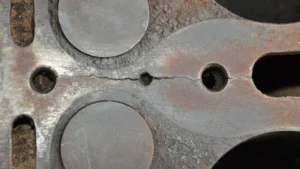
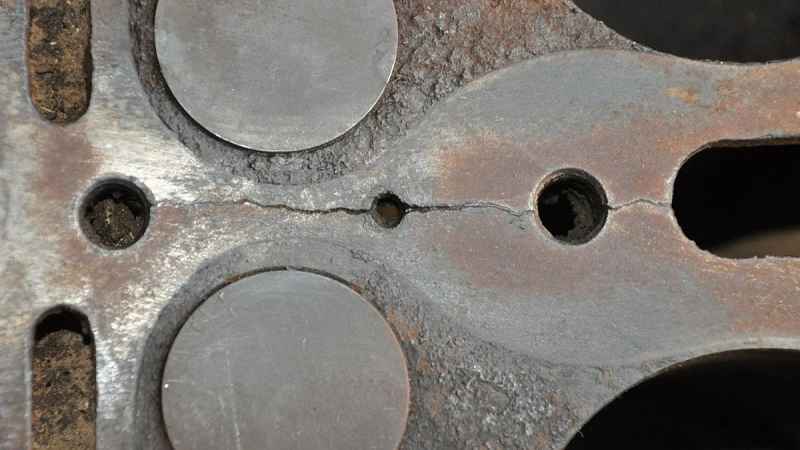
Cylinder head cracks typically occur in high-stress areas between valve seats or around combustion chambers. These cracks might not be visible to the naked eye. Professional shops use magnetic particle inspection or dye penetrant testing to locate hairline cracks.
Some heads develop cracks in coolant passages that only leak under pressure and temperature. These cracks might not show up during visual inspection but cause persistent coolant loss during operation.
Valve Seat and Guide Inspection
While inspecting the head, check valve seats and guides. Loose valve seats can mimic crack symptoms by allowing combustion gases into the coolant passages. Similarly, worn valve guides affect compression readings and can confuse diagnosis.
Key Differences in Damage Patterns
Understanding typical damage patterns helps distinguish between block and head failures without extensive disassembly.
Location of Common Failure Points
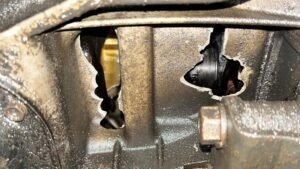
Engine blocks typically crack in specific areas. Cylinder wall cracks often appear between adjacent cylinders where the walls are thinnest. Main bearing cap areas can crack from extreme stress. Coolant passage cracks usually occur in areas with sharp corners or thickness changes where stress concentrates.
Cylinder heads most commonly crack between valve seats, particularly between the exhaust valves that experience the highest temperatures. Cracks around the combustion chamber perimeter indicate overheating or detonation damage. Some diesel engines develop cracks between the precombustion chamber and main chamber.
Temperature-Related Versus Stress-Related Damage
Engine blocks primarily fail from casting defects, freeze damage, or extreme overheating. The block’s thick sections make it relatively resistant to thermal stress compared to the head. However, once a block cracks, the damage typically proves irreparable through normal means.
Cylinder heads fail more often from thermal stress because they experience greater temperature extremes. The thin sections between valve seats particularly struggle with the heating and cooling cycles. Repeated overheating eventually fatigues the material, leading to cracks even in well-maintained engines.
Material Composition Considerations
Modern engines use different materials for blocks and heads. Cast iron blocks offer excellent durability and heat resistance but prove heavy and expensive to manufacture. Aluminum blocks reduce weight significantly but require more careful operation to avoid overheating damage.
Cylinder heads frequently use aluminum alloys, even on cast iron block engines. Aluminum conducts heat more effectively, helping manage combustion chamber temperatures. However, aluminum heads expand more than iron blocks during heating, placing additional stress on head gaskets and head bolts. This differential expansion contributes to head gasket failures and warpage issues.
Repair Options and Cost Considerations
Once you’ve identified the problem, understanding repair options helps you make economical decisions.
When Repair Makes Sense
Minor cylinder head cracks can sometimes be repaired through specialized welding techniques. Machine shops can also resurface warped heads if warpage falls within acceptable limits. These repairs cost significantly less than replacement, typically ranging from $200 to $500 depending on complexity.
Engine block repairs prove more challenging. Small cracks in non-critical areas might be repairable through specialized processes, but success rates vary. Most mechanics recommend replacement for cracked blocks because repairs rarely provide long-term reliability.
Replacement Part Considerations
When replacement becomes necessary, you face several options. Original equipment manufacturer (OEM) parts guarantee fit and quality but cost the most. Aftermarket parts offer savings but vary widely in quality. Remanufactured components provide a middle ground, offering OEM-quality parts at reduced prices.
For engine block head assemblies, quality matters enormously. Cheap components might fit initially but can fail prematurely, leading to repeated repairs and downtime. Consider the total cost of ownership, not just the upfront price.
Long-Term Reliability Factors
Before deciding on repairs, consider your engine’s overall condition. If the block or head failed due to overheating, other components likely suffered damage too. Repairing one cracked component might buy time, but you could face additional failures soon after.
High-mileage engines with cracked blocks often make better candidates for complete replacement rather than repair. The labor cost to remove and reinstall an engine block head assembly often exceeds the parts cost, making repairs economically questionable on older engines.
Prevention and Maintenance Best Practices
Preventing engine block head damage costs far less than repairs. Following these practices extends your engine’s life significantly.
Cooling System Maintenance
Proper cooling system maintenance prevents most thermal-related failures. Flush and replace coolant according to manufacturer specifications. Modern coolants contain additives that prevent corrosion and maintain proper heat transfer. Old coolant loses these properties, allowing hot spots that lead to cracks.
Check coolant levels regularly and address leaks immediately. Even small leaks reduce cooling system pressure and effectiveness. Inspect hoses and clamps for deterioration. A burst coolant hose can cause catastrophic overheating in seconds.
Proper Operating Procedures
Avoid extreme temperature cycling when possible. Allowing your engine to warm up before heavy operation and cool down before shutdown reduces thermal stress on components. This practice proves especially important in turbocharged engines where extreme temperatures stress materials.
Never add cold coolant to an overheated engine. The rapid temperature change can crack both the block and head. Instead, allow the engine to cool naturally before adding fluids.
Regular Inspection Schedules
Develop a routine inspection schedule. Check for coolant and oil leaks regularly. Monitor engine temperature during operation. Pay attention to any changes in how your engine runs or sounds. Early detection of problems allows for intervention before minor issues become major failures.
Have your cooling system pressure tested annually. This simple test can identify small leaks before they become serious problems. The test costs minimal compared to engine repairs.
Finding Quality Replacement Parts
When repairs or replacement become necessary, sourcing quality parts makes all the difference in long-term reliability and performance. Whether you need a complete engine block head assembly or individual components, choosing the right supplier ensures you get parts that meet or exceed original specifications.
For businesses requiring engine components in quantity or those seeking custom solutions, working directly with manufacturers offers distinct advantages. Factory-direct sourcing eliminates middleman markups while ensuring consistent quality across orders. As a factory specializing in engine components, XJXPARTS provides custom manufacturing solutions for engine blocks, cylinder heads, and related components tailored to specific applications and requirements. Contact us to discuss your engine component needs.