For engine distributors, importers, and wholesalers, knowing how these two essential components differ in function, material, and manufacturing requirements helps ensure the parts you supply deliver consistent reliability.
1. Understanding the Role of Each Shaft
Crankshaft: The Engine’s Power Converter
For this reason, a crankshaft requires high-strength alloy steel, precise balancing, and superior surface finishing to handle friction and vibration without deformation.
Camshaft: The Timing Controller
A well-machined camshaft ensures perfect timing between valve movement and piston stroke, which is essential for efficient combustion and fuel economy.
2. Key Structural Differences That Affect Manufacturing
| Feature | Crankshaft | Camshaft |
|---|---|---|
|
Material Composition |
Forged or cast steel, sometimes with nitriding treatment |
Alloy steel, cast iron, or chilled cast iron |
|
Main Function |
Converts piston motion into rotational motion |
Controls valve timing |
|
Stress Points |
Journals, fillets, counterweights |
Lobes, journals |
|
Machining Process |
Forging → rough machining → heat treatment → grinding and balancing |
Casting → hardening → CNC machining of lobes and journals |
|
Precision Requirement |
Balance and concentricity are critical |
Lobe lift and timing accuracy are critical |
Because of these differences, many manufacturers specialize in one of the two components rather than producing both. Each requires dedicated machinery, tooling, and inspection systems to achieve consistent precision.
3. Manufacturing Standards and Quality Control
A. Crankshaft Quality Control
- Runout testing to ensure no bending during rotation
- Hardness testing to verify consistent heat treatment results
- Dynamic balancing to prevent vibration at high RPM
- Crack detection using magnetic particle or ultrasonic inspection
B. Camshaft Quality Control
Common inspection methods include:
- Profile measurement for cam lobe lift and duration
- Surface hardness testing after induction hardening
- Journal diameter inspection to guarantee oil clearance consistency
- Visual inspection for surface defects such as pitting or scoring
A manufacturer with in-house CNC equipment and automated measurement systems provides better repeatability and traceability, which helps distributors minimize returns and warranty issues.
4. Common Failure Modes and How to Prevent Them
Engine distributors often receive customer complaints that stem from improper part selection or inconsistent manufacturing quality. Understanding typical failure causes can help prevent these issues.
Crankshaft Failures
- Fatigue Cracks: Usually caused by insufficient fillet radius or improper surface finish.
- Journal Wear: Linked to poor lubrication or incorrect hardness.
- Imbalance Vibration: Resulting from non-uniform counterweights or machining inaccuracies.
How to prevent: choose crankshafts produced using CNC grinding, dynamic balancing, and nitriding for surface reinforcement.
Camshaft Failures
- Lobe Wear: Caused by inadequate surface hardening or improper lubrication.
- Timing Inaccuracy: Stemming from tolerance deviation in cam lobe positioning.
- Bending or Breakage: Often linked to material impurity or casting flaws.
How to prevent: verify the supplier applies induction hardening and 100% lobe inspection before packaging.
5. What Distributors Should Check Before Buying
A. Technical Capability
- Casting or forging capability
- CNC machining and grinding precision
- Heat treatment and hardening line
- Dynamic balancing and inspection stations
Suppliers that handle these processes internally can ensure traceable quality and stable lead times.
B. Certification and Quality System
Check for certifications such as IATF 16949, ISO 9001, or ISO/TS standards, which demonstrate systematic quality management.
A professional factory will also provide inspection reports, measurement data, and batch tracking numbers upon request.
C. Product Compatibility and Range
A strong supplier should cover multiple engine applications—Toyota, Nissan, Hyundai, Mitsubishi, Isuzu, and other common global platforms. This diversity indicates tooling investment and long-term production stability.
D. Packaging and Logistics
For distributors, packaging is not only about protection but also about resale presentation. Crankshafts and camshafts require anti-rust treatment, individual wrapping, and oil sealing for storage.
Ensure your supplier provides export-grade packaging suitable for container transport and warehouse storage.
6. Why Precision Matters in Engine Performance
- Increased friction and heat
- Loss of horsepower
- Engine vibration and noise
- Premature bearing or valve wear
Inconsistent manufacturing across different batches often causes these problems. That’s why distributors should prioritize manufacturers with process repeatability rather than the lowest price.
7. Camshaft and Crankshaft in Assembly Context
During assembly:
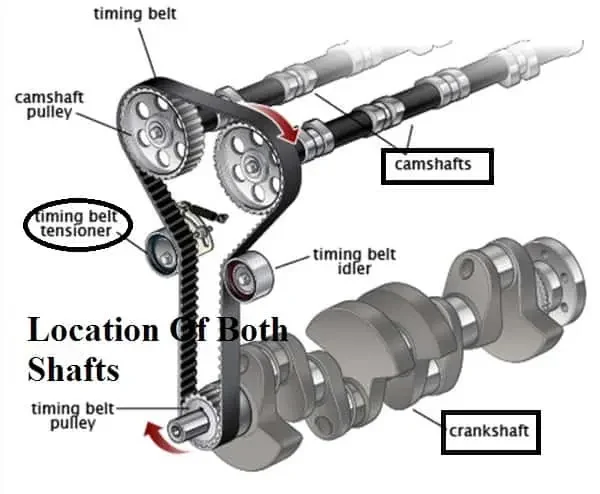
- The crankshaft drives the camshaft through the timing belt or chain.
- Any misalignment between these two shafts causes poor combustion and reduced efficiency.
- Professional manufacturers simulate this alignment during quality checks to guarantee correct timing compatibility.
For distributors, promoting products that are manufactured and tested as matched systems can significantly reduce aftersales issues.
Some suppliers even offer engine kits that include both crankshaft and camshaft matched for specific models—a value-added option that simplifies ordering and increases profit margin.
8. Choosing the Right Manufacturing Partner
When evaluating potential suppliers, consider these factors:
- Experience and Specialization: A company that focuses on engine component manufacturing typically invests more in precision tooling and quality inspection equipment.
- Production Scale: Consistent large-scale production ensures part uniformity and cost efficiency.
- Engineering Support: Ability to provide drawings, material analysis, and sample validation.
- Export Track Record: Proven experience in supplying OEM or aftermarket clients globally.
A trusted manufacturer helps distributors maintain strong relationships with their customers by delivering dependable products every time.
Conclusion
While the camshaft and crankshaft serve different functions inside an engine, both demand uncompromising precision and manufacturing expertise.
For engine distributors and wholesalers, understanding these differences is key to sourcing reliable products that protect your brand reputation and reduce warranty risk.
Partnering with a specialized manufacturer—one that controls casting, machining, heat treatment, and inspection under one roof—ensures each shaft meets global standards of strength, accuracy, and durability.
In a market where quality defines long-term success, selecting the right production partner is the best investment any distributor can make.