In every internal combustion engine, two mechanical components define how efficiently power is produced and delivered — the camshaft and the crankshaft. Though they work in harmony, their functions, designs, and movements are entirely different. Understanding the differences between them is essential for anyone involved in engine manufacturing, repair, or performance tuning.
What Is a Crankshaft?
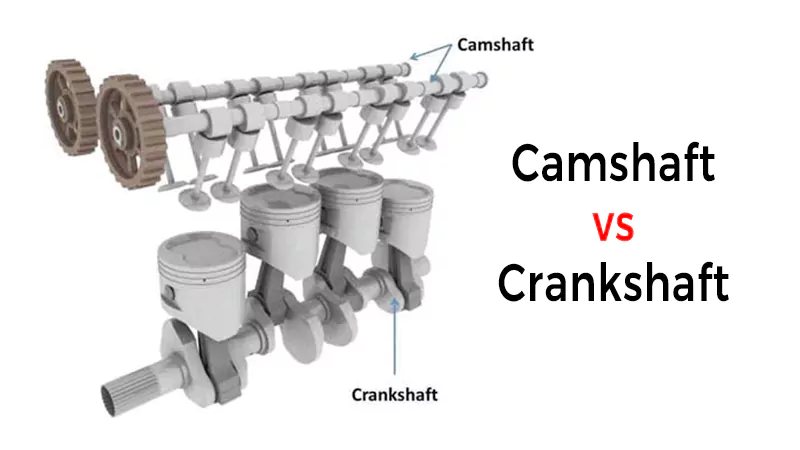
The crankshaft is the backbone of an engine. It converts the linear motion of the pistons into rotational force, which ultimately drives the vehicle’s wheels. Every time a piston moves up and down in a cylinder, it pushes on a connecting rod, which in turn rotates the crankshaft. This rotational energy, known as torque, is what makes the vehicle move forward.
Crankshafts are usually made from forged steel or cast iron, designed to withstand high stress and continuous rotation. They also contain counterweights to balance the motion of the pistons and minimize vibration.
- Converting reciprocating piston motion into rotational energy
- Transmitting power to the flywheel and drivetrain
- Maintaining engine balance and smooth operation
What Is a Camshaft?
While the crankshaft provides rotational energy, the camshaft controls timing. It regulates the opening and closing of the intake and exhaust valves. This determines when air and fuel enter the combustion chamber and when exhaust gases exit — a process critical for efficiency and performance.
A camshaft consists of a series of lobes or cams, each designed to push a valve open at a specific moment. The shape and positioning of these lobes are carefully engineered to match the engine’s timing requirements.
- Controlling valve timing and duration
- Coordinating air-fuel intake and exhaust flow
- Supporting variable valve timing in modern engines
Key Differences Between Camshaft and Crankshaft
| Feature | Camshaft | Crankshaft |
|---|---|---|
|
Function |
Controls valve timing |
Converts piston motion into rotation |
|
Location |
Near the top of the engine (in cylinder head) |
At the bottom of the engine block |
|
Speed |
Rotates at half the speed of the crankshaft |
Rotates twice as fast as the camshaft |
|
Connection |
Driven by timing belt, chain, or gears |
Connected directly to pistons via connecting rods |
|
Impact on Performance |
Affects valve timing and engine breathing |
Affects torque and overall balance |
|
Material |
Cast iron or billet steel |
Forged steel or nodular iron |
|
Common Problems |
Worn lobes, timing errors |
Bearing wear, cracking, imbalance |
This synchronized relationship ensures that when the crankshaft rotates twice, the camshaft completes one full rotation — keeping valve events precisely aligned with piston movement.
How They Work Together and the Role of Timing Components
The camshaft and crankshaft operate in perfect coordination to maintain engine timing and performance. This synchronization is achieved through a timing belt, chain, or a set of gears that link the two shafts together.
When the piston moves down during the intake stroke, the camshaft opens the intake valve to allow the air-fuel mixture in. During compression, both valves remain closed to seal the chamber. As combustion occurs, the crankshaft converts that explosion into rotation, and the camshaft opens the exhaust valve to release gases.
If the timing between these two shafts is disrupted — due to a worn belt, stretched chain, or faulty tensioner — the valves may open or close at the wrong moment. This can cause power loss, misfires, or in severe cases, valve and piston collision. Regular inspection of the timing system is therefore vital. Manufacturers often recommend replacing timing belts every 60,000 to 100,000 km, depending on the engine type. For chains, regular oil changes help prevent slack and wear, extending the system’s lifespan.
Proper synchronization between the camshaft and crankshaft ensures maximum combustion efficiency, stable idling, and long-term reliability of the entire engine assembly.
Common Issues and Maintenance Tips
- Worn lobes: Often caused by poor lubrication or contaminated oil. It leads to improper valve lift and uneven idling.
- Timing misalignment: Can result from a stretched chain or incorrect belt installation, affecting power delivery.
- Camshaft sensor failure: Triggers check-engine lights and may cause starting difficulties.
- Bearing wear: Results in knocking noise, oil pressure drop, and potential journal scoring.
- Cracks or imbalance: Usually caused by excessive load or poor-quality materials.
- Seal leakage: Leads to oil loss and contamination of other components.
- Always use engine oil that meets OEM viscosity standards.
- Change oil and filters regularly to avoid sludge buildup.
- Replace timing components as per manufacturer schedule.
- Inspect crankshaft journals for scoring during rebuilds.
- Use quality replacement parts to ensure dimensional accuracy and balance.
Conclusion
The camshaft and crankshaft are the fundamental elements that define how an engine operates. The camshaft controls breathing, while the crankshaft delivers motion — and together, they synchronize every combustion cycle. A well-balanced interaction between the two ensures efficiency, performance, and durability.
Understanding their differences helps manufacturers, importers, and mechanics choose the right components, diagnose issues faster, and maintain engines at their best performance.
If you’re looking for reliable camshaft, crankshaft, or complete engine components, XJX PARTS is a trusted factory supplier committed to precision manufacturing and quality assurance.