However, “longevity” is a broad term. For a light-duty pickup, 350,000 miles is a stellar run; for a heavy-duty Class 8 semi-truck, hitting 1,000,000 miles is the industry expectation. This incredible lifespan is not a product of chance but a result of superior metallurgy, compression-ignition engineering, and a dedicated maintenance schedule. In this guide, we will break down the mechanics of diesel durability and show you how to ensure your engine reaches its maximum potential.
To understand the lifespan of a diesel engine, we must look at the different categories of engines and how they are utilized. Not all diesels are created equal, and their life expectancy varies based on their design intent.
Found in passenger cars and smaller pickup trucks, these engines are designed for a balance of fuel economy and torque. You can typically expect these engines to last between 250,000 and 350,000 miles. Because they are often used for short commutes—which prevents the engine from reaching optimal operating temperatures—they may face more carbon buildup than their larger counterparts.
These are the workhorses of the delivery world, found in box trucks and specialized equipment. These engines are built with heavier castings and larger cooling capacities. Their expected lifespan usually ranges from 350,000 to 500,000 miles. They benefit from being driven for longer durations, which helps maintain internal cleanliness.
This is where the “million-mile” reputation comes from. Used in long-haul freight and massive industrial machinery, these engines are designed with a “B10 life” rating. This means that 90% of these engines are expected to reach 1,000,000 miles before requiring a major overhaul. These engines feature “wet-sleeve” designs, meaning the cylinder liners can be replaced without replacing the entire engine block, theoretically allowing the engine to last indefinitely with proper care.
While diesel engines are inherently robust, their actual lifespan is dictated by four critical pillars: engineering, environment, lubrication, and thermal management.
The primary reason a diesel engine outlasts a gas engine is the stress it is built to endure. Diesel engines operate via compression ignition, requiring compression ratios as high as 22:1. To survive these internal pressures, the blocks are made from high-strength cast iron or compacted graphite iron (CGI). The pistons, rods, and crankshafts are significantly thicker and heavier than those in gasoline engines, which allows them to absorb millions of combustion cycles without suffering from metal fatigue.
Diesel fuel itself is a light oil. In a gasoline engine, the fuel acts as a solvent that can wash away lubricating oils from the cylinder walls. In contrast, diesel fuel actually aids in lubrication. Furthermore, diesel engines hold a much higher volume of oil. A heavy-duty diesel might hold 10 to 15 gallons of oil, compared to the 5 to 8 quarts in a gas engine. This large volume allows the oil to stay cooler and hold more contaminants in suspension before it becomes saturated, protecting the bearings and journals more effectively over long distances.
Friction is the enemy of longevity. Diesel engines produce their peak power and torque at much lower RPMs than gasoline engines. While a gas engine might cruise at 3,000 RPM, a diesel is often humming at 1,500 to 1,800 RPM. Fewer rotations per mile mean less wear on the piston rings and cylinder walls. Additionally, diesel engines are most efficient when they are hot and running at a constant speed. Frequent “cold starts” and short trips are what truly degrade a diesel’s lifespan, as the metal components do not have time to expand to their ideal tolerances.
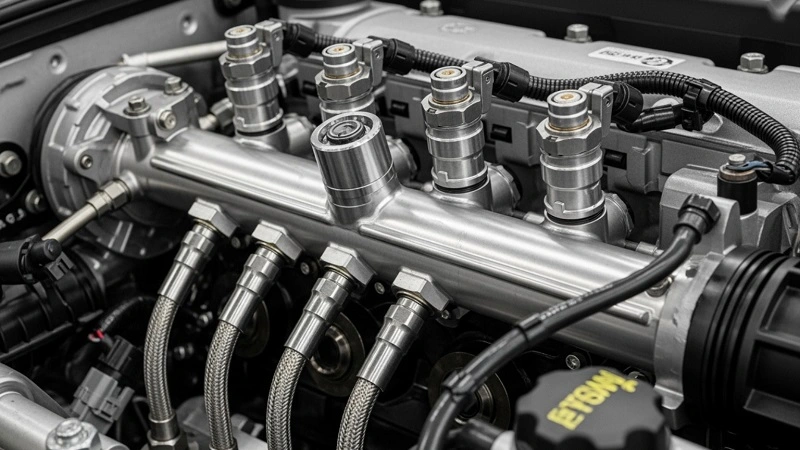
Because modern diesel engines use high-pressure common rail (HPCR) systems, they are extremely sensitive to contaminants. Fuel injectors now operate at pressures exceeding 30,000 PSI with tolerances measured in microns. If water or microscopic debris enters the fuel system, it acts like a sandblaster, eroding the injector tips and causing “blow-torch” effects that can melt a piston. Similarly, the massive amount of air a diesel consumes must be perfectly filtered; even a small amount of dust entering the intake can lead to “dusing,” which grinds down the cylinder cross-hatching in a matter of hours.
Even the most durable engine will eventually show its age. Recognizing these symptoms early can be the difference between a simple part replacement and a total engine failure.
As piston rings wear down, they can no longer seal the combustion chamber perfectly. Some of the high-pressure gases “blow by” the rings into the crankcase. If you remove the oil filler cap while the engine is running and see a steady stream of smoke or feel significant rhythmic pressure, the engine is likely losing compression. This is a primary indicator that an overhaul is on the horizon.
Diesel engines rely on the heat generated by compression to ignite the fuel. When an engine ages and loses compression—or when the glow plugs and injectors begin to fail—starting the engine in cold weather becomes increasingly difficult. If your engine requires excessive cranking or “starting fluid” to fire up, the internal clearances are likely outside of their functional range.
While it is normal for large diesel engines to consume a small amount of oil between changes, a sudden increase is a red flag. If you are adding several quarts between service intervals, the oil is either leaking past the turbo seals or being consumed by the cylinders, both of which indicate that critical components are nearing the end of their service life.
The secret to a million-mile engine is not magic; it is a disciplined approach to maintenance. If you want to maximize your investment, you must be proactive rather than reactive.
Never extend your oil change intervals beyond the manufacturer’s recommendations. In fact, if you operate in dusty environments or do a lot of heavy towing, you should shorten those intervals. Always use high-quality synthetic oils and OEM-grade filters. The oil filter is the only thing standing between a piece of carbon and your engine’s crankshaft bearings.
More diesel engines die from cooling failures than from actual mechanical wear. Over time, coolant becomes acidic and can cause cavitation—a process where tiny bubbles collapse with enough force to punch holes through cylinder liners (liner pitting). Regularly testing your coolant’s pH and using Supplemental Coolant Additives (SCAs) is essential for “wet-sleeve” engines.
The turbocharger operates under extreme heat and speed. To prolong its life, always let your engine idle for 2 to 3 minutes after a long or heavy haul before shutting it down. This allows oil to circulate and cool the turbo bearings. If you shut the engine off hot, the oil “cokes” or turns into carbon inside the turbo, which will eventually lead to bearing failure
In a diesel engine, a small oil or coolant leak is often a symptom of a larger pressure issue. A weeping water pump or a leaking turbo oil feed line can lead to a catastrophic “meltdown” if it fails completely while on the road. Replacing these “wear parts” with high-quality components ensures the core engine remains protected.
As your engine accumulates miles, components like gaskets, fuel injectors, and water pumps will inevitably need replacement. The longevity of your “second half” of the engine’s life depends entirely on the quality of these parts. Low-grade components can lead to premature failure, often taking the entire engine with them.