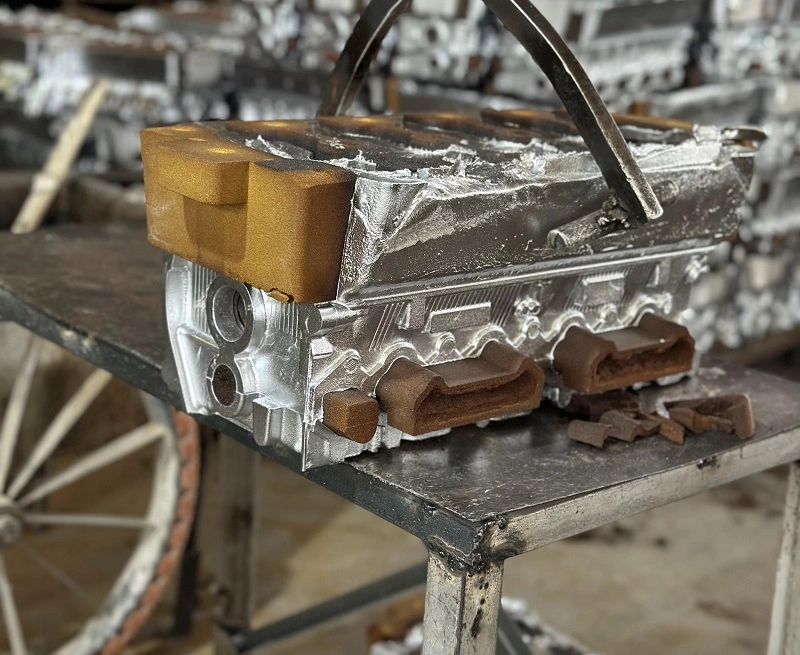
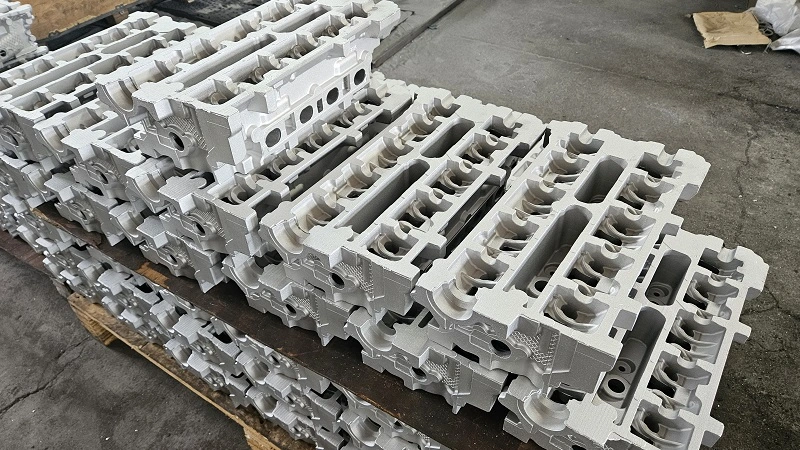
How Cast Aluminum Engine Blocks are Made

An aluminium engine block is a critical structural component in modern internal combustion engines, designed to balance strength, thermal efficiency, and lightweight construction. As automotive manufacturers continue to prioritize fuel efficiency and performance, aluminium engine blocks have become increasingly common across passenger vehicles, commercial platforms, and aftermarket applications.
Behind every reliable aluminium engine block lies a carefully controlled manufacturing process. Among the available production methods, sand casting remains one of the most versatile and widely used techniques, particularly for engine blocks requiring complex internal structures and high dimensional stability.
This article explains how aluminium engine blocks are manufactured, with a strong focus on sand casting, followed by a clear breakdown of each major production stage—from mold design to final inspection.
aluminum-engine-block

What Is an Aluminium Engine Block?

An aluminium engine block forms the foundation of the engine, housing the cylinders, crankshaft, oil passages, and coolant channels. Compared with cast iron blocks, aluminium engine blocks offer reduced weight and improved thermal conductivity, but they require more precise manufacturing control to ensure long-term durability.
To achieve this balance, aluminium engine blocks are typically produced using specialized aluminum alloys and advanced casting techniques, followed by extensive machining and inspection processes.

Why Sand Casting Is Widely Used for Aluminium Engine Blocks

Several casting technologies exist for aluminium engine block production, but sand casting remains a preferred method, especially for manufacturers focused on structural integrity, flexibility, and controlled production quality.
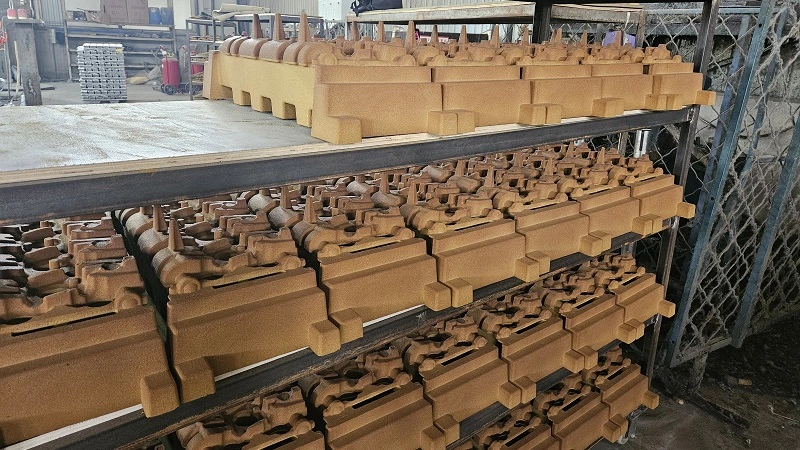
sand-casting-model

Sand Casting for Aluminium Engine Blocks

Sand casting involves forming molds from specially prepared sand mixtures, allowing molten aluminium to be poured into a cavity shaped like the engine block. Once the metal solidifies, the sand mold is removed, revealing the raw casting.
Key advantages of sand casting include:
  • Exceptional design flexibility: Sand casting allows for highly complex internal geometries, including integrated coolant passages and oil galleries that are difficult to achieve with other casting methods.
  • Better suitability for thicker wall sections: Engine blocks require reinforced areas around main bearing journals, cylinder banks, and mounting points. Sand casting accommodates these structural requirements without excessive internal stress.
  • Lower tooling investment: Compared to high-pressure die casting, sand casting requires less expensive tooling, making it ideal for medium-volume production and aftermarket engine components.
  • Improved thermal stability: Sand molds cool more slowly than metal dies, reducing internal stress and distortion—an important factor for large aluminium engine blocks.

Because of these advantages, sand casting is commonly used for OEM replacement blocks, performance engine platforms, and heavy-duty aluminium engine block applications.

Aluminium Engine Block Casting Methods Compared

While sand casting is widely adopted, other casting methods are also used depending on production goals.
Casting Method Typical Use Key Characteristics
Sand Casting
Engine blocks
Complex geometry, strong structure, flexible design
Low-Pressure Die Casting
OEM blocks
Improved density, consistent quality
High-Pressure Die Casting
Smaller components
High precision, higher tooling cost
For full-size aluminium engine blocks, sand casting remains one of the most reliable and practical production methods.

Aluminium Engine Block Manufacturing Stages

Rather than viewing aluminium engine block production as isolated steps, it is more accurate to understand it as a controlled sequence of manufacturing stages, each directly influencing strength, accuracy, and service life.

Stage 1: Mold Design and Core Engineering

The manufacturing process begins with mold and core design. Sand molds define the external shape of the engine block, while internal sand cores form coolant passages, oil galleries, and structural cavities.
Key Considerations in This Stage:
  • Core alignment accuracy
  • Core strength and collapse control
  • Dimensional tolerance of internal channels
Precision at this stage is critical. Any deviation in core positioning can affect cooling efficiency or oil flow, leading to long-term reliability issues.

Stage 2: Aluminium Melting and Controlled Pouring

Once the mold system is prepared, aluminium alloy is melted under carefully monitored conditions.
Process Controls Include:
  • Temperature stability during melting
  • Degassing to remove hydrogen
  • Filtration to reduce inclusions
Controlled pouring ensures the molten aluminium fills all cavities evenly, minimizing porosity and internal defects. For sand-cast aluminium engine blocks, stable metal flow is essential to maintain structural consistency throughout thick and thin sections.

Stage 3: Solidification and Heat Treatment

After pouring, the aluminium engine block is allowed to solidify within the sand mold. The controlled cooling rate helps reduce residual stress.
Most aluminium engine blocks then undergo heat treatment, commonly T6 treatment, which includes:
  • Solution heat treatment
  • Rapid quenching
  • Artificial aging
This stage significantly improves mechanical strength, hardness, and dimensional stability, preparing the block for precision machining.
Solidification

Stage 4: CNC Machining and Precision Finishing

Raw castings cannot meet engine tolerances without machining. CNC machining transforms the cast aluminium engine block into a functional, high-precision component.
Typical Machining Operations:
  • Cylinder bore machining
  • Deck surface milling
  • Main bearing tunnel alignment
  • Thread and oil passage machining
Precision machining ensures correct clearances, flat sealing surfaces, and proper alignment—critical for engine longevity and performance.

Stage 5: Cylinder Liners and Surface Treatments

Because aluminium is softer than iron, aluminium engine blocks often incorporate additional wear-resistant solutions.
Common approaches include:
  • Cast iron or steel cylinder liners
  • Press-fit or cast-in liner designs
  • Advanced surface treatments for friction reduction
The choice depends on engine design, performance targets, and service life requirements.

Stage 6: Inspection, Testing, and Quality Control

Before an aluminium engine block is approved for use, it undergoes comprehensive inspection.
Common Quality Checks:
  • X-ray inspection for internal porosity
  • Pressure testing of oil and coolant passages
  • Dimensional measurement using CMM equipment
  • Material hardness and tensile testing
Consistent inspection ensures each aluminium engine block meets structural, dimensional, and performance standards before delivery.

Aluminium Engine Block vs Cast Iron Engine Block

Feature Aluminium Engine Block Cast Iron Engine Block
Weight
Lighter
Heavier
Heat Dissipation
High
Moderate
Structural Design
Reinforced
Naturally rigid
Machining Complexity
Higher
Lower
Fuel Efficiency Impact
Positive
Neutral

This comparison explains why aluminium engine blocks are widely adopted despite their more complex manufacturing process.

Applications of Aluminium Engine Blocks

Aluminium engine blocks are commonly used in:
  • Passenger vehicles
  • Light trucks and SUVs
  • Performance and motorsport engines
  • OEM replacement and aftermarket applications
Their versatility makes them suitable for a wide range of engine platforms.
A well-manufactured aluminium engine block depends on controlled sand casting, precise machining, and rigorous quality inspection. When these stages are executed correctly, sand-cast aluminium engine blocks deliver excellent strength, thermal efficiency, and long-term reliability.

XinJin Auto Parts is a manufacturing-focused automotive parts factory with experience in aluminium engine-related components. If you require production support or technical consultation, you are welcome to contact us via our Contact Us page.
Related Post

Leave a Comment

Your email address will not be published. Required fields are marked *

Scroll to Top

Get Your Quote Now

    Get Your Quote Now