We’ve all heard of turbo engines, but how much do you really know about how they differ from normal engines? In this guide, we’ll break down the differences in detail, covering how they work, their benefits, downsides, and how they compare to naturally aspirated engines.
How Normal Engines Work?
A normal engine, also known as a naturally aspirated (NA) engine, draws air into the cylinders purely through atmospheric pressure. Fuel is mixed with this air and ignited, pushing the pistons down and producing power. The power output of a normal engine is limited by its displacement and how much air it can naturally draw in. Typically, a 2.0-liter NA engine will only be able to burn the air that naturally flows in, which directly affects horsepower and torque.
Naturally aspirated engines are often praised for their linear and predictable power delivery. The throttle response is immediate, making it easy for drivers to modulate acceleration. This smooth and consistent feel is particularly appreciated in everyday city driving and by enthusiasts who value a direct connection between their foot and the engine. Because they are mechanically simpler, NA engines are generally easier and less expensive to maintain, with fewer components that could fail.
Historically, NA engines have dominated the automotive market for decades. Many classic sports cars and luxury sedans rely on large-displacement naturally aspirated engines to provide smooth, high-revving performance. Even today, several high-performance vehicles, such as the Porsche 911 GT3 and the Mazda MX-5, retain naturally aspirated engines because of their instant throttle response and predictable behavior.
How Turbo Engines Work?
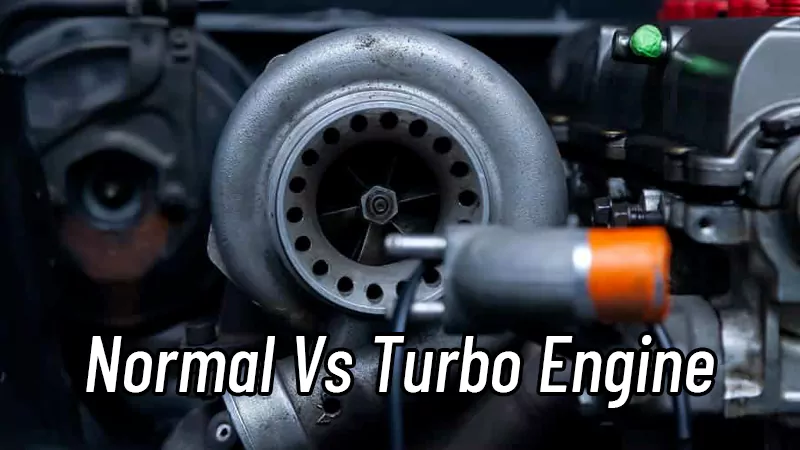
Turbo engines operate differently by using a turbocharger to force more air into the combustion chamber, effectively increasing the engine’s efficiency and power output. A turbo consists of a turbine wheel on one end and a compressor wheel on the other, all enclosed within a snail-shaped housing. Exhaust gases from the engine spin the turbine, which in turn spins the compressor. The compressor draws in large quantities of air, compresses it, and sends it through an intercooler to cool the air before it enters the cylinders.
Turbochargers can operate at incredibly high speeds, often reaching up to 250,000 RPM. Because of this, they require sophisticated oil and cooling systems to prevent overheating and premature wear. Most systems include a wastegate, a valve that diverts excess exhaust gases away from the turbine to regulate boost pressure and prevent engine damage.
Turbo engines make use of energy that would otherwise be wasted in exhaust gases. By recycling this energy to increase intake air, they produce more power from the same engine displacement. For example, Ford replaced its 1.6L naturally aspirated engine with a 1.0L EcoBoost turbo engine, achieving comparable or even superior performance while improving fuel efficiency. Other examples include Volkswagen’s 1.4 TSI engines and BMW’s 2.0-liter N20 turbocharged engines, which demonstrate how smaller engines can outperform larger NA engines thanks to forced induction.
Benefits of Turbo Engines
Power: Turbocharged engines produce more power for the same engine size. This allows manufacturers to design smaller engines that deliver the same or greater horsepower as larger naturally aspirated engines. Drivers experience more thrilling acceleration, particularly in highway overtaking and rapid city driving situations.
Fuel Economy: Turbo engines often deliver better fuel economy under normal driving conditions because they can operate efficiently at lower engine speeds while still providing strong performance when needed. This approach allows automakers to downsize engines without sacrificing power.
Torque and Performance: Turbo engines generate higher torque at lower RPMs, which translates to quicker acceleration and stronger responsiveness in everyday driving. Even smaller turbocharged engines can outperform larger NA engines, especially when climbing hills or carrying heavier loads.
Quieter Operation: Turbo systems can reduce intake and exhaust noise, as air passes through more components, resulting in a smoother and quieter engine experience.
Environmental Compliance: Turbo engines often emit less CO2 than larger naturally aspirated engines because of better fuel efficiency and downsizing, making them a popular choice in markets with strict emission regulations.
Downsides of Turbo Engines
Expensive Repairs: Turbochargers add complexity to the engine. Failures can be costly to repair and may affect other components. Regular maintenance is crucial to prevent issues such as oil starvation, overheating, or turbo wear.
Turbo Lag: Turbo engines can exhibit a delay in power delivery, known as turbo lag. This occurs when the engine is not producing enough exhaust gases to spin the turbine quickly. Manufacturers mitigate this by using twin turbos of differing sizes or variable geometry turbines, but some lag may still be noticeable in aggressive driving.
Efficiency vs Driving Style: Real-world fuel economy can be affected by driving style. Heavy acceleration while on boost increases fuel consumption, so drivers may need to adjust habits compared to NA engines to maintain efficiency.
Long-Term Reliability: Turbo engines require more attention to oil quality, cooling, and overall maintenance. Neglecting these aspects can shorten the engine’s lifespan compared to naturally aspirated engines, which are simpler and more robust.
Comparing Turbo and Normal Engines
While turbo engines excel in power, torque, and fuel efficiency, naturally aspirated engines offer simplicity, reliability, and a linear driving experience. Choosing between the two depends on your priorities: performance and efficiency (turbo) versus ease of maintenance and predictable behavior (NA).
For instance, city drivers who prioritize fuel savings and compact engine design might prefer a small turbocharged car, such as a 1.0L EcoBoost Ford Fiesta. Conversely, enthusiasts seeking high-revving engines and minimal maintenance may opt for vehicles like the Mazda MX-5 or Honda S2000, which rely on naturally aspirated designs.
Conclusion
Understanding the differences between normal engines and turbo engines is key when deciding on a vehicle. Turbo engines provide higher power, better torque at low RPMs, and potential fuel efficiency advantages, but they require careful maintenance and may come with higher repair costs. Naturally aspirated engines are simpler, reliable, and offer a linear driving experience, though they may lack the peak performance and efficiency of turbocharged units.
Power your drive with XINJIN engines. Whether turbocharged or naturally aspirated, every engine is precision-built to deliver peak performance and long-lasting reliability. Add an XJX engine to your vehicle and experience smoother acceleration, stronger torque, and unmatched durability. Discover more on our website today.