If you look inside a car engine, two key shafts are essential for making everything work: the crankshaft and the camshaft. While they are connected and synchronized, their roles are very different. You can think of the crankshaft as the power generator and the camshaft as the valve controller. Together, they ensure the engine produces power efficiently, runs smoothly, and lasts a long time.
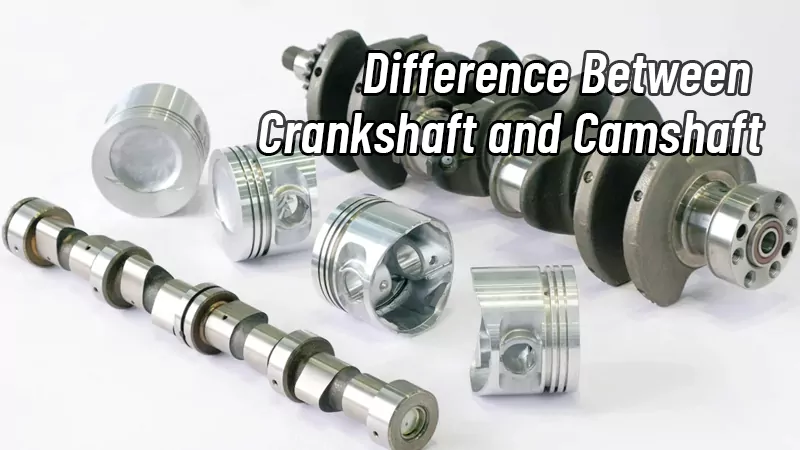
Understanding the difference between these two shafts is important not only for mechanics and engineers but also for car enthusiasts. It helps explain how engines function, why timing matters, and why maintenance like replacing a timing belt or checking valve timing is critical.
What is a Crankshaft?
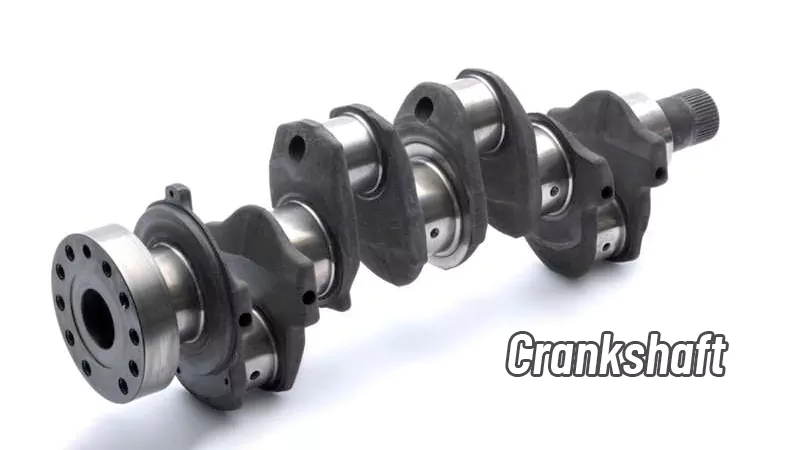
The crankshaft is often called the “heart” of the engine. It converts the up-and-down motion of the pistons into rotational motion, which ultimately turns the wheels. Every time fuel burns in a cylinder, the expanding gases push the piston down. The piston is connected to the crankshaft via a connecting rod, which translates that motion into a rotation.
Structure of a Crankshaft
The crankshaft has several important components:
- Main Journals: These are the bearings on which the crankshaft rotates inside the engine block. They provide support and ensure smooth motion.
- Connecting Rod Journals: Points where the pistons attach via connecting rods.
- Counterweights: Heavy sections that balance the crankshaft during rotation. They help reduce vibration and make engine operation smoother, especially during the exhaust stroke.
Materials and Durability
Crankshafts are made from forged steel or cast iron, sometimes with special alloys for high-performance engines. They need to be extremely strong because they absorb massive forces during combustion. Any failure of the crankshaft usually leads to catastrophic engine damage.
Everyday Analogy
Think of the crankshaft like a bicycle pedal crank. When you push the pedals up and down, the crank converts that motion into a spinning motion that drives the bike forward. Similarly, the pistons “push” the crankshaft, generating the rotation that eventually turns your car’s wheels.
What is a Camshaft?
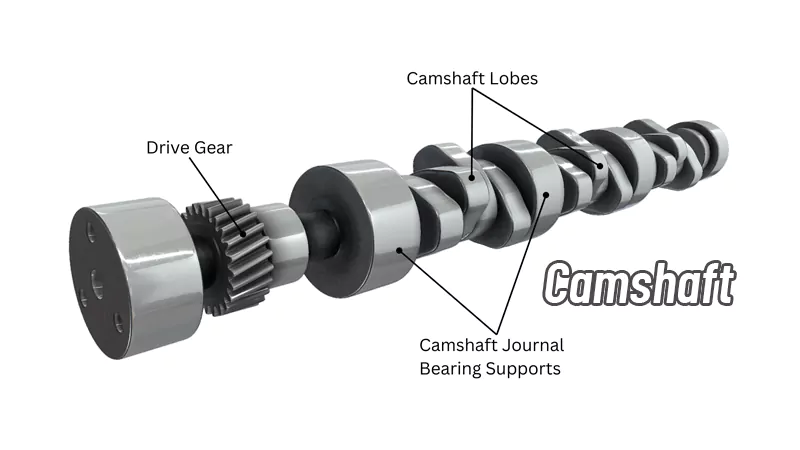
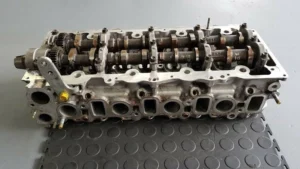
The camshaft is responsible for controlling the engine’s intake and exhaust valves . These valves let air and fuel into the cylinders and let exhaust gases out. The camshaft has cam lobes, egg-shaped protrusions that push the valves open at the correct time. Valve springs close the valves when the cam lobe rotates away.
Timing and Synchronization
The camshaft must rotate in perfect synchronization with the crankshaft. This is achieved via a timing belt, chain, or gears. If the timing is off, valves may open or close too early or too late, which can cause poor engine performance, overheating, or even engine damage.
Camshaft Placement
Modern engines can have different camshaft configurations:
- SOHC (Single Overhead Camshaft): One camshaft operates all valves in a cylinder bank. Common in many compact and mid-range engines.
- DOHC (Dual Overhead Camshaft): Two camshafts per cylinder bank allow more precise control of valve timing and higher performance. Popular in sports cars and performance engines.
Materials and Durability
Camshafts are usually made from hardened steel or cast iron. They must withstand wear because the cam lobes constantly contact valves or pushrods under high pressure.
Everyday Analogy
Imagine the camshaft as a conductor in an orchestra. The crankshaft provides the rhythm (power), while the camshaft ensures that all instruments (valves) come in at the right moment to create harmony (efficient combustion).
Key Differences Between Crankshaft and Camshaft
| Feature | Crankshaft | Camshaft |
|---|---|---|
|
Function |
Converts piston motion into rotation |
Controls intake/exhaust valves timing |
|
Location |
Bottom of engine (engine block) |
Top of engine (cylinder head) or block |
|
Driven By |
Power from piston combustion |
Driven by crankshaft via timing belt/chain |
|
Key Components |
Main journals, counterweights |
Cam lobes |
|
Main Purpose |
Produces power to drive the car |
Controls air/fuel intake and exhaust |
The crankshaft and camshaft work like a perfectly timed machine. The crankshaft spins due to piston movement, while the camshaft opens and closes valves at the right moment. The timing belt or chain connects them, ensuring that when a piston compresses the fuel-air mixture, the intake valve is closed, and the exhaust valve opens at the right moment to expel gases. Proper synchronization is critical; even a slight misalignment can reduce efficiency, cause engine knock, or damage valves.
Conclusion
In summary:
- The crankshaft converts piston motion into rotational power to drive the car.
- The camshaft controls valve timing, ensuring proper airflow and exhaust.
- They are connected and synchronized by a timing belt or chain.
- Both must be made from durable materials and maintained properly to ensure engine efficiency and longevity.
Knowing the difference is key for troubleshooting, maintenance, and appreciating how engines work.